All posts filed under: Tales from Rural India

A Demon Who Loved Music

A Short History of Folktales in India Folktales are Oral stories that are passed down by the elders to the younger generation. For centuries, folktales have been a crucial medium for preserving cultural traditions and teaching the youth to understand the world around them. A Folktale from Uttar Pradesh A poor Brahman grew sick of being poor and set out on a pilgrimage to Kashi, the holy city. After walking many miles in the sun, he stopped in a shady grove to rest and eat the stale rice he had packed himself for the journey. As he squatted under a tree to answer the call of nature, he was startled by a deep unearthly voice that said, ‘Don’t.’ He quickly got up and looked about him for the source of the voice. He could see no one around. He then walked to a nearby pond to rinse his mouth when again he heard the voice say, ‘Don’t!.’ This time he went ahead and rinsed his mouth, not heeding the warning but when he unpacked his …
Travelling through Rural West Bengal in Blazing Indian Monsoons- I

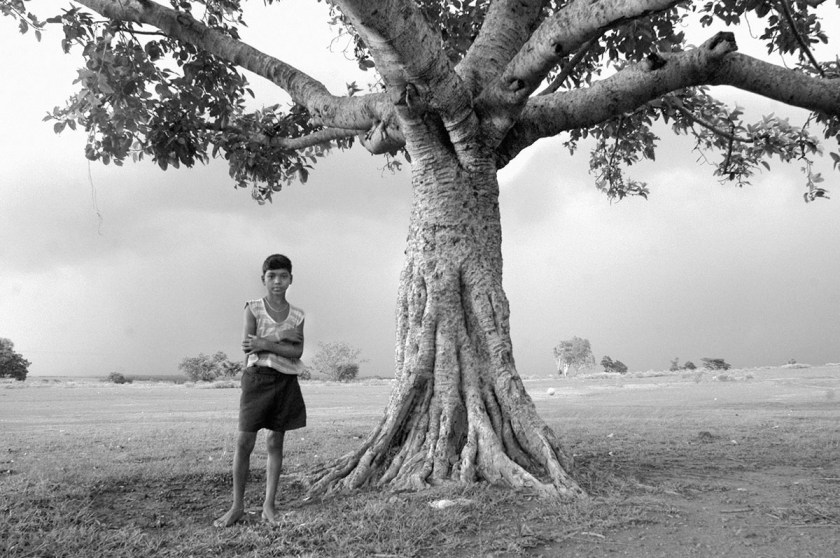
Monsoons are going on, Or are they going? They say that this year it’ll not only rain but the skies are going to weep. Clouds arrived four weeks early. And they have mostly stayed. Even the universe knows, that the monsoon times most children are angry or show their displeasure. They are told to not go out as it will rain, yet many go and whirl even at the expense of catching cold. Because only they know that cold does not exist, what does breathe in them is the joy of dancing with nature’s music. Few years ago, I travelled through Rural Bengal during the majestic Indian Monsoons. Being there it felt like my soul grew while only seeing the earth showing her abundance, her happiness. So many emotions churned within me then that I had to write a letter to a friend who sat far. Not to tell her as such, but to learn myself what was actually happening, to me. Many years later as I read this letter, I am taken back again to …

One Scary Night at the India Pakistan Border – Visiting Tanot Mata Temple Longewala

Amongst the six major wars since Independence in 1947, India fought its deadliest battle with East Pakistan which resulted in the Birth of a country called ‘Bangladesh”, in 1971. But, even though, the Indian Army was confronting the rogue Pakistani soldiers in erstwhile East Pakistan, Pakistan decided to engage Indian Army and opened the western front in the Thar Desert of Rajasthan where only 120 Indian soldiers were manning their territory against 2000-3000 Pak soldiers with 40 Tanks. It was a night attack in a vulnerable open desert landscape which back fired for Pakistani Army six hours later but by then they had bombed most installations with heavy causalities. It is known that amongst all of this the only structure that was left as it was, was a mother Temple called Tanot Mata Temple, with 120 men winning an unusually long fight. My work was done by the noontime. After a whole morning of chasing a Manganiyar tribe, I finished my interview with the old tribal singer and requested Veeru’s great grandfather to sit under …

Who is The Greatest Man in the World?

Folktales are Oral stories that are passed down by the elders to the younger generation. For centuries, folktales have been a crucial medium for preserving cultural traditions and teaching the youth to understand the world around them. A Short History of Folktales in India People believe that Indian folk tales originated in ancient India during the Vedic period (10000 BCE to 5000 BCE). And subsequently, they passed down these tales from generation to generation through oral tradition. And often used them as a means of entertainment and education. These tales evolved over time, incorporating elements from different cultures and regions of India. The tales typically have a rural or village setting and feature ordinary people, animals, and magical creatures. They are popular among all age groups due to their simplicity, humor, and accessibility. This post is dedicated to land of Nagaland; preserving the lesser known folktale from this Northeastern state of India and Northwestern region of Myanmar. Who is the Greatest Man in the World: A Folktale from Nagaland One day a man was going …

The Web of Illusion and the Story of Origin of the Ancient Indian Calendar

Sage Narada could travel instantly to any part of the world whether it was the skies, the earth or below the ground. He did not possess a home or a vehicle, and was notorious for mischievously engineering many misunderstandings. However, he would always side with the truth and his words were taken seriously. His presence was always welcomed by devas, asuras and humans. Narada advised everyone he met to become a sage like him and constantly pray to Vishnu. This upset his father greatly. Brahma said to his son, ‘Look, you are free to do whatever you want to do- you have few responsibilities and almost no attachments, but the common man on earth has much more to worry about and must undergo his share of suffering. Don’t think that you know what’s best for others, especially when you have no understanding of a mortal life, of marriage and children, of joy and sorrow. Narada, however, did not heed his father’s words and only smiled mockingly at Brahma before going on his way. A few …

A Dairy of a Photographer and his Incredible Rural India Stories

Being a Photographer myself, I have always been fascinated by the old world charm that Rural life provided to my spirit. And Its not just about India but whole of South and South-East Asia had an unexplainable charm to it, still has. There is so much in common. Culture going centuries back. And today in 2023, when the world has started sprinting at a breakneck speed; when people, younger generations have almost, already left things behind; I feel an urge and need to conserve things, documents, stories, creations and life of the past. As much as I can in my limited means. And what better there is to learn and study from someone who himself has been a conservationist in the real sense. Jyoti Bhatt’s work is a proof in itself, that had there been no him, we wouldn’t have ever known what Rural India of the past looked like. Here sharing excerpts from his travels, some never seen images and stories that only his closed ones must have known. The diary of Jyoti Bhatt …

The Choice Of Death: The Legend Of Madhu Kaitabha

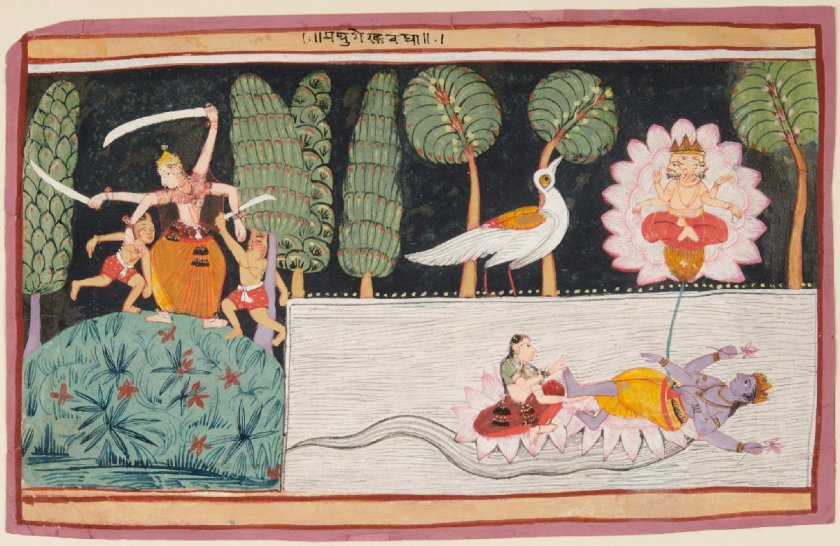
While they were resting, Vishnu observed that the concentration of his foes was wavering, he addressed them in a loud voice and said, “I have been very much pleased by the skill you two have displayed. Till date, I have not come across a single person who could stand up to me in concept. In recognition of your bravery, I shall grant you a boon. Ask, and it shall be yours.”

A Memory of the Most Beautiful Woman : A Photographic Recollection of Three Days Living in a Rural Rajasthani Home

Dhapodi ji became a shepherd once she learnt that she would not be able to give Ambaram any children. Limping, I saw her whole life in that moment as she slowly walked away from us, with his cattle family. She took the responsibility of walking seventy goats and four cows to greener pastures. She used to take them all together for grazing, in rain, in dusty, deadly heat of Rajasthan daily, finding newer fields and branches to eat from all day to come back as the sun sat and help his husband’s second wife in cooking. Yes, second wife! Ambaram married again, in search for a boy to continue his lineage. Instead the new couple got five beautiful talkative girls, each a year apart. They went to every temple and sage to pray and ask for their blessing- leaving the older wife- Dhapodi and children back home. It became an irony that on the day Ambaram and Dhapodi got married- twenty years later, a boy arrived from the younger wife. As i Sit on the …

Last Few Days of Winter from my friend Rinku’s Home, in Naggar- Himalayas: A Photo-Story

You know I love Delhi for its years old rich history, but more often than less, it has only been a pass for me towards the mountains. I love the Himalayas more. And in last one decade and half, I have found myself reaching to Naggar than anywhere else. It may also be how this quaint small village found me finding. Also Read: Birdsong- the first poem i wrote after reaching Naggar In 2007, while riding my bike from Delhi, looking for a place to stay for the night, each person i asked from directed me towards Naggar. Nagar in Hindi simply means a ‘city’, or so i thought that once i reach the city i will find a place. But the altitude kept getting higher as i rode in the night getting skeptical of ever reaching any so called ‘city’. But when I finally reached there, the first thing my senses noticed was the fragrance of Devdar trees. It was dark in the night and cricket sang the song of the moon. There were …

Life Of Verrier Elwin: Past and the Present Of the Tribal Cultures In Central India: A Photo-ethnographic Essay

Elwin’s research work in India took place at a critical period leading up to the Indian Independence from British rule. Verrier Elwin first met Mahatma Gandhi in 1928 at his ashram in Ahmedabad, where he had gone to represent the Christa Seva Sangh at the International Fellowship of Religions. Gandhi’s philosophy of satyagrah  as non-violent resistance against the colonial rule had a strong impact on Elwin and he were drawn into the national movement for Independence. However, as he became more deeply involved in the welfare of the community that he lived with, in central India, he began to question the relevance of Gandhi’s severe views on prohibition, celibacy and vegetarianism for that environment. In his autobiography he wrote. “long letter from Mahatma Gandhi urging me to perform daily yagna or sacrifice, of spinning; as no one here for hundreds of miles has ever seen a spinning wheel, decide not to, but suggest rice pudding as a daily sacrifice instead. Elwin’s personal reassertion of loyalty and identity was unequivocal. At a time when most of …

Leaves from a Jungle: The Life of Verrier Elwin living with the Gonds in Central India – I/II

My co-travellers here on the Road to Nara, must already know and have experienced by now how much there is to absorb in India that is Bharat. Every state works like an organ. Each region in contrast to the other in food, language yet somehow bonded by sense and tradition. In my brief career as a traveller, I have desired not just to travel as much, but also to learn, research and document life of other travellers who once walked and measured this nation in a different light, time and dimension. The ones who somehow recorded the flow that once was; those happenings which can only be dreamt of today but can never again be touched. Also Read: How Jyoti Bhatt inspired the new age Travellers and Documentarians with his life? I was an NCC(National Cadet Corps, youth wing of Indian Armed Forces) Cadet during my university years and had a brief opportunity to rigorously walk throughout the Central Indian State of India, Madhya Pradesh for over a month. During one such walk on a …

Jyoti Bhatt : A Tribute to a Living Legend : A Photographic Essay on Rural Gujarati Indian Life(1971-1987)

Today, he is 87 and I will only wish that somehow a film compiling his works, his life, no matter however directed, should come out before we lose all of it. His experiences of that time and era must be recorded.

Pandava Forest and the Brahma Kamal: The Nights of Change in the Higher Himalayas – I

But before finding Brahma Kamal, Nara had to go through the forests where Pandavas once roamed. Pandavas!   The mighty heros of the Indian Epic, Mahabharata. Who after defeating the Kauravas, after slaying their own uncles, brothers, friends in a battle that went on for 18 days, not night. The rule was to rest and sleep in the night; until Pandava’s sons were murdered. The rage from there onwards became the reason to kill; not merely win. The carnage started then. Pandavas killed each Kaurava till the last count one by one. It was a bitter victory. Pandavas went on to rule for 36 years. But the guilt of killing their own kept breathing in their minds. Pride over the years melt into feeling sinful. As sharp pangs of remorse led the Pandavas to leave their kingdom they had won; leaving their worldly clothes, ornaments, and even their weapons; to find eternal peace, to attain Moksha. It was during this search on their way to heaven, while walking for years in the mountains; numerous stories, …

Truth, Evil and the Sun

When we reached Gopeshwar that night, Gana seemed speechless. But Neel looked at him with satisfaction giving an expression like then he has seen. We sat around fire, while waiting for the food to arrive. Open your ears said Neel and he began speaking like reciting an over practised hymn. The men in the east, he said, are trees; those in the south are flocks of animals; those in the west are wild plants. And those in the north like ourselves, who cried out while they ate other men, were the waters. When the collective sound started filling the air, he started explaining about eating. The act of eating is a violence that causes what is living, in its many forms, to disappear. Whether grass, plants, trees, animals or human beings, the process is the same. There is always a fire that devours and a substance that is devoured. This violence bringing misery and torment will one day be carried out by those who inflict it. Pouring milk into the fire- every morning, every evening- …

Life and nothing more- II/VII

Continuing from Call of the Now, for the Great Himalayan Road Reunion. : ँ : To Srinagara, to zojila, to Leh, to Hanle, to the land that invoked my spirit, beyond the Indus, towards the Karakoram, to the parents of my children in Turtuk, to the man who flipped, to all the treks that lead to mahadeva and Gaura; to the top of that Himalayan mountain where the first tyre burst, to i don’t know what pass that came after where hundred’s of horses ran just to take left, and we took towards sky. Stone laden river bed that kept us moving on a conical mountain all afternoon, many called it a road. Through a broken bridge, through the ditches connecting another ditch on the World Yoga day. To stopping in front of the snow, and drinking it. To dipping in the coldest river Tirthan, to filling stomach from the river Chandrabhaga. To standing all night under the milky way. To crying for my parted child, to buying eyes for Rasool bhai. While laughing at …

When Krishna calls. A dream life of an Australian Photographer from Paris : Travels in Vrindavan

“O Krishna, the stillness of the divine union, which you describe, is beyond my comprehension. How can the mind which is so restless, attain lasting peace. Krishna, the mind is restless, turbulent, powerful, violent. To tame the mind is like to tame the wind.” – Srimad Bhagvad Gita  I was in my early teens when on my grandmother’s fierce insistence, parents took us on a tour to Mathura and Vrindavan. Krishna had supposedly entered my grandmother’s dream. She lost her sleep, and waited for that day when she would touch the earth of Krishna’s birth. And encircling the epical, ancient, holy Govardhana hill,  गोवर्धन पर्वत on her bare feet. The sun was setting in the land of braj as we arrived, the winds started blowing, grandmother’s eyes went backwards; her body calmed, voice started mumbling the words known to every wall and each monkey sitting on them, as they could  be heard from myriad mouths. Narrow lanes of brick, tall walls wearing Mughal attires turning holy, as the time turned blue like romance, the colour of Krishna, Yamuna …

A Magical Walk to Bijli Mahadev and Mystical Manali Stories

Lets start from where we ended. For twenty-seven nights, I was the only one living in a wooden balcony that hung facing the jungle on a whole mountain. The red moon that I saw on the forehead of a mother in the village down, i saw a similar one on my lover. But her eyes were set against the only window the first night. Pink walls. She told me she wants to scream. Now! I said. She smiled. Fire. She kept looking in my eyes and started screaming. I closed my mouth. And opened my eyes. It was winters. It was cold. And you know when it is winters and when it is cold how heavy the rains hit. It confuses the heart. It was sunny next day. Pluto arrived. Nara, let’s go meet the man who sneezes forty times. He does that once daily. We left our two limping dogs behind. It was a beautiful walk. We reached. We sat outside Daulat Ram’s home in his garden on uncomfortable plastic chairs. An old brown …