
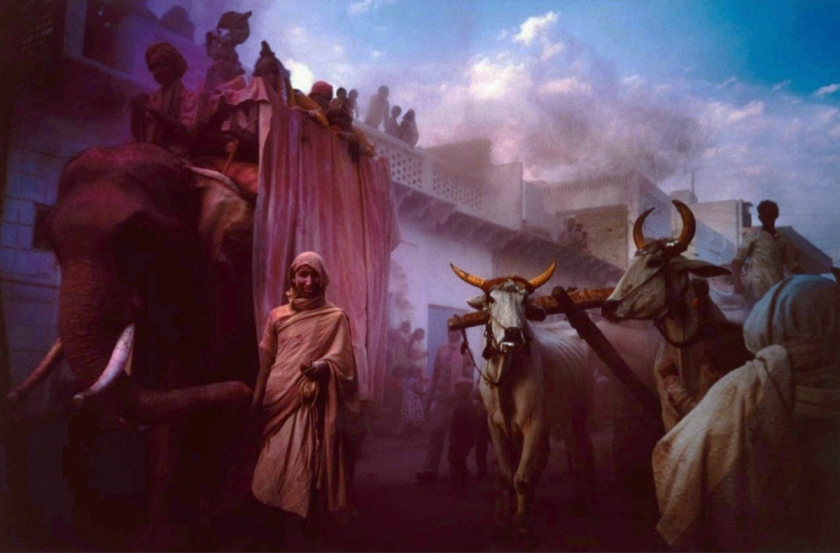
A Joy filled, Colourful and Auspicious Holi to each one. The colourful festival of Holi, literally meaning ‘burning’, is celebrated on the full moon day in the month of Phalguna and heralds the onset of spring season.
Holi is One of the two Indian Festivals, amongst a plethora of them and other than Diwali that the world recognises. And for us here in India, it has quite a few meanings. Foremost and the simplest one is its arrival marks the end of a long and Cold winter, and that the time of colour and water has arrived.
And since this beautiful festival starts with fire, the night before, symbolising the legend of Holika Dahan; a story of Truth and devotion’s victory over Evil.
here on ROAD TO NARA, I will take my co-travellers on an outing sharing a Visual History of this Ancient and most colourful festival on Earth, Holi.
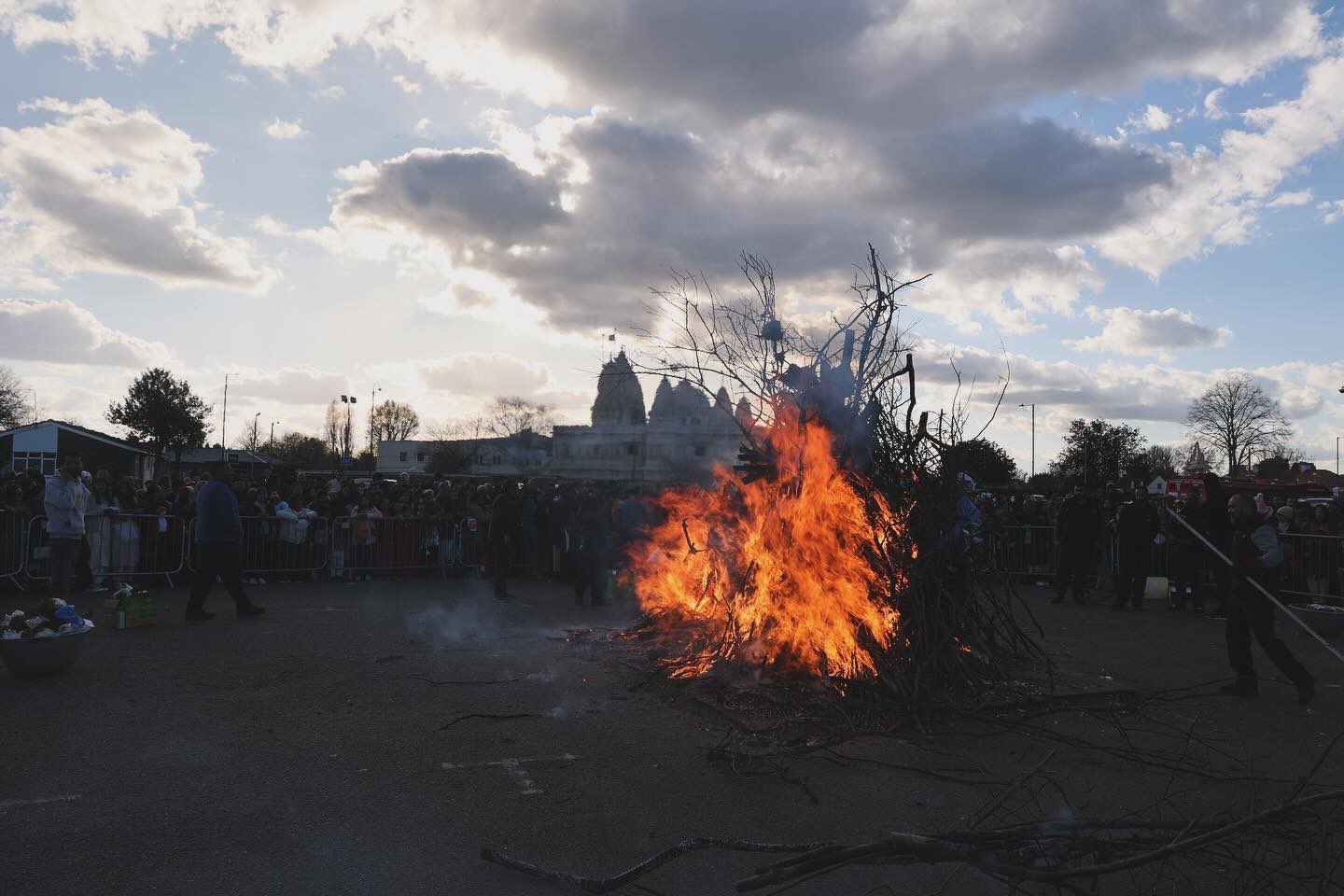

Unraveling the Mystique of the Indian Holi Festival
From All-Women to Coed, from Music and Fire to Water,
From Feast to Bhang.
Holi is Called by various names throughout the ages and regions: “Dol-Jatra”, “Dulhendi”, “Dhola”, “Odad”, “Holikotsav”, “Holi”, “Rangwali Holi”, “Dol Purnima”, “Dhuleti”, “Dhulandi”, “Ukuli”, “Manjal Kuli”, “Yaosang”, “Shigmo”, “Phagwah”, or “Jajiri”
Archaeo evidences suggest that the Full moon of Phalgun was celebrated by woman with music followed by a full night Jagran(musical awakening) on the following day dedicating it to Shiva until about 1000 years ago.
Also read: When Krishna calls. A dream life of an Australian Photographer from Paris Travels in Vrindavan
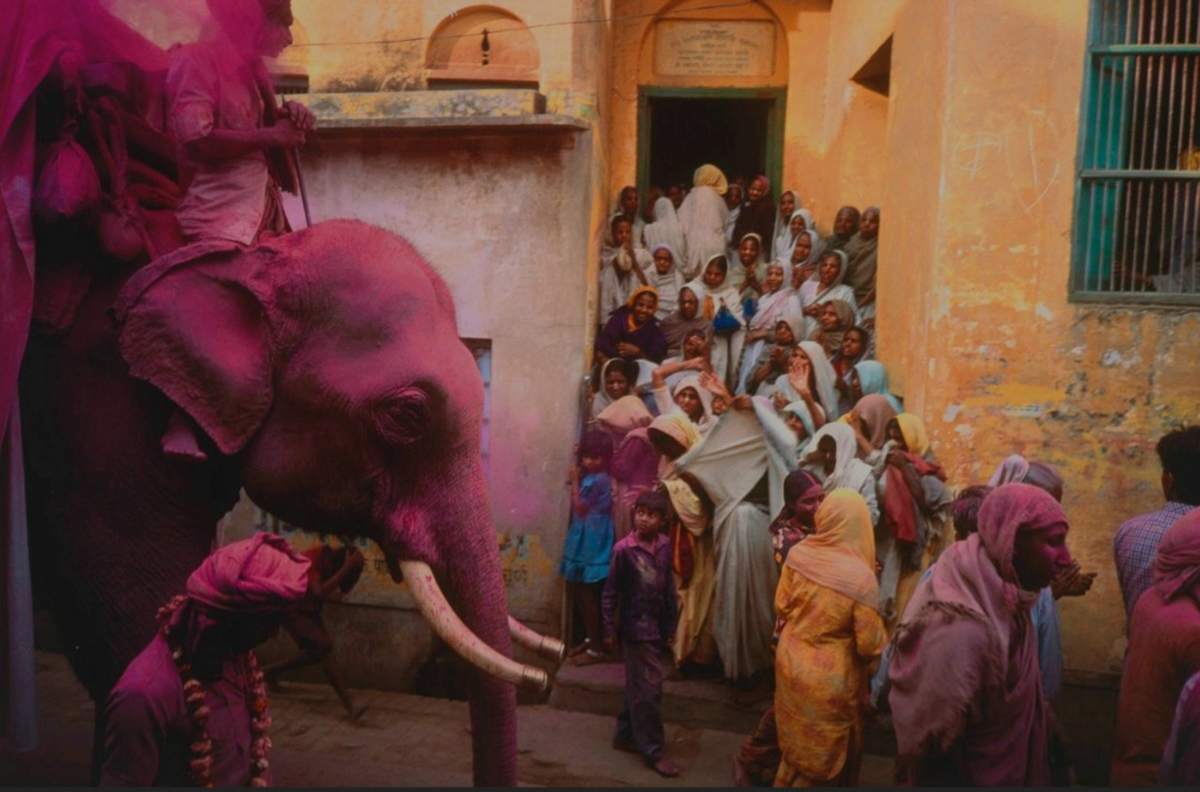
Evidences of pichkaries and Water are seen from 10th century onwards with some participation of man is also visible in this era
Around 1500, The men participation increased.
Around 1750, Radha Krishna paintings became popular.
And by 1970, Holi’s association with Bhang came into limelight with Bollywood films and songs.
Exploring the Journey of Holi
Holi is one of the Oldest festivals on the planet being celebrated till date. It is described by Buddha himself during his lifetime in the text Udânavarga. the oldest reference of holi comes from the eighteenth pariśītha of Atharvaveda where its mentioned by the name Holäkâ to be observed on Phalguna Purnima- the same day we celebrate it even today.
Gathâsaptasati by the Sâtavahana King Hâla written 2000 years ago gives a detailed description of playing Holi by throwing colours and water playfully at each other.
3rd Century BCE
The earliest mention of the Holi festival dates back to the Sitabenga Cave Inscription from the 2nd or 3rd century BCE. –
“adipayariti hadayarti 1 sabhava-garu kavayo e ratayarh
dule vasarhtiya hasavanubhute I kudasphataiii evarii alarh g”.
It describes how during the swing-festival of the vernal full moon, people used to tie garlands thick with jasmine flowers around their necks as they enjoyed frolics and music.
In a second picture from Chandraketugarh, Bengal, woman can be seen playing music with garlands around her neck. (Similar to the inscription found in Sitabenga) Suggesting that around 2200 years ago, Holi may have been primarily a women’s festival.
Approximately 2200 years ago, during the time of Holi, the weather would have been as hot as it is today in April due to the earth’s precession.

7th Century CE
King Harsha mentioned Holikotsav in his work ‘Ratnavali.’
Holikotsav is an ancient Hindu festival that signifies the victory of good over evil. It typically falls on a full moon day during February-March and marks the beginning of spring.

1012 Century CE: Holi as per Al Biruni who visited India
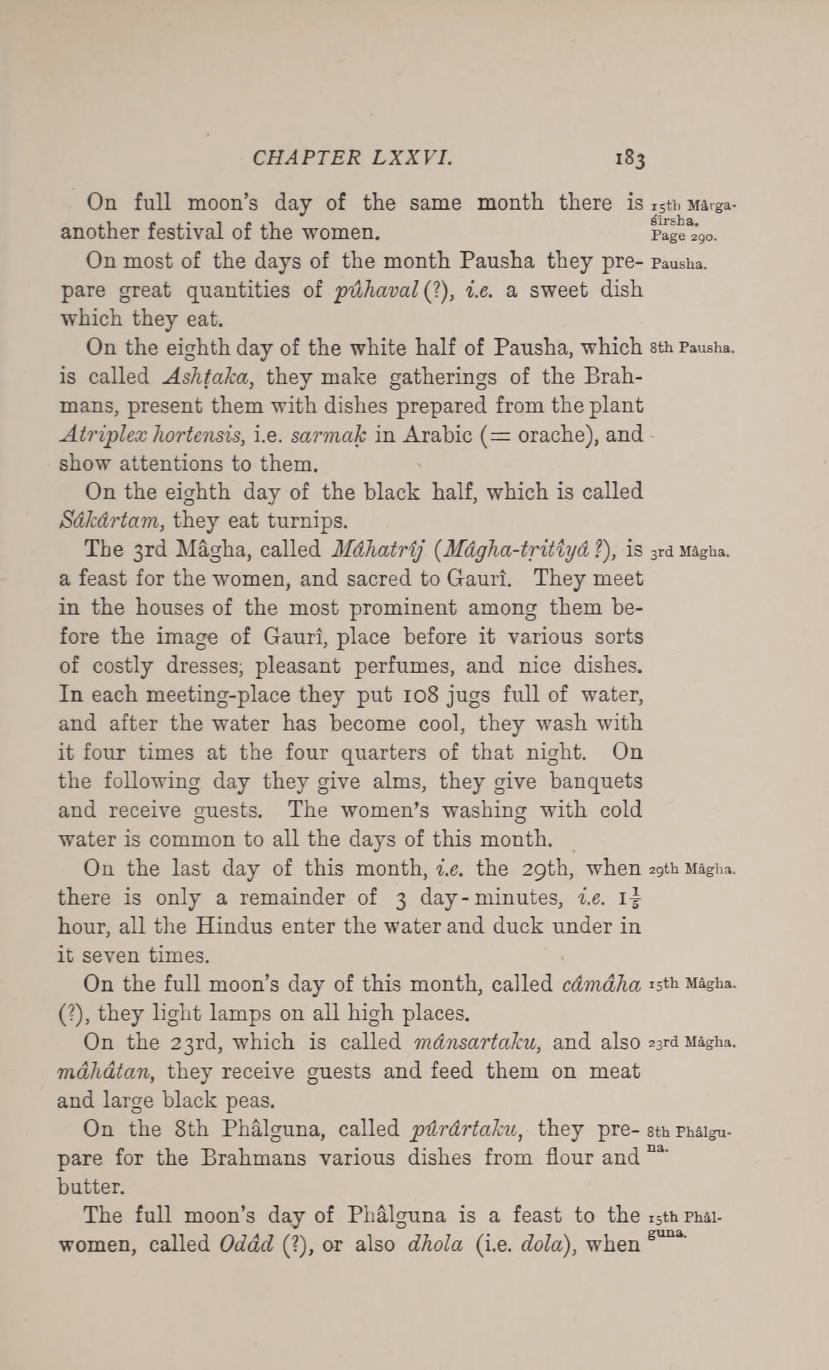
The full moon’s day of Phalguna is a feast to the “Women”, called Odad (?), or also dhola (i.e. dola), when they make fire on places lower than those on which they make it on the festival camahka, and they throw the fire out of the village.
On the following night, i6. that of the 16th, called Śivaratri, they worship Mahadeva during the whole night; they remain awake, and do not lie down to sleep, and offer to him perfumes and flowers.


12th Century. CE
A woman plays Holi while her assistants fill the Pichkari and Gulal Pot. She holds a clutcher, likely for Gulal.
In second carving the women are seen filling pichkaris themselves
Location: Chennakesava Temple, 12th century AD, Belur, India


“Pichkari” Piston Technology:
Originated in India a millennium ago but “Patented” by JW Wolf in the US in 1896, over 130 years ago

15th Century CE
A stunning carving from the Holi festival at Mahanavami Dibba, Hampi, Karnataka captures the essence of the celebrations. King Krishnadevaraya commissioned the building of the temple in 1513 AD. The exquisite walls feature intricately carved statues depicting women joyfully playing Holi with pichkaris and tubs.
The pride of India is in it’s vibrant heritage. While pictures of people playing Holi are there in miniature art, in sculpture form, this depiction is very rare.

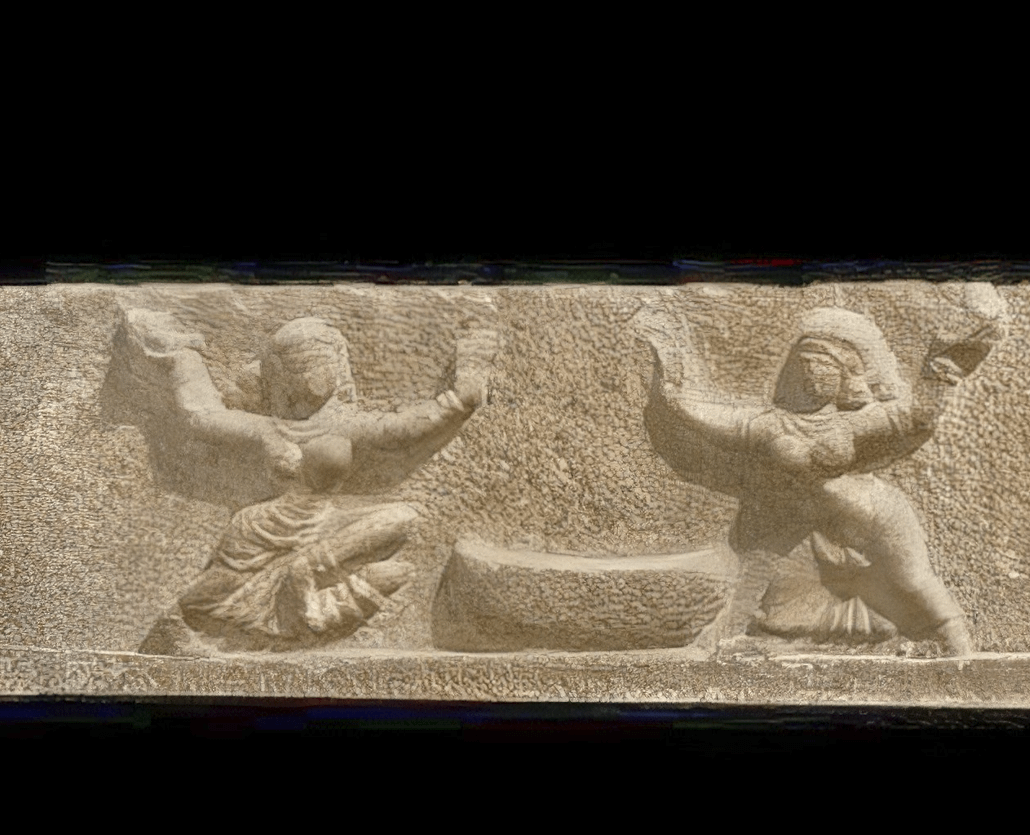
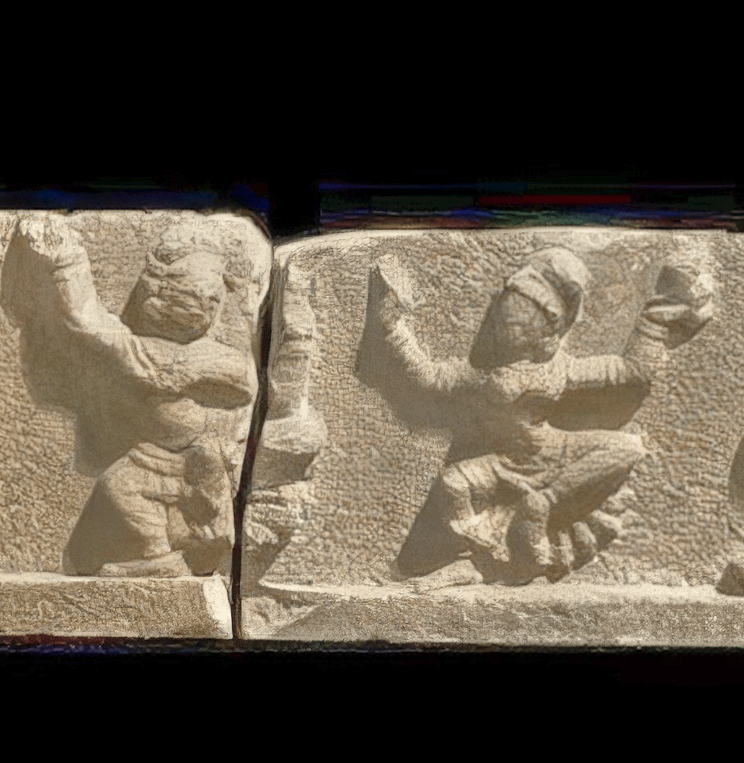
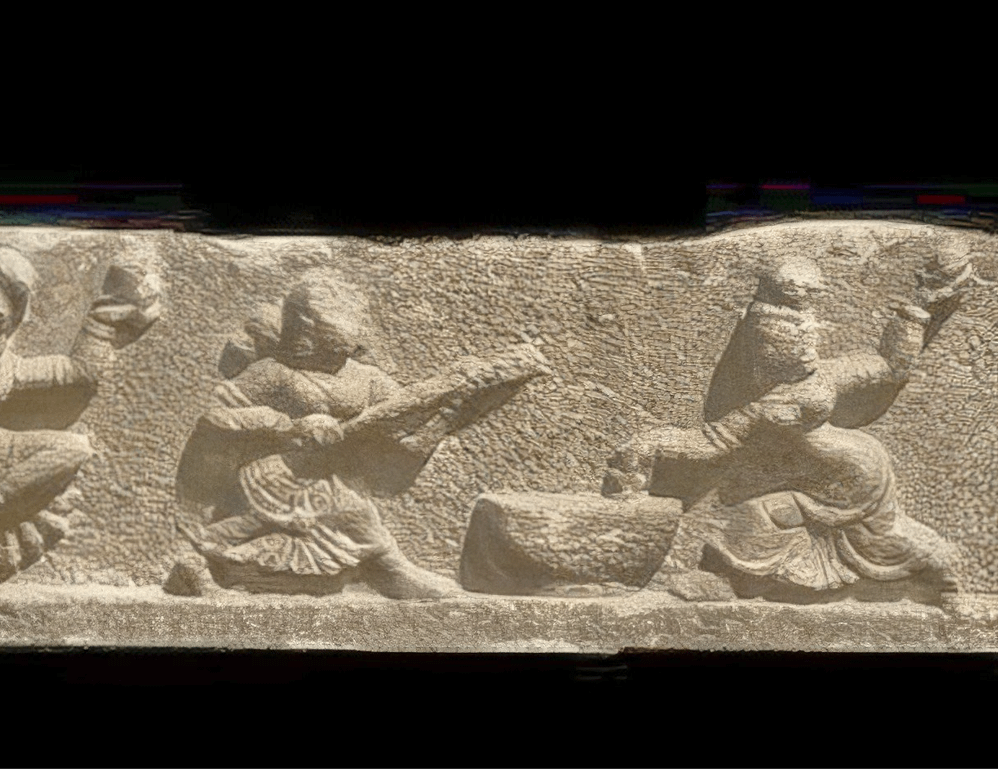
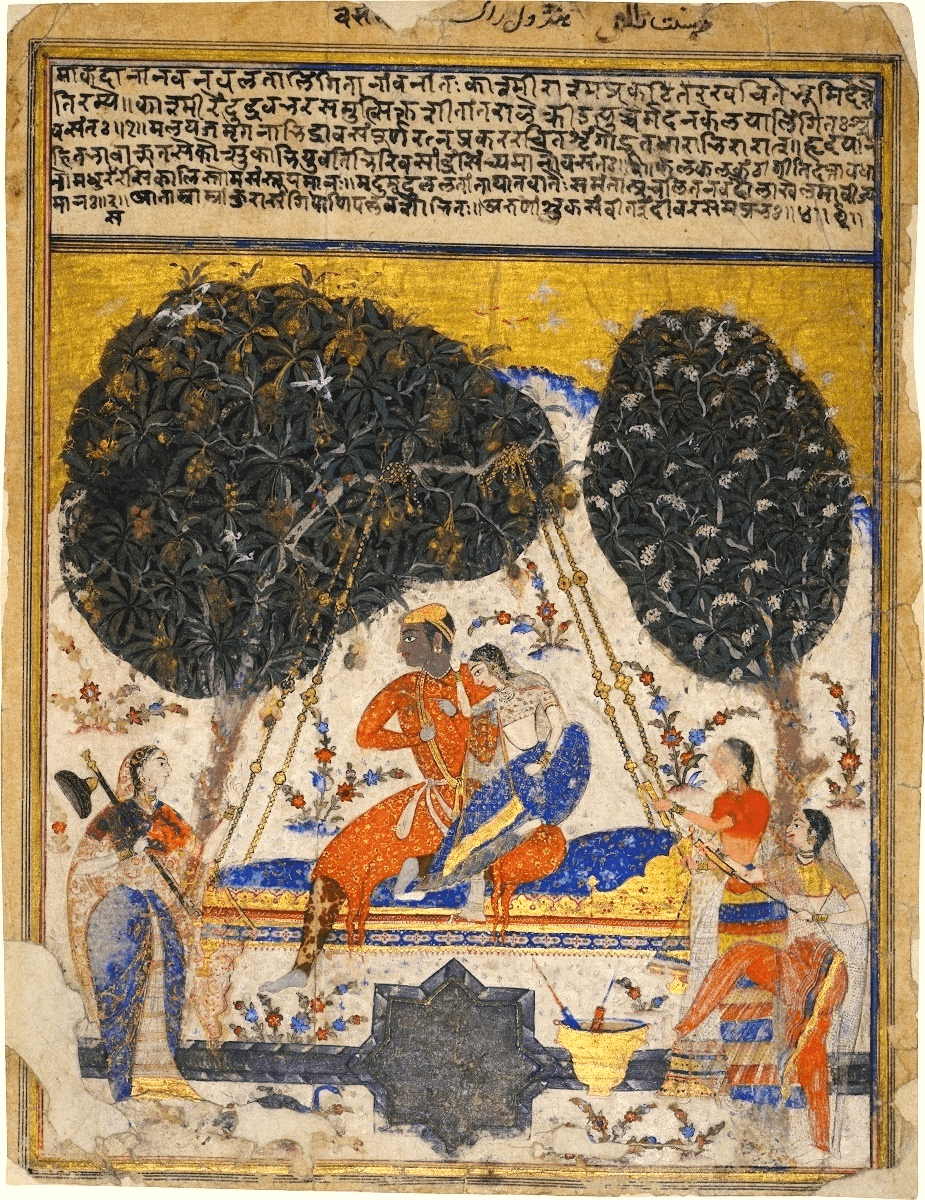
1591 A.D
The two women on the right are spraying the lovers on the swing with coloured water from bamboo syringes (pichkaris)
1635 A.D
Jahangir celebrates the Hindu festival of Holi in the Minto Album, attributed to Govardhan. Image © The Trustees of the Chester Beatty Library, Dublin.
In his memoirs, Jahangir, whose mother was Hindu, vividly describes Holi, the exuberant Hindu festival:
‘Thursday is the Holi, which in their belief is the last day of the year. On the night of this day they light fires at the head of the streets and ways, and when it becomes day they splash ashes on each other’s heads and faces, creating a wonderful noise and disturbance. After this, they wash themselves, put on their apparel, and walk about in the gardens and on the plains.’

Krishna and Radha Celebrating the Holi Festival with Companions
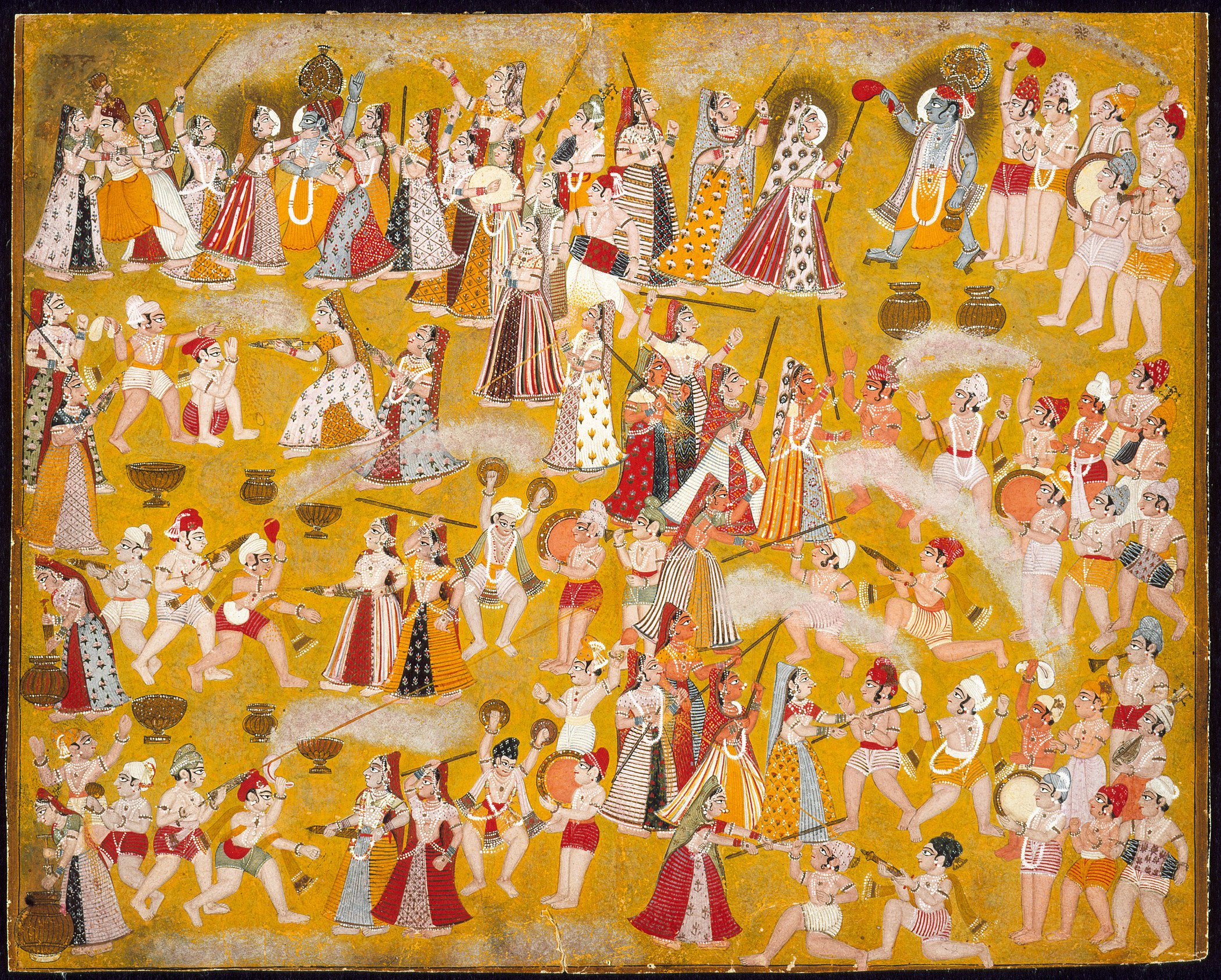
India, Rajasthan, Marwar, circa 1750
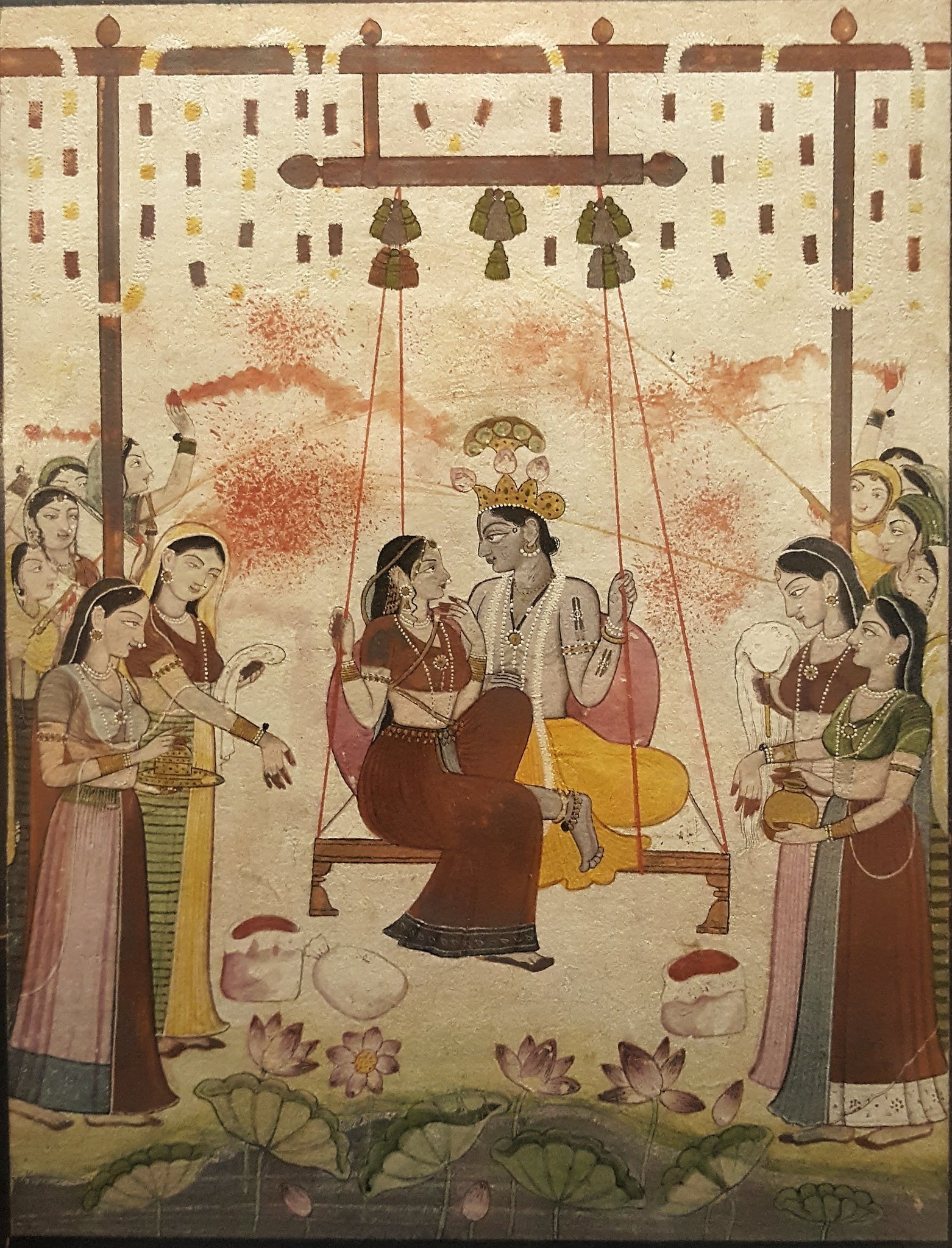

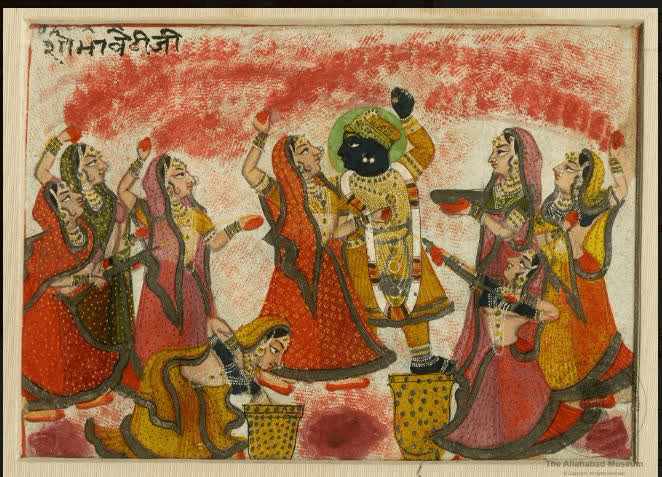
Pahari Hills, Bilaspur School
Nathdwara, C 1800
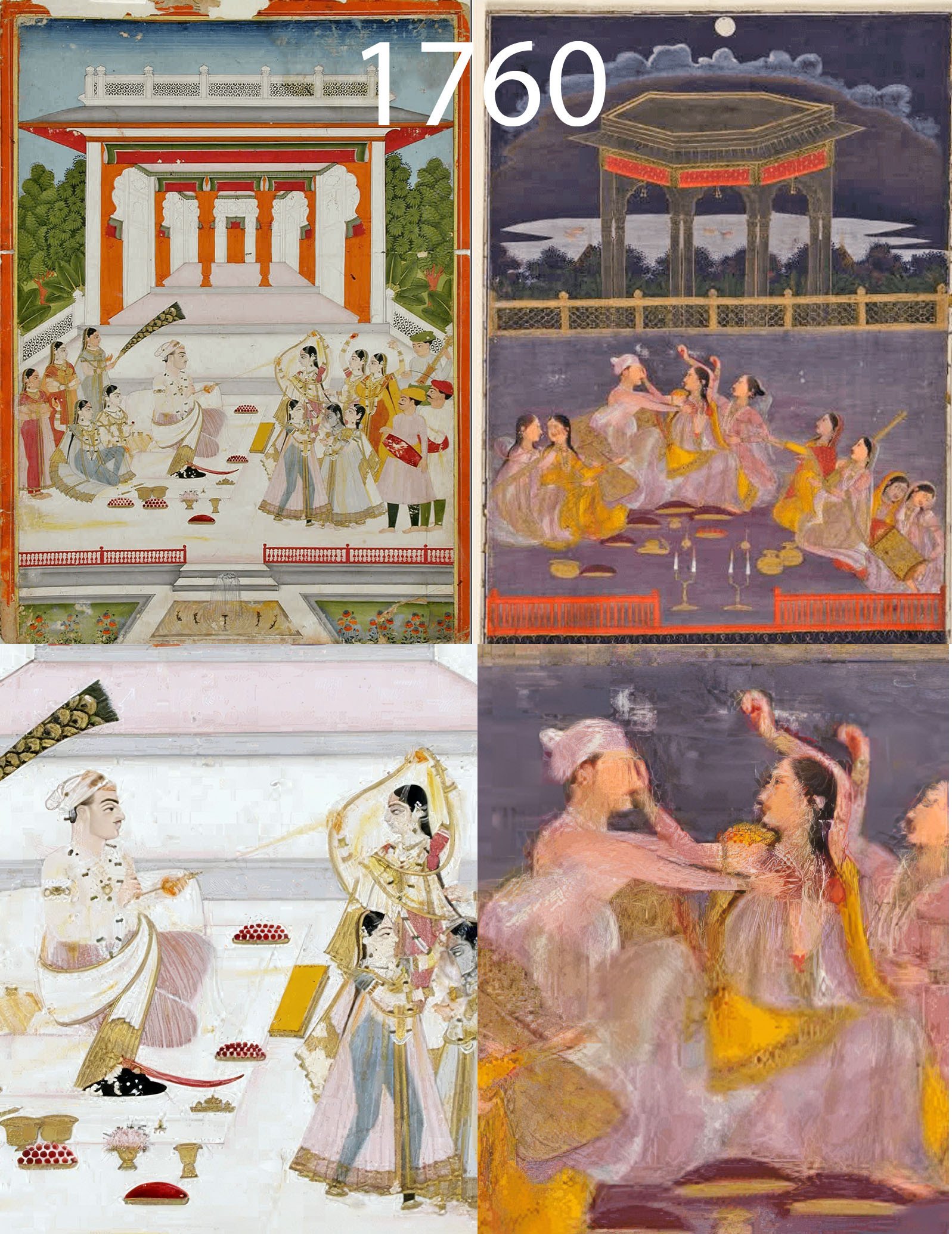
1760 A.D
King and Prince playing Holi with their consorts in Farukkhabad and Deccan region

1795 A.D
A nobleman watching Holi celebrations Patna style Women and men are seeing throwing Cotton, balloons and water using pichkaris.
British Library

19th century
Holi Festival by a Lucknow Painter
Holi in 20th Century

1950s :: PM Jawahar Lal Nehru Playing Holi
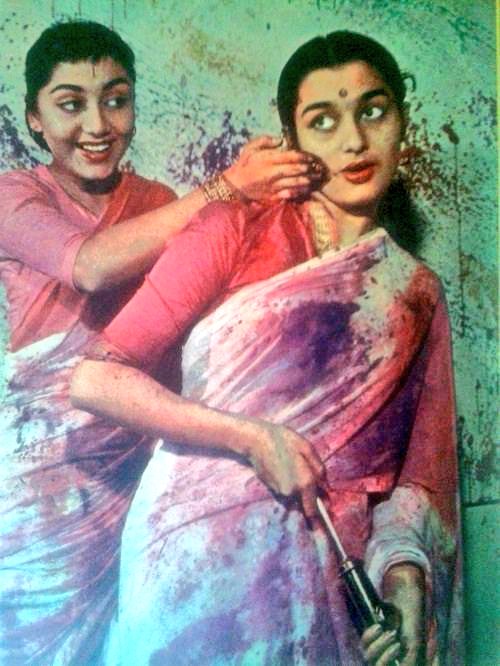
1960s :: Actress Sadhana Playing Holi With Asha Parekh

1968 :: The Beatles Playing Holi In Rishikesh
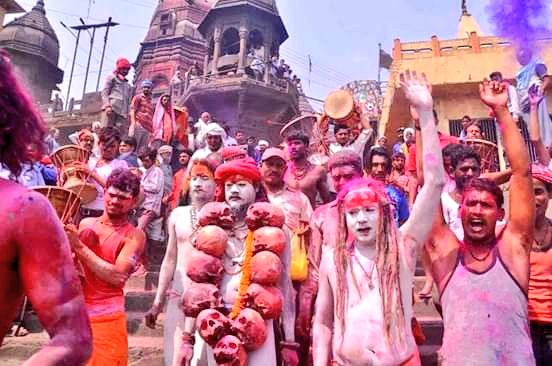
Holi at the sacred Manikarnika Ghat, Varanasi.
Today Holi is misunderstood for intoxicating oneself with Bhang Filthy songs about sacred relationships are played with all vigour.

Many men use this day to malign and grope women, stories of abuses and trauma circulate the internet. Who is responsible for turning a “festival that dignified woman” to a “Festival in-dignifying woman”?
Please share this essay, and your experiences in Comments. But meanwhile, never let darkness in, because that is what the human journey is all about.
It is towards light, towards colour, towards Joy.

Here, in the late 90s, my Little Sister and I.
Happy Holi.
: ँ :
Thank you.
If today is the first time you have arrived on The Road To Nara, you are heartily welcome ~ Namaste
If you like reading from Road To Nara, do subscribe to the email list. This will help us to connect and reach out to you whenever we roll out anything new.
: ँ :
I will take this opportunity to introduce you to About me and importantly,
As a co-traveller, share my Ten Lessons I learnt from several years on the road, before you coarse on your own Road to Nara.
: ँ :
And Importantly, You may like to know and Support My School
If you have anything to share, or feel like saying a hello, please feel free to write to me at lotusofnara@gmail.com
Instagram | X | Facebook
: ँ :

 ROAD TO NARA
Bless you and greetings dear bro! thankyou for sharing this wonderful work. peace and love to you. Di
LikeLiked by 1 person
Thank you dearest Sis. So long. Putting some colour to your forehead. Love.
LikeLiked by 1 person
Simply wonderful!
LikeLiked by 1 person
Thank you Dear Luisa.
LikeLiked by 1 person
You’re more than welcome 🙏💙🙏
LikeLiked by 1 person
All the stories from the Indian mythology that Narayan brings to the attention of his readers are interesting and colorful. This is also the case today as Narayan eloquently describes the ancient history of Holi, the festival celebrating with great joy the arrival of Spring, and the triumph of good over evil.
As Narayan points out, this festival’s vibrant heritage unites all the people of India and around the world wherever Indian people settle. Apart from Diwali, this festival
is the most colorful and most loved. It includes fire and water in the festivities, and one can only imagine the infectious effect of being among the crowd of people dancing, singing, and spraying each other with powders, ash, and scents.
A special sweet food is offered, and the festivities go on for a few days.
All participants are beautifully dressed for this unique event, and the illustrations presented by Narayan are a wonderful addition to his words, Thank you.
Joanna
LikeLike
Thank you dearest, Holi is a special curve in years progression, also as the full moon of Phalgun is when it arrives. So a meditative full moon to you too.
LikeLike
Thank you dearest Narayan for your good wishes; Full Moon is always my object of veneration on the nights when I can see his beauty and golden light!
Joanna
LikeLiked by 1 person
Yes Joanna, full moon- its really hard to not look at it again and again.
LikeLike
Pingback: A Brief Visual History Of the Oldest Festival of Colour and Water Holi | Ned Hamson's Second Line View of the News
🔱
LikeLike
PS. Happy Holi, Narayan to you and your family!
Joanna
LikeLike
A very Happy Holi to you too dearest Joanna, and and each one in your family 🙂
LikeLike
Thank you, dearest Narayan, and likewise to you and your family too!
Joanna
LikeLiked by 1 person
My goodness, Narayan, this time of year is certainly worth celebrating. Today the blackthorn (Prunus spinosa) trees have opened their tiny flowers & with the rain washing over them, they are shining brightly. A joy to see! Happy Holi 🙏
LikeLiked by 3 people
Spring is magic somehow and are all seasons, but spring- the jump is even in the name.
Thank you for the wiahes. Happy Colours and coming Summers to you too.
LikeLiked by 1 person
Happy Holi to you, too, Narayan!
LikeLiked by 2 people
Thank you dear Rosa, Happy colours and upcoming Summers to you too.
LikeLiked by 1 person
Wishing you a very happy Holi. Those paintings are wonderful. It’s nice to see a picture of you with your little sister.
LikeLiked by 1 person
Thank you dear Caro.
And thank, so lovely 🥰 of you to mention me and Lil sis. I love that image too.
LikeLike
Happy Holi to you too!
And thank you for the history of the festival!
LikeLiked by 2 people
Thank you, dear Stella.
Happy colors and upcoming Summer to you too 😊
LikeLiked by 1 person
Great art and sculptures, Nara.. Happy Holi💓
LikeLiked by 1 person
Thank you, dear Cindy. Do you play there with colours in the US?
LikeLike
Great article on Holi with excellent photos as an Indian Ialso didn’t know so much about Holi. Well shared.
LikeLiked by 2 people
Thank you, Priti.
LikeLiked by 1 person
Welcome 🤗
LikeLike
What a lovely treatise on this great festival, Narayan ji! Right from the ancient times to modern times, your pictorial description is superb. It shows how old and rich our history and traditions are.
LikeLike
Thank you, Kaushal Ji. Our history and tradition are indeed something to learn from and we are standing at a cusp of time that we may either lose all or archive some, to conserve a bit of our history.
LikeLiked by 1 person
You’re right, Narayan ji. You’re welcome!
LikeLike
Excellent post!
LikeLike