
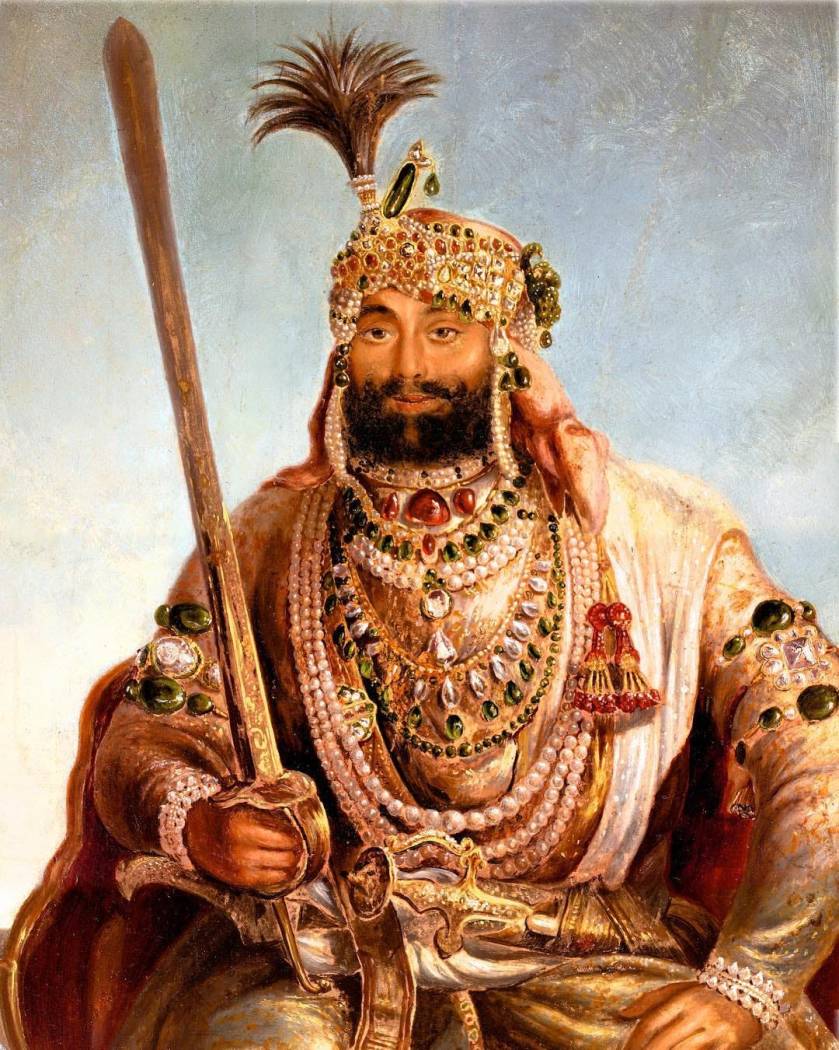
There is a story that is commonly told in Britain that the colonisation of India – as horrible as it may have been – was not of any major economic benefit to Britain itself. If anything, the administration of India was a cost to Britain. So the fact that the empire was sustained for so long – the story goes – was a gesture of Britain’s benevolence.
New research by the renowned economist Utsa Patnaik –just published by Columbia University Press – deals a crushing blow to this narrative. Drawing on nearly two centuries of detailed data on tax and trade, Patnaik calculated that Britain drained a total of nearly $45 trillion from India during the period 1765 to 1938.
It’s a staggering sum. For perspective, $45 trillion is approximately 17 times more than the total annual gross domestic product of the United Kingdom today.
Yet Interestingly, When the Britishers were plundering India, they took away not only the Money, the artefacts, archaeological marvels, and not only the Costliest Diamond of the world “The Koh-i-Noor” but also the Timur Ruby.
A lesser known gem. A stone that weighs 361 carats!!!
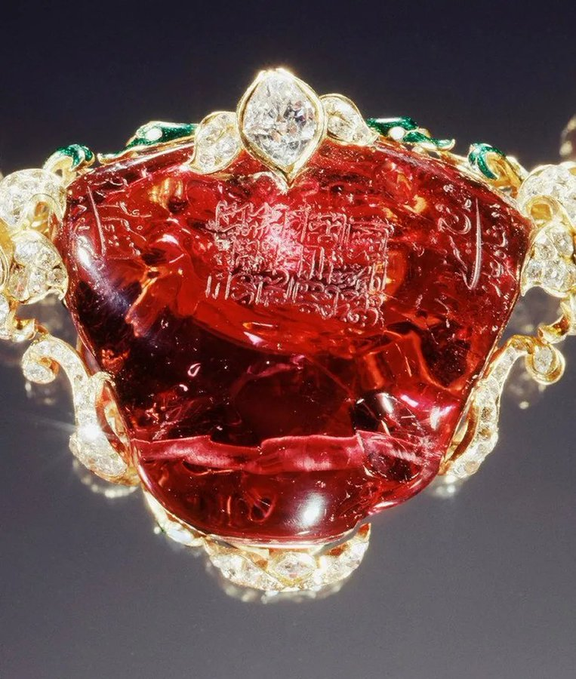
A 361 carat Stone! It is believed that when Timur ransacked Delhi, he found the stone and returned to Samarkand with it. The ruby took his name, though Timur’s ownership of the stone has been contested by many historians.

Sometime in the 17th century, the stone fell into the hands of Shah Abbas I of Persia. Shah Abbas was chuddy-buddies with Jahangir aka Prince Salim. They liked to exchange gifts, so much so that the Paparazzi of the time caught the two in a nice embrace, once.
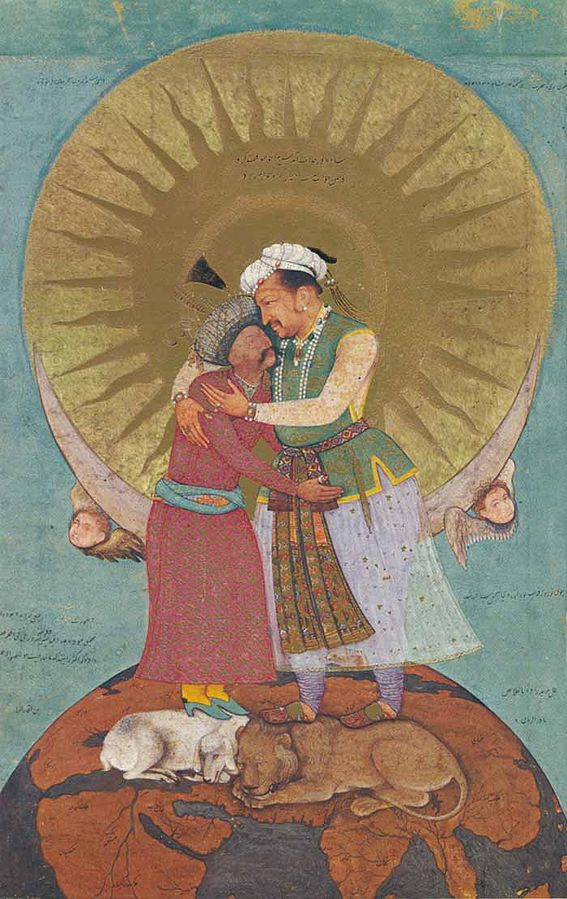
In 1612, Shah Abbas gifted the ruby to Jahangir. And to mark the ownership, Jahangir engraved his name onto the stone along with the name of Akbar. As it passed down generations, other Mughals engraved their names.
Also read: The Story of 75 Independent Years of India

Then in 1739, the Mughal empire reached its Nadir when Nader Shah plundered Delhi. He took with him the Peacock Throne, the Koh-i-noor diamond and also this ruby.
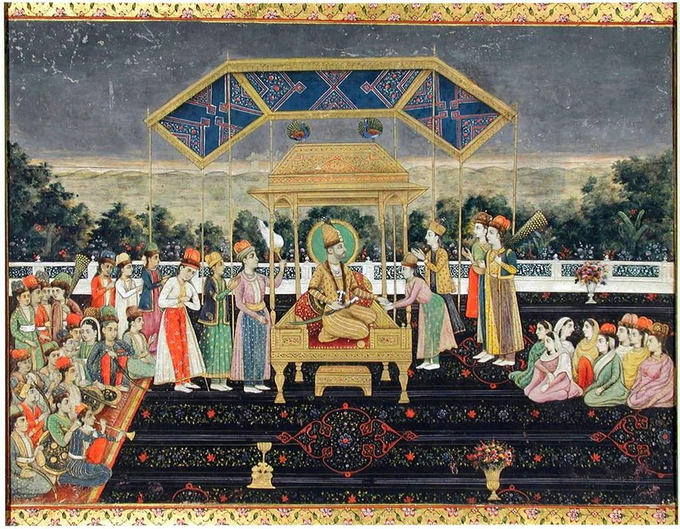
Nader Shah engraved that this ruby belonged to the king of the kings – Sultan Sahib Qiran, which is how the Persians called Timur. It is because of this inscription, we get the name of the gem as Timur Ruby.
The last inscription was made by Ahmad Shah, who was the commander of Nader Shah’s army when Nader Shah was assassinated in 1747. He tried to become a king, but managed to get hold of a lot of the loot and founded the kingdom of Afghanistan.
So, by the time the stone returned back to India, it was etched with the names of five of the men who owned it: Jahangir (1569-1627), the 4th Mughal Emperor; Shah Jahan (1592-1666), the 5th Mughal Emperor; Farrukhsiyar (1685-1719), the 10th Mughal Emperor; Nader Shah (1688-1747), Shah of Iran; and Ahmad Shah Durrani (1722-1772). And even Ahmad Shah’s surname Durrani had a small history that hundreds of years later contributed to the Indian Cricket.

When Ahmad Shah became king of Afghanistan he took the title Shāh Durr-i-Durrān, or the King of Pearls. He changed the name of his tribe to Durrani. Former Indian test cricketer Salim Durrani traces his lineage to Ahmad Shah.
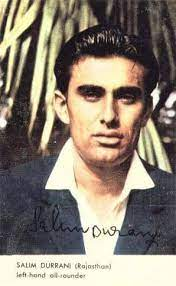
Salim Aziz Durani was an Afghan-born Indian cricketer who played in 29 Test matches from 1960 to 1973. An all-rounder, Durani was a slow left-arm orthodox bowler and a left-handed batsman famous for his six-hitting prowess. He was the only Indian Test cricketer to have been born in Afghanistan.
Ahmad Shah’s grandson Shah Shuja was deposed from the throne and he fled to India. He took refuge with Ranjit Singh, who ruled over the Sikh empire in the northern part of the Indian subcontinent. The gem was inherited by his son, Maharaja Sher Singh, in the 1840s. After Sher Singh was assassinated, his younger brother, Duleep Singh, became the new maharaja (and the new owner of the Timur Ruby). Duleep was then only five years old.
Also read : The Legend of Fredrick Pahari Wilson A British Raja of Garhwal
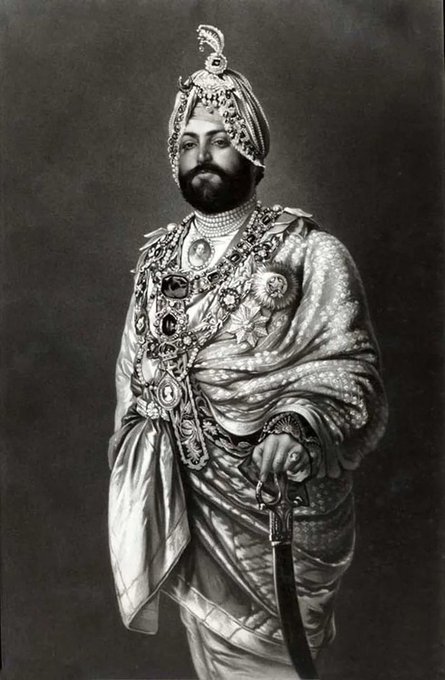
Duleep Singh’s youth made him extremely vulnerable. Indeed, in 1848-49, the British East India Company waged war on the Sikh Empire. Following the conflict, the Company annexed the Punjab region and compelled the ten-year-old maharaja to sign over his kingdom. Duleep Singh was placed in the care of a Scottish guardian and isolated from almost all contact with his fellow countrymen. Two famous gemstones that had been in his possession, the Timur Ruby and the Koh-i-Noor Diamond, were also ceded to the British. This transaction remains incredibly controversial to this day, with some depicting it as a gift exchange, others interpreting it as a part of a military treaty negotiation, and even others arguing that it was outright theft.
The two gemstones were taken to London and presented to Queen Victoria. And since then have remained in London, just like Duleep Singh, who was also brought to England. Though he would make several attempts to relocate permanently to his native land, Singh was compelled by the British government to remain in Europe for the rest of his life, dying in Paris in 1893. He’d only been allowed to make two brief visits to India in the 1860s.
Also read : The Life of Verrier Elwin A Britisher who lived with the Jungle Tribes of India

The diamond on display at the 1851 Great Exhibition (Photo: Wikimedia Commons)
It is said that Queen Victoria was more impressed with the ruby than the Koh-i-Noor diamond. However In 1851, closer examination of the gemstone revealed that it was not a ruby but a spinel. (The technology to differentiate the two types of gems had only been around since the 1780s.) A new gold and diamond necklace setting for the spinel was made for Queen Victoria in 1853 by the crown jeweller, Garrard. It was designed so that the Timur Ruby could be removed from the necklace and replaced by the Koh-i-Noor Diamond, further reinforcing the idea of the two stones as sister gems.

Though several queens wore the Koh-i-Noor Diamond often in the second half of the nineteenth century and the first half of the twentieth, the Timur Ruby Necklace was worn much more rarely. In the BBC’s 1969 documentary, Royal Family, the Queen was filmed handling the necklace and discussing it with her dresser. She calls the piece a “fascinating necklace,” and she suggests that they should have a dress made so that she could wear the jewel. She then notes that she has actually worn the necklace before, something confirmed by her dresser. It’s an interesting moment, as no photos appear to exist showing the Queen wearing the necklace. And certainly now both the Koh-i-Noor Diamond and Timur Ruby are considered too politically controversial to wear, so it seems unlikely that we’ll see any member of the royal family wearing the spinel again.

: ँ :
Thank you.
If today is the first time you have arrived on The Road to Nara, you are heartily welcome ~ Namaste
If you like reading the posts from Road to Nara, do subscribe to the email list for the best writings on Interesting History bits, Ancient Yogic Practices, On Indic Rivers, Cultures and Borders at the Heart of Travel.
: ँ :
I will take this opportunity to introduce you to About me and importantly,
As a co-traveller, share my Ten Lessons I learnt from several years on the road, before you coarse on your own Road to Nara.
: ँ :
You might also like to know about My Little School Project.
If you wish to come over for a visit someday, that you must, you will be heartily welcome here
If you have anything to share, or feel like saying a hello, please feel free to write to me at lotusofnara@gmail.com
Instagram | X | Facebook
: ँ :

 ROAD TO NARA
These jewels should have been returned long ago, just like the Elgin Marbles should have been returned to Greece long ago.
LikeLiked by 3 people
Thats how things are, dear Jane. Thank you.
LikeLiked by 1 person
Great post! I didn’t know about that gem!
LikeLiked by 1 person
Not many know about it in the west, dear Luisa.
LikeLiked by 1 person
Thanks a lot for your nice reply. Much appreciated
LikeLike
As befitting the master of history, Narayan’s knowledge is omniscient on the subject, and his narrative is as fascinating, as the pictures of his presentation.
Narayan’s research is above excellent, and his attention to detail legendary.
That is why this post is a page turner, and brings all the time something new and interesting. The complex tale of how priceless gems of India ended up in the hands of queen Victoria is astonishing in its unfairness, as indeed is the fact that the huge sum of money was plundered from India by the British.
We are now many years away from those historical times, but the lesson of the injustice of invading another country for gain was not learned.
It is therefore important to mention, and even highlights that India now free from the oppression is fast becoming one of the greatest economies in the world, leading in the industry, space exploration, education for the masses, and many other directions in successful development.
As for the jewels, they should be returned to India, its rightful owner.
Thank you, Narayan, for another memorable masterpiece of professional writing.
Thank you.
Joanna
LikeLiked by 3 people
Thank you, dearest Joanna.
LikeLike
You are welcome.
Joanna
LikeLike
The vast amounts of plunder taken by colonists around the globe should be returned to their origins. Museums make the excuse that they are being “safeguarded”. I don’t agree and the two gem stones you mention here should most certainly not be in the possession of the Royal Family! I love the paintings. I have two which are similar that I had properly framed and they are one of my few treasured possessions, brought back from a long-ago trip to India.
LikeLiked by 2 people
haha.. 🙂 time only knows if anything comes back but certainly researching on this story took me around the lives of these men. How fast years turn into lives and one thing that remained constant was a stone. Thank you, dear Caro.
LikeLike
And yes, they must be highly treasured possessions that you have from India. Are they portraits ?
LikeLike
I have sent you photos of them on Facebook.
LikeLiked by 1 person
I got them Caro. I have seen them and they sit just prettily.
LikeLike
I had no idea of the existence of this ruby nor about a stone called spinel. Thanks for sharing it’s fascinating history, made for very interesting reading. These stones are such politically charged subjects that their intrinsic and rare beauty, often gets lost in the deliberations.
LikeLiked by 2 people
Thank you, dear Diti. You are right. Right from these stones birth they seem auto-mated to be politically charged 🙂
LikeLike
Well researched and informative post about our beautiful Bharat 🙏👌
LikeLiked by 2 people
Thank you, dear Soul.
LikeLiked by 1 person
Also loved going through your Travelogues 🙂 and other important essays on Yoga.
LikeLiked by 1 person
I’ve never heard of this gem before nor its complicated travels. Unfortunately it’s unlikely it will ever be returned. Maggie
LikeLike
haha. Yes many things are not known in the west. And seeing how Indians are reaching up the ladder in important positions, who knows we might get it back one day 🙂
LikeLiked by 1 person
😊
LikeLike
Fascinating! Thank you, Narayan, for highlighting these injustices in history. 👂🙏
LikeLike
Thank you, dear Ashley. Actually I wrote snd shared this with a lighter, more on the info note. But i imagine after reading many comments it is serious political history.
LikeLike
Serious, indeed, dear Narayan! 🙏
LikeLiked by 1 person
Very interesting.
LikeLike
Thank you, dear Gita
LikeLiked by 1 person
Fascinating history, Narayan, that dispels the narratives of colonialists. So much wealth was transferred from India and all colonies worldwide to Europe.
LikeLike
Yes Rosa, from wherever they could get, they did. May be that is why the region has seen Civil wars and economic uncertainties even after all the development there.
LikeLiked by 1 person
Very nice.
LikeLike
Thank you, Verma Ji.
LikeLike
So much of information… thanks
LikeLiked by 1 person
Thank you, dear Indra.
LikeLiked by 1 person
Very nice post.
LikeLike
Thank you, dear T.
LikeLiked by 1 person
My pleasure. 😊
LikeLike
This is fascinating! I don’t get to read stories like these often. Thanks for the share.
LikeLiked by 1 person
Thank you, dear Vanya.
LikeLiked by 1 person
Humans and magpies are fascinated by shiny things! I think we should let bygones be bygones and be nice to each other now.
LikeLike
Humans and Magpies likewise are fascinated by many other things Harini. And if storytellers start thinking like let bygones be bygones, then evolution shall cease to exist.
I actually wrote this article in a lighter vein, also because I reached the source of this story reading about Cricket 🙂
LikeLiked by 1 person
It was an interesting story, Narayan, no disputing that! But don’t you think stories of a happy future are more conducive to evolution than stories of a gory past?
LikeLiked by 1 person
It’s more Greedy than Gory past as far as this story goes Harini. But I to me personally it simply astonished me as to how life was playing out around something for this long.
And hope has me, dear Harini. my writings have majorly roam around it. 🙂 And thank you for mentioning it.
LikeLiked by 1 person
Wow, what a story! But is is not a new one where colonizers are concerned. It’s what they do – loot and plunder. The British should give both the diamond and the spinel back to India, the same as they’ve started to give the objects from Tutankhamun’s tomb back to Egypt.
Alison
LikeLiked by 1 person
Thank you Ali, but seriously no ones asking as of now. Yet they might as their PM is of Indian Descent 😉
LikeLiked by 1 person
I would like to think that most of the western countries are gradually moving towards returning these looted treasures, but progress seems incredibly slow.
LikeLiked by 1 person
haha.. yes Mick. And its alright I think, nobody’s forcing them to return as of now.
LikeLiked by 1 person
Perhaps we need more pressure.
LikeLike
This was fascinating. I always enjoy your writing and this post did not disappoint.
Narayan, Please continue to share the historical facts, gory or not. History is important and so many of our youth have no sense of what happened past the date of their birth. Some may feel it assaults their sensibilities, but as this famous quote warns:
‘Those who do not learn history are doomed to repeat it.’ George Santayana and similarly, Winston Churchill expressed the same sentiment.
And not so famously known, I give this one:
‘History deserves to be remembered.’ Lance Geiger – The History Guy
Keep working to enrich the world. You’re good at it!
Lynda
LikeLiked by 1 person
You wrote about Britain’s benevolence. Bharat has been of great benevolence to the British as well as the Mughals and not only have they robbed the country of the riches, they robbed away our traditions and culture from us to some extent by introducing their cultures which we picked up foolishly and adopted in our lives.
LikeLiked by 2 people
True, but its good to see that we didn’t lose it all at least. Slowly getting our way back to olden traditions again.
LikeLiked by 1 person
Namaste, Narayan. Your posts are fascinating, and I appreciate you setting the story straight, telling the truth in historic events.
LikeLike
Lovely to have your words here, dear Mary, Namaste. And its how it is Mary, about some events that may no longer look intense but have had a long tale that survived centuries. Thank you and Welcoming you warmly here 🙂
LikeLike
Hello friend, I enjoyed reading your post. I subscribed. See you often. Have a happy and bright day.^^*
LikeLiked by 1 person
Thank you dear AA for your kind words, Apologies for writing late.
LikeLiked by 1 person
I have never understood the deplorable human tendency to conquer and plunder, no matter what empire is responsible, and I wish all of us could live in peace with one another.
LikeLike
Hi Tanja, lovely to have your introspective Comment here. Conquerors and Plundeters, well it’s the history of all major empires at one point in time, it’s rather continues to happen even now. And seemingly is going to become worse in some years to come before peace arrives for sometime again 🙂
LikeLiked by 1 person
Our inability to keep the peace makes a very sad and sobering statement about humankind. 😢
LikeLiked by 1 person
Nature is not all about peace. We all creatures come out of desire. Not just humankind. Each one of us.
LikeLiked by 1 person
True.
LikeLike
An interesting history lesson, Naryayn. Looks like we are not the only ones who want to rewrite history to suit our narrative! British imperialism spread its effects all over the world! Amazing to me what people fight over and try to gain!
LikeLiked by 1 person
I missed this comment dear Dwight. Yes, it’s interesting to revisit history after all what and how events took place. Reminds me of comedian Trevor Noah act on Britishers coming to India 😬. Have a good day my friend
LikeLiked by 1 person
Oh I just found your comment here in spam. Apologize for not seeing and responding it in time. I will see you soon friend. Thanks for coming over.
LikeLike