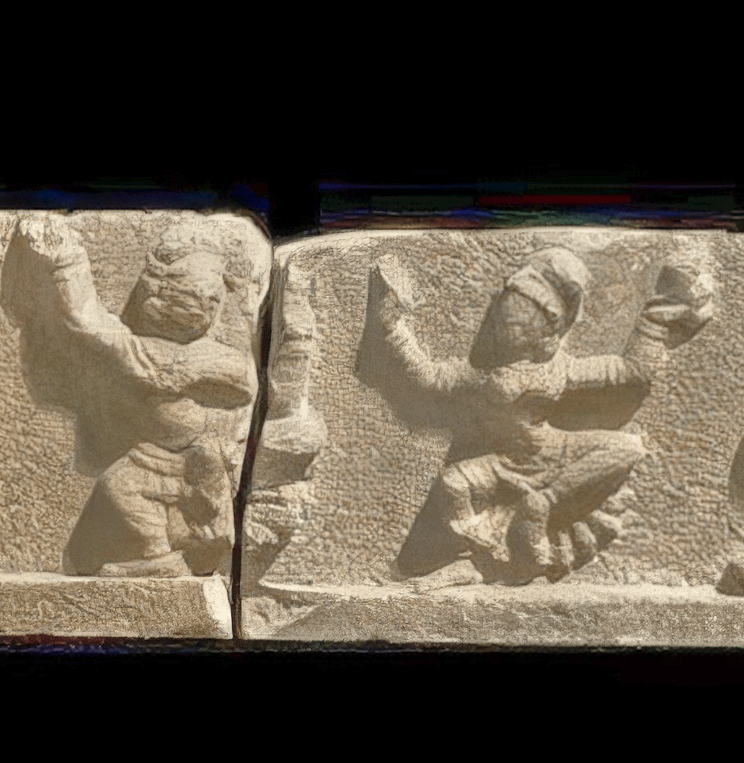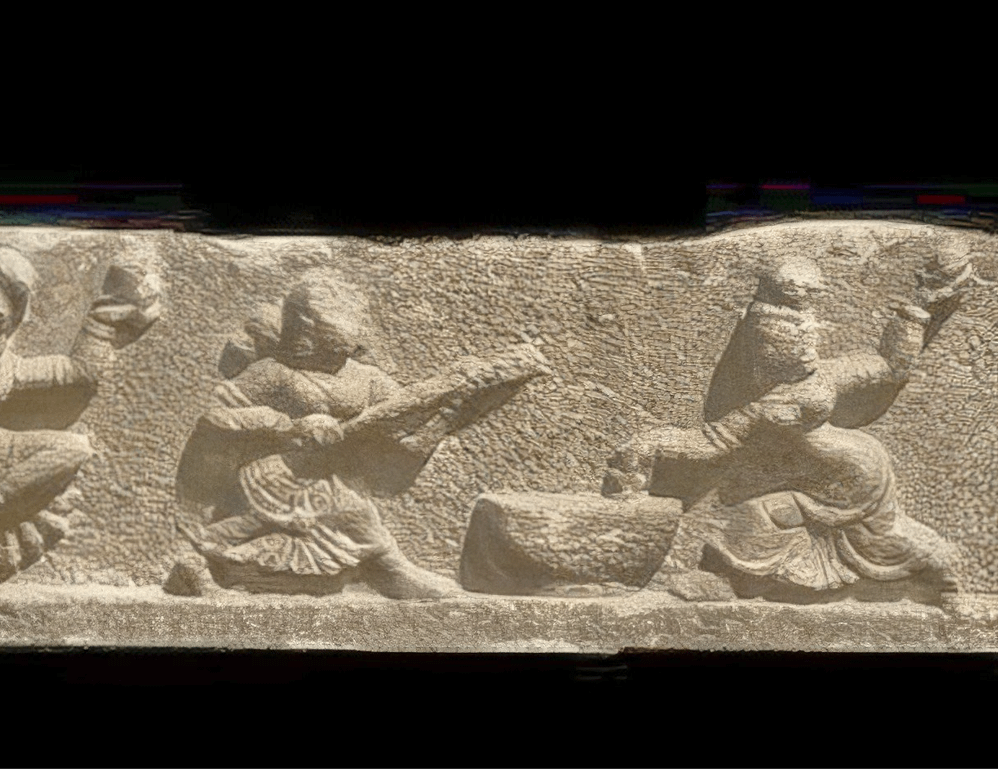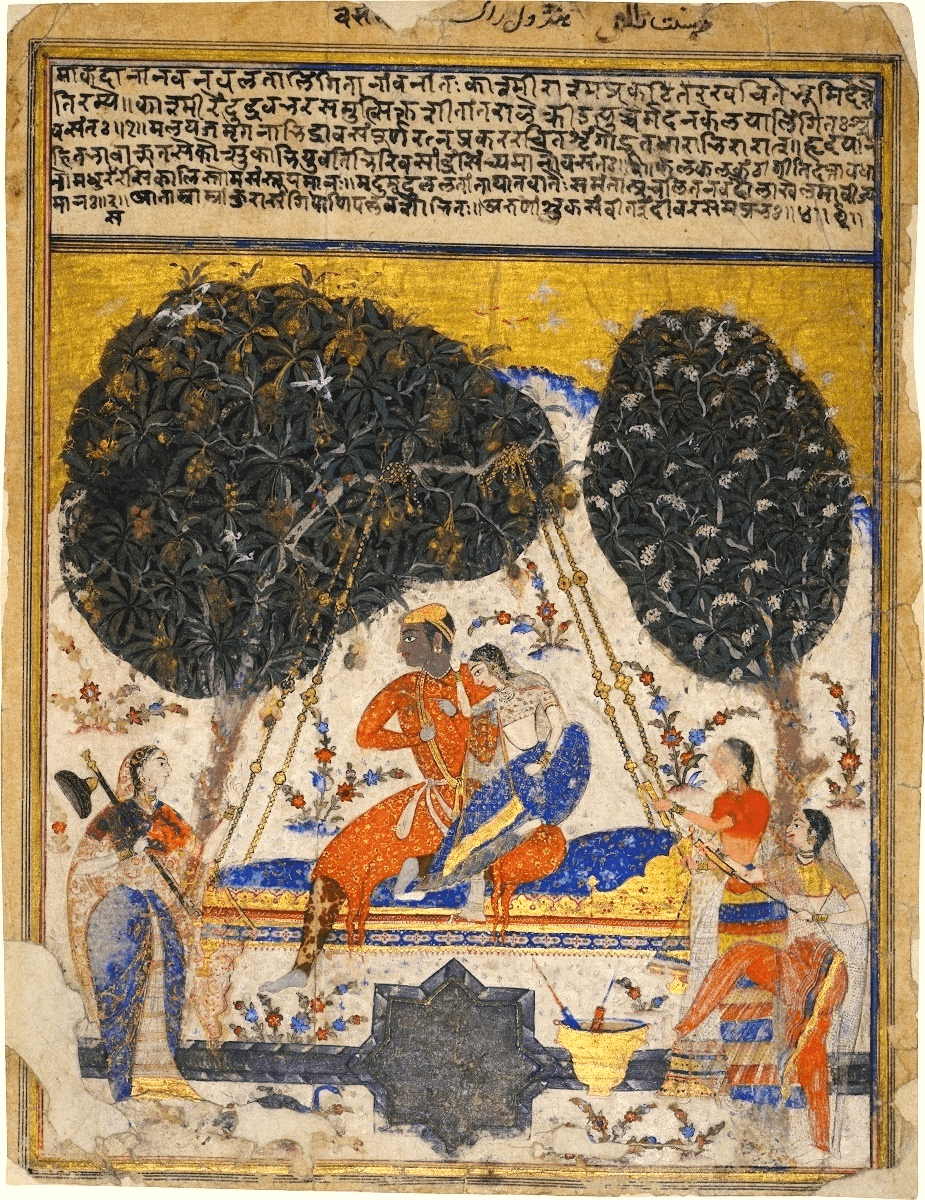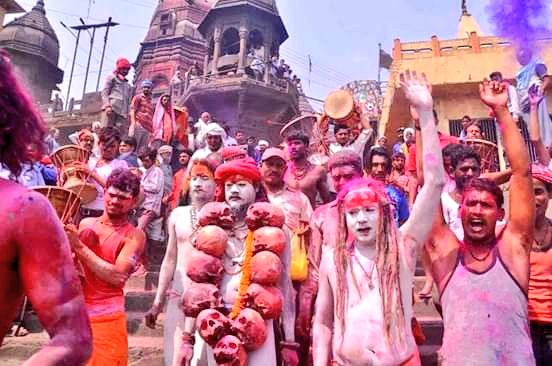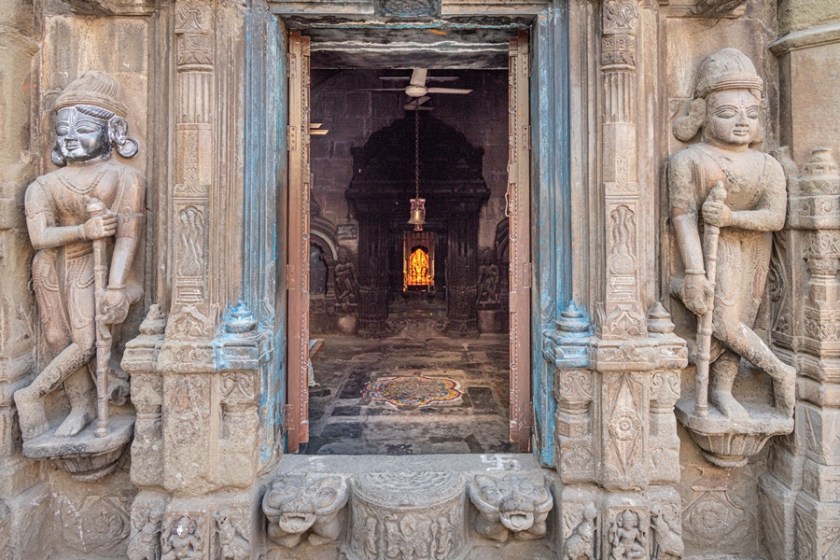
In India, the term Trimurti is used in reference to the three faces of god. They are Brahma, Vishnu and Shiva. They are collectively known as the Trinity. Together they represent the oneness of the universe while retaining their distinctive nature and are known for their ability to grant boons. Hymns are chanted every day all over India, in temples and homes, and countless stories abound in their praise.
Here is the tale of the Origin of the Bilva Leaf
Mandara the mountain was a great devotee Mother Parvati because of her kindness and the fact that she was the daughter of the king of mountains. Parvati lived with her husband, Shiva, on Mount Kailash but Mandara longed for mother’s presence on his mountain.
One day, Shiva and Parvati danced for many hours on end. Finally tired, Parvati stopped to rest, wiping the sweat off her forehead with her hand. The droplets fell on Mandara and a sapling sprang up there, growing taller and stronger until it became a beautiful tree within a few months. Nobody had ever seen this tree before. Each of its twigs sprouted three leaves and it also bore fruit.
Mandara took some twigs to Parvati. When he met her, he asked, ‘This tree was born out of your sweat. What must I do with it?’
Parvati looked at the twigs and the leaves, thoughtfully. ‘What a wonderful tree! She exclaimed. ‘The three leaves indicate the three eyes of Lord Shiva and the three stages of all existence- birth, the journey of life and death. They also represent the three realms- heaven, earth and the world below. So three is an auspicious number.’
She beamed at Mandara and continued, ‘Your faith and devotion pleases me. This tree will be called the Bilva tree and the leaves, Bilva patra. Anyone who takes Bilva leaf to Shiva, will also have my blessings. Since we are inseparable, worshipping Shiva in this manner also means worshipping me. You will always have the Bilva tree on your mountain, Mandara,’
Mandara couldn’t contain his happiness and prostrated himself before the beautiful goddess. His prayers had been answered.
And this is why Bilva leaves are used as an offering to Shiva even today.
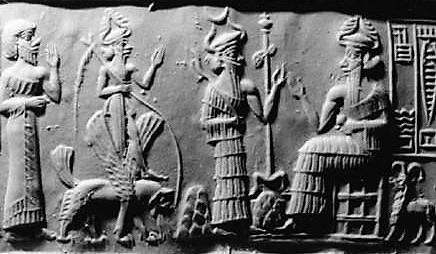
There is a popular story that is recited here in Northern India on Mahashivaratri is of a hunter who when chased by a tiger climbs up a Bilva tree and stays awake on the night of by dropping tree leaves while inadvertently fasting and worshipping Shiva, depicted here on this Harappan seal from ~2500 BCE.
: ँ :
Thank you.
Do write what you thought of the story?
If today is the first time you have arrived on The Road To Nara, you are heartily welcome ~ Namaste
: ँ :
ROAD TO NARA is an Ethnographic Blog of History, Stories of Culture, Passion, Art, People, Rivers, Folk, Mysticism, Meditation, Mountains, Trees and Tantra Yoga Science of Ancient India and the Indigenous World to your mailbox.
Do subscribe to Nature: ROAD TO NARA
Subscribe to Nature
Type your email…
SUBSCRIBE
: ँ :
I will take this opportunity to introduce you to About me and importantly,
In India, the term Trimurti is used in reference to the three faces of god. They are Brahma, Vishnu and Shiva. They are collectively known as the Trinity. Together they represent the oneness of the universe while retaining their distinctive nature and are known for their ability to grant boons. Hymns are chanted every day all over India, in temples and homes, and countless stories abound in their praise.
Here is the tale of the Origin of The Crescent Moon
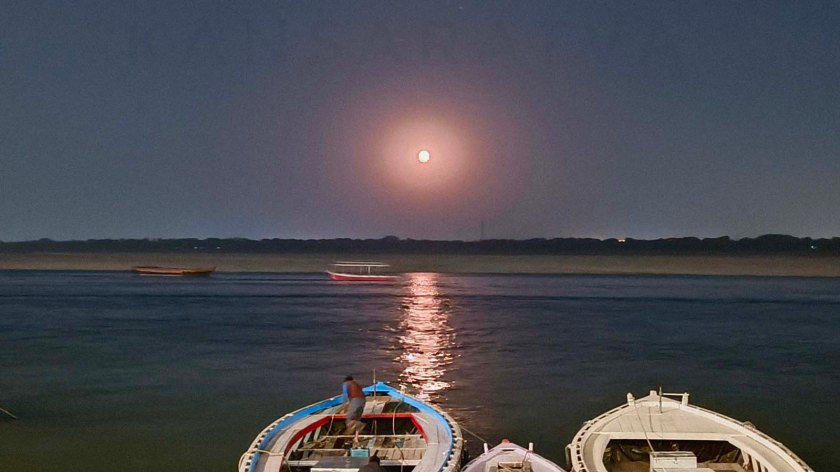
According to legend, the moon god, Chandra, was born three times, which is why he also came to be known as Trijanmi. The first time, he was created by Brahma, and the second time, he emerged from the eyes of Sage Atri. Chandra’s radiance became so powerful and intolerable that he was immersed in an ocean of milk to ensure the world’s survival. Durning another event, which involved the churning of the ocean by the Asuras and the Devas, chandra was reborn and released, along with Goddess Lakshmi. Thus, Chandra came to be known as Lakshmi’s brother.
Among his twenty-seven wives, Daksha’s daughters, Chandra was especially fond of his fourth wife, Rohini, and spent most of his time with her. The other wives resented his indifference to them and complained about it to their father. Daksha immediately cursed Chandra. ‘May your powers decline with the passing of each day,’ he said, losing his temper as usual.
Now the daughters regretted telling Daksha what they had. Their intention was not to punish Chandra- all they wanted was his attention. What if their husband simply disappeared one day along with his powers?
Chandra begged Daksha to take curse back. But once a curse is uttered, no one can revoke it. ‘I am sorry, son, ‘Daksha said. There is nothing that I can do now. Perhaps if you pray to Shiva, he may help you.’
Holding on to this slim ray of hope, Chandra went to the famed holy ground Prabhas Patan, established a linga and prayed earnestly to Shiva. Pleased with Chandra’s devotion, Shiva appeared and said, ‘Chandra, I empathise with your plight and, though I cannot reverse Daksha’s curse, I can soften it to some extent. From this day onward, you will increase in brightness for fifteen days in Shukla Paksha’ and then wane for fifteen days in Krishna Paksha.’ You will fill the world with your radiance on full moon days and disappear on new moon days.’
Chandra was disappointed at the thought of waxing and waning, His crescent shape would just be constant reminder of the curse and his reduced strength! Shiva consoled him by saying, ‘my child, the crescent indicates that you will still retain some of your powers. I will wear your crescent indicates my hair to show my devotees that they are dear to me even in their lowest moments. That way you will be my constant companion.’
Thus from that day Shiva came to be known as Chandrashekhar, or the one with Chandra mounted on his head’.
The moon came to be known as Soma and one day of the week- Somavar or Monday- which is also the day when Shiva is worshipped was dedicated to him. The Linga that Chandra worshipped became famous as the pilgrimage site of Somnath in Gujarat. Generous donations were made to this site, which was later plundered seventeen times. This linga is considered to be the first jyotirlinga in our Country. Even though i am still to visit Somnath but my parents visited this place before I was even born.
There is also one fascinating mystery called “Baan Stambh” in the ancient Somnath Temple of Gujarat. On the south side of the temple, overlooking the sea, is a pillar called “Baan sthamb”. An arrow is built on the top of the pillar which points towards the sea. The existence of this
Jyotirlinga is an iconic representation of Lord Shiva. It is said to have emitted light. And the twenty-seven wives of Chandra are the constellations surrounding the moon’s orbit, and are frequently referred to as nakshatra or stars. The names of these nakshatra- for example, Kritika, Rohini and Ashwini- are still an important part of the Hindu calender.
Mine Nakshatra is Pushya.
: ँ :
Thank you.
Do write what you thought of the story?
If today is the first time you have arrived on The Road To Nara, you are heartily welcome ~ Namaste
: ँ :
ROAD TO NARA is an Ethnographic Blog of History, Stories of Culture, Passion, Art, People, Rivers, Folk, Mysticism, Meditation, Mountains, Trees and Tantra Yoga Science of Ancient India and the Indigenous World to your mailbox.
Do subscribe to Nature: ROAD TO NARA
Subscribe to Nature
Type your email…
SUBSCRIBE
: ँ :
I will take this opportunity to introduce you to About me and importantly,
A determined Parvati began her penance, abstaining from food and only focusing on her chanting, which earned her the name Aparna, or ‘the girl who refuses to eat even a leaf’. With each passing day, her tapasya became more and more severe, until the entire world was aware of her meditation. Years passed, and Parvati grew powerful with the strength she obtained from her intense penance.
In the meantime, Shiva came to learn about everything that had transpired- her devotion to him and his failure to notice her. He realised that she wasn’t a mere mortal, and decided to test her faith.
Shiva approached Parvati disguised as a Sanyasi begging for food. Though she was deep in meditation, she sensed the sanyasi’s presence and opened her eyes. A wave of peace and calm swept over Shiva.
Parvati stared at him without realising who he was, and then offered him all she had. While receiving the alms, the ascetic asked, ‘why are you performing this penance?’
‘It is for Shiva. I wish to marry him, ‘she said simply.
‘But he is not worthy of you, said the ascetic. ‘Shiva’s dwelling is atop the cold and bleak mount Kailash, and sometimes he is even found in cremation grounds. You are exquisite and refined while his appearance is ghoulish. He smears ash on his body and uses skulls for garlands. You are delicate while he is slovenly. You are sweet-tempered while Shiva is known for his wrath. He is no match for you. You should marry someone kind, handsome and gentle, who can treat you the way deserve to be treated. Take my sincere advice and end your penance. Go back to the life that you were meant to live.’
Shiva without Parvati would be chaos, and Parvati without Shiva would be silence. Together, they’re the dance of creation and destruction. That’s the power of true union: Marriage of Lord Shiva and Goddess Parvati/ Ellora Caves
Parvati was furious at the sanyasi’s words. ‘You came to me for food and I have given you all that I can. It is time for you to be on your way. I know Shiva’s soul. He does not care for fine clothes and ornaments. Why, he doesn’t even care for grand rituals performed in his name! A devotee can offer him a leaf from a Bel tree and some water, and he would be satisfied. He is the kindest of all the gods, and he always stands by the promises he makes to his followers, regardless of who they are. I am sorry, but I do not need your guidance in this matter.’
The ascetic, however, paid no heed to her words. He continued, ‘but Lady, what about the way he reduced poor Kamadeva to a heap of ashes…. Surely you can’t approve of that-‘
‘I cannot listen to you anymore! And if you won’t leave, I will, ‘Parvati retorted,
Just as she turned to go, there was a flash of white light and Shiva appeared in his true form.
‘My dear Parvati, ‘he said. ‘Please forgive me for my harsh words. It is my loss that I was unaware of your presence earlier. But I can see you clearly now. You are Dakshayani, my beloved consort, and we belong together. We always have. Will you marry me and agree to be my companion for eternity?’
Parvati smiled and nodded in assent.
The whole world rejoiced when they heard the news, and the wedding, which was known as Girija Kalyana, was celebrated with much pomp and show.
In time, a child was born to the couple, whom they named Karthikeyan. He was also called Shanmukha because he had six faces, which meant that he could see problems approaching from anywhere.
Karthikeyan knew the purpose of his birth, While he was still a child, he fought the mighty Taraka with the support of the gods and eventually slew him using his most deadly weapon- Shakti. He also killed Taraka’s two brothers: Simhamukhan, who later became Parvati’s mount, and Suradpadmun, who was reborn as the peacock that became Karthikeya’s vehicle.
News of his valour spread far and wide, and the gods eventually appointed him as commander of the heavenly army.
Thus, Karthikeya’s birth ended Taraka’s cruel reign and saved the world.
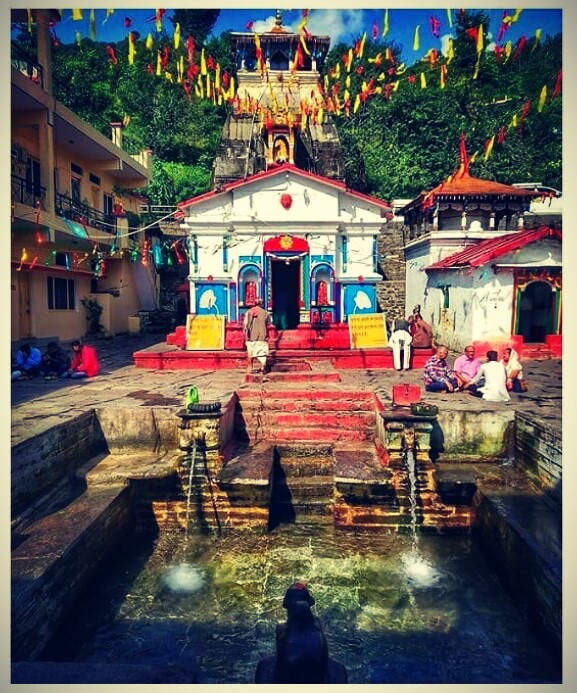
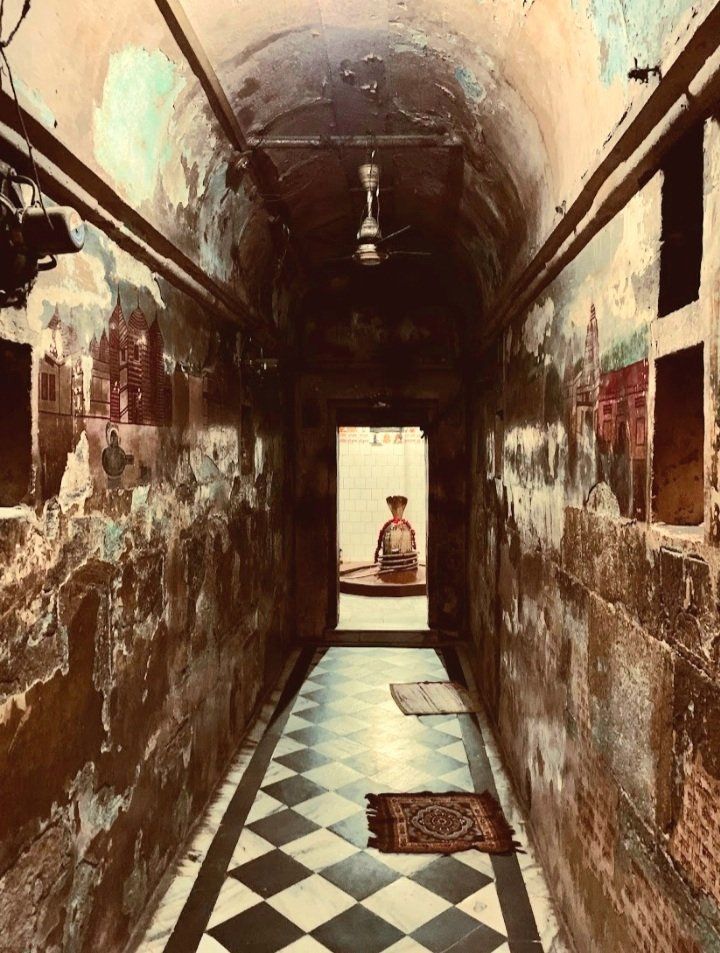
I also remember this beautiful story because of a sacred Shiva temple that i have been fortunate to visit a few times in the Himalayas. It is the most beautiful Vishwanath temple in Guptakashi, Uttarakhand. According to the locals, priests and the legends tell that Shiva proposed Parvati here at Guptakashi, before they got married.
On the wedding day, Bhagwan Narayan performed all the rituals as Mata Parwati’s brother and Lord Brahma became the Purohit for the wedding.
There is also Ardhnarishwar temple just left to this temple. So do plan a visit whenever visiting the Himalayas
: ँ :
Thank you.
Do Share what you thought of the story?
If today is the first time you have arrived on The Road To Nara, you are heartily welcome ~ Namaste
: ँ :
ROAD TO NARA is an Ethnographic Blog of History, Stories of Culture, Passion, Art, People, Rivers, Folk, Mysticism, Meditation, Mountains, Trees and Tantra Yoga Science of Ancient India and the Indigenous World to your mailbox.
Do subscribe to Nature: ROAD TO NARA
Subscribe to Nature
Type your email…
SUBSCRIBE
: ँ :
I will take this opportunity to introduce you to About me and importantly,
In India, the term Trimurti is used in reference to the three faces of god. They are Brahma, Vishnu and Shiva. They are collectively known as the Trinity. Together they represent the oneness of the universe while retaining their distinctive nature and are known for their ability to grant boons. Hymns are chanted every day all over India, in temples and homes, and countless stories abound in their praise.
Here is the most Intense tale of Kamadeva trying to break Lord Shiva’s Penance and Why?
The god and goddess of eternal love, Kamadeva and Rati, were a lovely couple. Their affection for each other blossomed visibly during the spring season, and their companions included flowers, buds, cuckoos, parrots, honeybees and lush green trees.
One day, Kamadeva’s father, Vishnu, summoned him to his abode and said, ‘I have a difficult task for you. You are the only one with the ability to wake Shiva from his stupor. Once you do that, he will open his eyes and see the beautiful Parvati. As you are the god of love, you must use the power of your gentle arrows to make him fall in love with her.’
An alarmed Kamadeva replied, ‘Dear father, you are asking me to play with fire. Shiva is no ordinary god! He is the lord of destruction! His temper is fearsome and you know what will happen if he opens his fiery third eye. Didn’t you see his Tandav Nritya after Dakshayani jumped into fire? Even you couldn’t pacify him. And Lord Brahma just about managed to calm him down before he shook the whole world. So how do you think I can withstand his wrath? I fear this will be the end of me. Please let me go.’
Vishnu then said sternly, ‘Kamadeva, there is no denying that Shiva can be ferocious, but don’t forget that he is also exceptionally kind. He forgave his father-in-law and brought back him to life. He is the only one who grants boons to his devotees irrespective of the cost to himself- that’s how much his followers mean to him. Even if something unfortunate were to happen, trust me, he will be the first to save you. This is no ordinary task- the fate of the world rests on it.’
But Kamadeva and Rati were still hesitant.
‘It is your duty! Insisted Vishnu. ‘Taraka has become such a huge menace that nobody wants to challenge him. The world is suffering, Kamadeva, and if you don’t make Shiva fall in love with Parvati, he will neither marry her nor produce the son fated to bring about Taraka’s death. The asura will continue to torment every living being, and you will be the only one responsible for it!
Kamadeva understood that he had no choice in the matter.
He reluctantly made his way to Mount Kailash with Rati. There they saw Parvati gazing lovingly at Shiva, who was deep in meditation, unaware of her presence.
Kamadeva got to work. He called upon all of his companions for help, which included his vehicle (a parrot), a swarm of humming honeybees and Vasantha, the god of Spring. Within minutes, the cold and harsh mount Kailash was transformed into a magical land in springtime. The ice melted and streams of cool blue water began to flow melodically. The frost-covered leaves changed to a brilliant reddish green that shone in the light of the sun as the birds started chirping and singing. The air was filled with a heady fragrance as buds bloomed into brightly coloured flowers. The whole scene was perfect for some romance.
But nothing happened. Shiva remained oblivious to his surroundings.
Rati and Kamadeva didn’t give up that easily. Being accomplished dancers, they put up an enthralling performance in front of the motiionless Shiva.
He still didn’t stir.
Parvati on the other hand, was enchanted by the beauty of the transformed landscape. She prayed fervently to Shiva to open his eyes.
Days went by with no luck.
Kamadeva became increasingly restless. None of his schemes were working. As a last resort, he picked up his bow of sugarcane and fired five flowered arrows. Each arrow was tipped with a different kind of flower- white lotus, blue lotus, jasmine, mango blossom and a flower from the ashoka tree. These arrows were so potent that the slightest contact with any of them was enough for most to immediately fall madly in love with the nearest person.
Kamadeva shot shiva with all five arrows at once, which gently touched the god and fell to the ground. Shiva’s eyes fluttered open. He started ahead without blinking, his eyes burning with incandescent rage. ‘Who dares disturb my penance?’ he thought.
And then he saw Kamadeva, who smiled at him in the hope of a friendly response. As Shiva was silent, Kamadeva assumed that his arrows had begun to work their magic. However, the smile on Kamadeva’s face only incensed Shiva further, and so his third eye opened. It is said to be the only instance of Shiva opening his third eye.
Kamadeva was reduced to a heap of ashes within seconds. The sight of the streaming mound calmed Shiva down and he closed his third eye. Then he simply stood up and walked away, noticing neither Parvati nor Rati. He was frustrated by his inability to concentrate and return to his meditation. His penance was over. And poor Kamadeva, the handsome god of love, had sacrificed his life for nothing.
Rati fell to the ground, and almost faint with grief. Sobbing, she cried out, O my dear husband, we are meant to be inseparable. How can I go on without you? Why didn’t Shiva turn me to ashes too?’
Parvati ran to Rati to console her the best she could. She was filled with intense mixed emotions herself. She was distressed and pained by Kamadeva’s fate, for he had died trying helping her! She was also insulted by the fact that Shiva had not even noticed her presence despite her devotion!
She made up her mind. ‘I am not going to chase Shiva any more. One day, he will come to me on his own. And until the I will perform penance. ‘Having decided her course of action, she left mount Kailash.
Devastated and helpless, Rati prayed to Vishnu, ‘Father, you said that you would support and guide us. We need you now.’
Vishnu immediately appeared in front of Rati, shocked and dejected by the turn of events. ‘Don’t worry, my daughter,’he said. ‘I will revive Kamadeva, though he will no longer possess human form. He will arise in the thoughts of people, and you will remain inseparable. Whoever thinks about love will inevitable invoke you and Kamadeva. He will henceforth be known as Manoj, “the one who emerges from the mind”, or Anaga, “the one who is without a body”/ The whole world will remember both your sacrifices.’
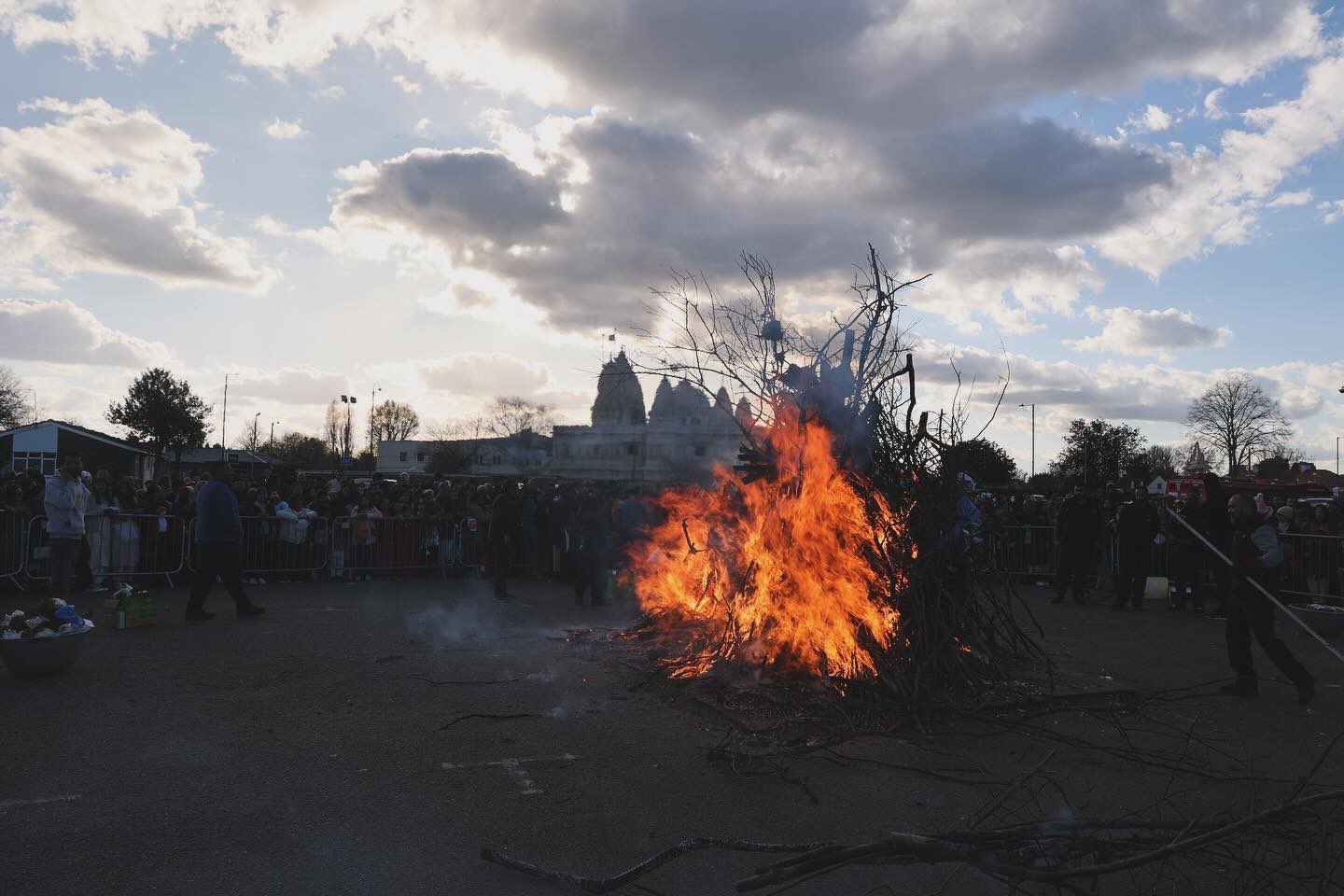
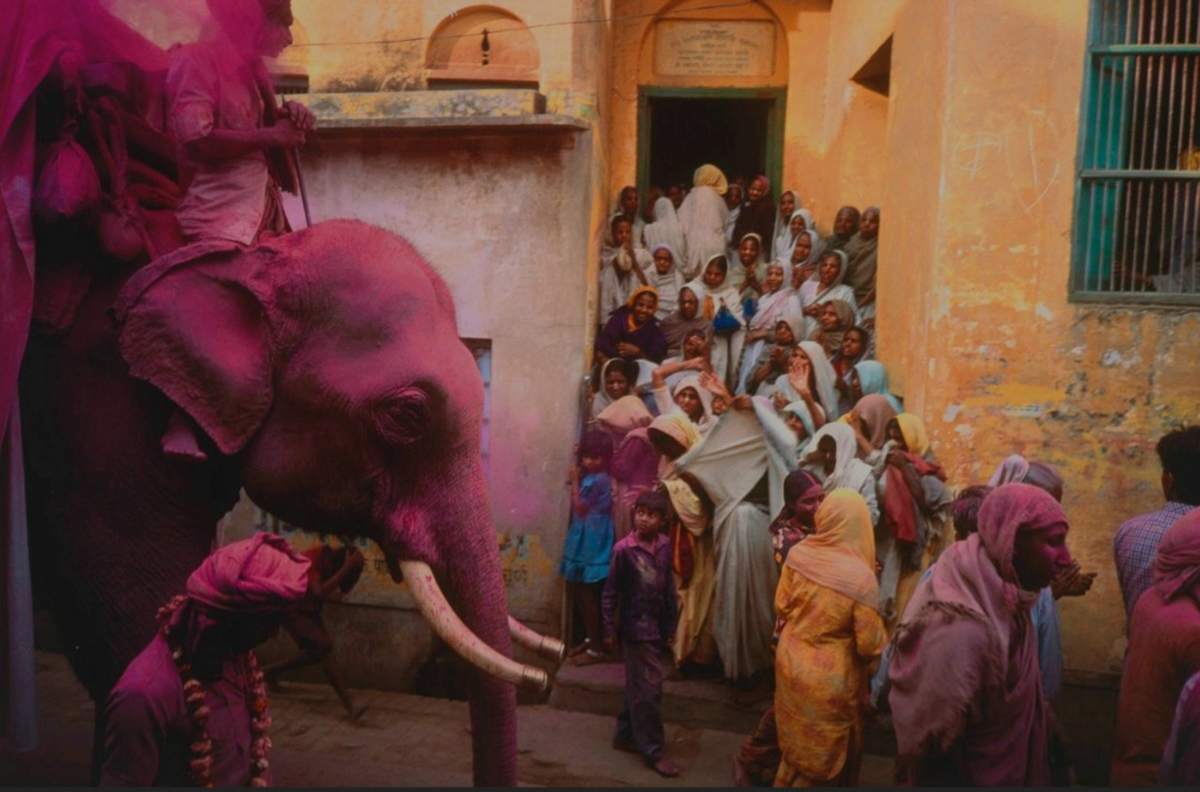
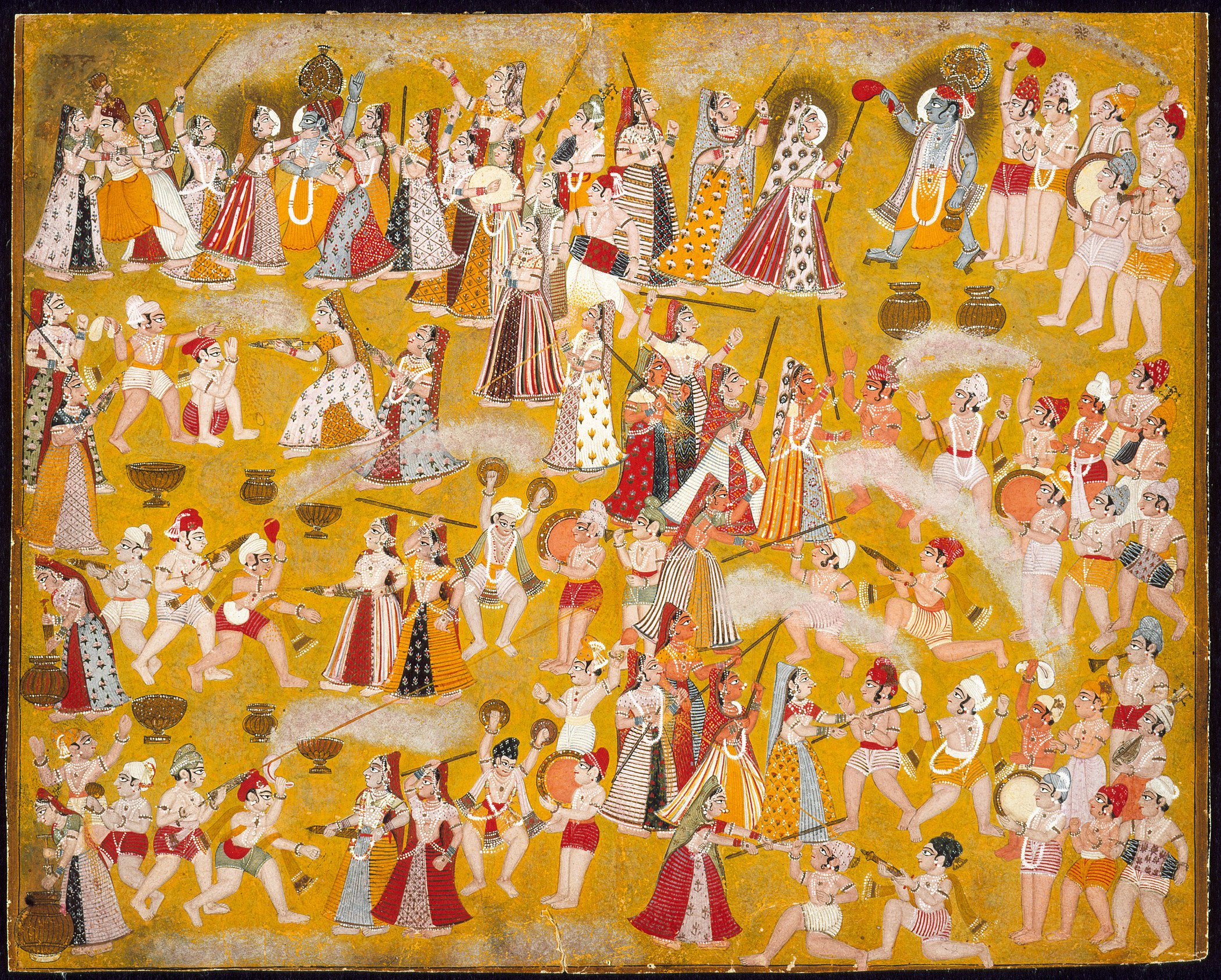
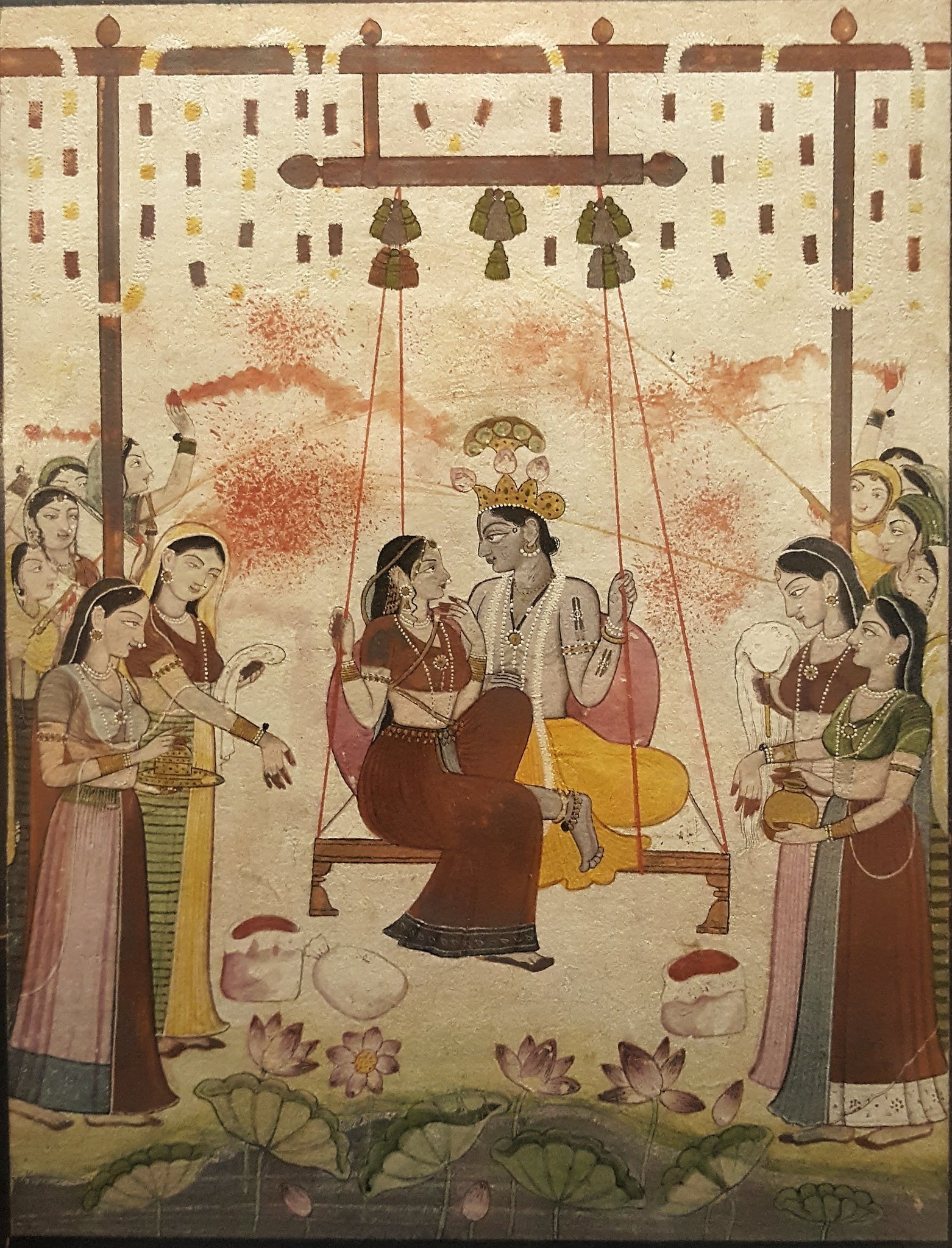
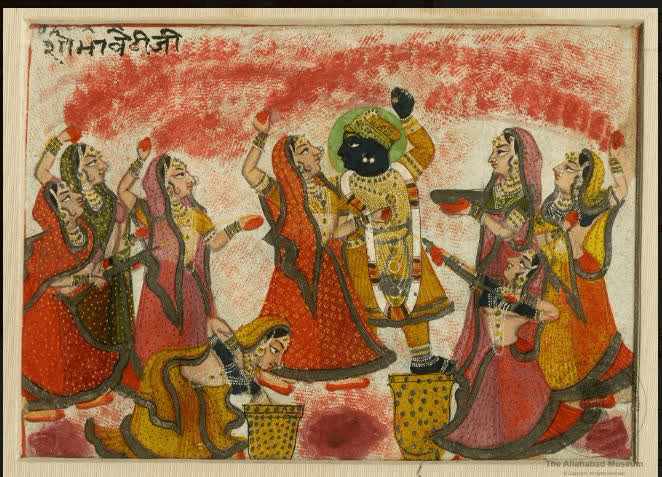
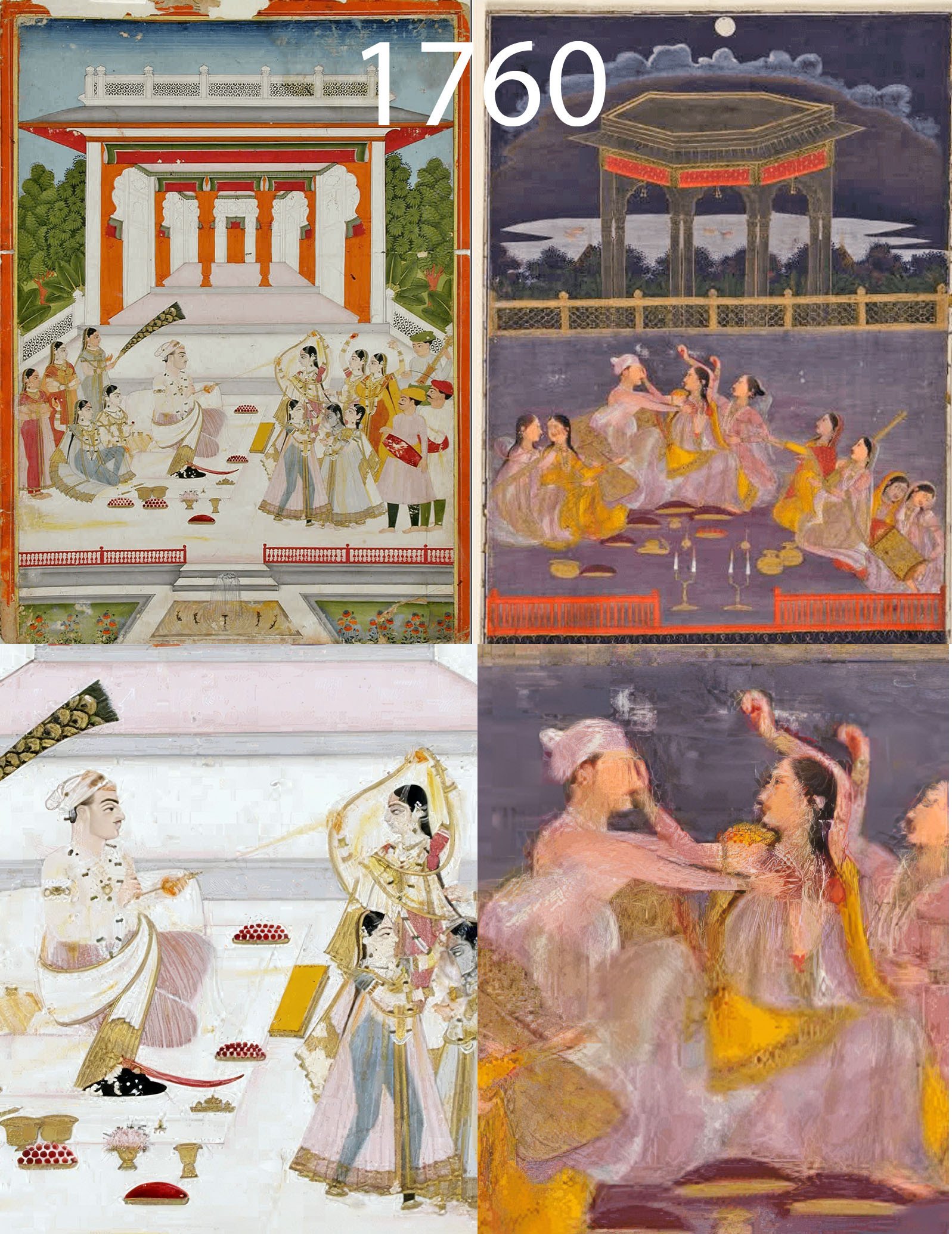
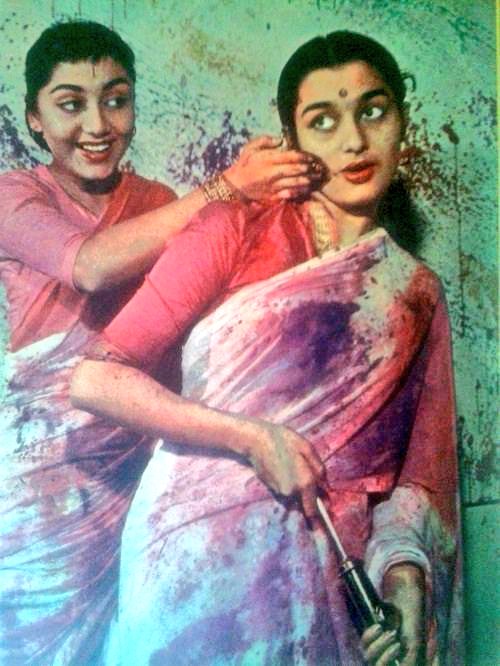
This incident, the burning of Kamadeva, is also associated with Holi, widely unknown in northern part of the country, which is usually followed by a light drizzle the next day. The rain is believed to be made up of the tears that Rati shed on the loss of her husband.
: ँ :
Thank you.
Do Share what you thought of the story?
If today is the first time you have arrived on The Road To Nara, you are heartily welcome ~ Namaste
: ँ :
ROAD TO NARA is an Ethnographic Blog of History, Stories of Culture, Passion, Art, People, Rivers, Folk, Mysticism, Meditation, Mountains, Trees and Tantra Yoga Science of Ancient India and the Indigenous World to your mailbox.
Do subscribe to Nature: ROAD TO NARA
Type your email…
SUBSCRIBE
Subscribe to Nature
: ँ :
I will take this opportunity to introduce you to About me and importantly,
In India, the term Trimurti is used in reference to the three faces of god. They are Brahma, Vishnu and Shiva. They are collectively known as the Trinity. Together they represent the oneness of the universe while retaining their distinctive nature and are known for their ability to grant boons. Hymns are chanted every day all over India, in temples and homes, and countless stories abound in their praise.
Here is the tale of the Birth Of Parvati
Taraka was a powerful and ambitious demon, and a devotee of Lord Brahma. One day he began a severe penance for Brahma, living on a mountain for a long period of time: Pleased with Taraka’s devotion, the creator appeared before him.
‘O my lord!’ Taraka cried. ‘My life’s purpose has been fulfilled now that I have felt your presence.’
‘My dearest devotee, you know that such a boon is not possible. Why don’t you ask me for something else?’
Taraka thought for sometime. ‘I don’t want to die at the hands of just any man or god. If I must perish, I would rather want that it happens at the hands of the son of Shiva, ‘he said, knowing fully that Shiva, being a grief-stricken Yogi, smeared in ashes, living all by himself on the top of mountains will never marry again. So the boon would actually make Taraka invincible and keep him safe from Yama, the god of death.
Brahma understood Taraka’s intention. Nevertheless, he said, ‘So be it.’
His penance now complete, Taraka descended from the mountain and returned to his abode. Over time, he created a powerful army headed by ten generals, who soon went on a cruel rampage, conquering kingdoms, abusing living beings on earth as well as the gods above. He terrorised them all so much that everyone began praying to Lord Vishnu.
Vishnu heard their pleas. ‘Shiva and Parvati’s son will be the cause of Taraka’s doom. ‘he declared.
Himavat or Parvatraj, the king of the Himalayas, had a wife named Menaka. The queen really wanted a daughter who would grow up to become Shiva’s consort. When Menaka heard about Dakshayani, she instinctively knew that Shiva’s wife would be reborn as her daughter. She thus decided to go into deep meditation, convinced that destiny would soon take its course.
Menaka gave birth to a beautiful baby girl, whom she named Uma. As Uma was the dughter of parvatraj, she was also known as Parvati, or Himani(from her father’s other name, Himavat), or Girija (meaning the daughter of the king of mountains), or Shailaja (meaning the daughter of the mountains).
In olden times, in India, daughters usually got their names from their fathers names or the kingdoms they belonged to. For instance, in the Ramayana, King Janaka’s daughter, Sita, was popularly known as Janaki. Her other names include Vaidehi (derived from Videha, her father’s kingdom) and Maithili (from Mithila, the capital of Videha). Similarly, in the Mahabharata, King Drupad’s daughter was called Draupadi or Panchali, as Drupada ruled over the kingdom of panchala.
Parvati was a charming child and unusually devoted to Shiva right from her birth. Even as an adult, she was always found either praying to Shiva or just talking about him. News of her beauty and intelligence spread far and wide. Though suitors came in hordes with the hope of winning her heart, Parvati could only think of Shiva and refused to entertain the idea of marrying anyone else.
The devas were watching all this with great interest. They eagerly awaited the arrival of parvati and Shiva’s son- the harbinger of Taraka’s death.
Shiva, on the other hand, deep in meditation atop the cold mount Kailash, remained unaware of what was going on. Much to the concern of her parents, a determined Parvati made the arduous journey to Kailash and began serving Shiva. She took care of his surroundings, brought him fruits and made garlands for him every day. She wanted to be there the moment he opened his eyes so they could marry as soon as possible.
A Yak standing in front of Mount Kailash in Tibet
The gods sighed with relief and hoped that Shiva would soon awaken from his penance.
Days, months and years passed but Shiva showed on signs of emerging from his meditation. If he did not open his eyes, he would never see Parvati, which meant that he wouldn’t marry her or have a son. And if the current state of affairs continued, Taraka’s cruel reign would be the end of everybody.
Frustrated, the gods decided to take matters into their own hands. All the realms were in grave danger. They had to intervene and force Shiva to awaken, but who would take the risk? No one dared offer to be the one to disturb Shiva’s penance and become the target of his infamous temper. Everyone knew if he ever became extremely angry, his third eye would open and immediately spew a great fire that could destroy everything which would come in its path.
And yet the task needed to be done.
The gods decided to approach the diplomatic Lord Vishnu and beseech him to find a way to guarantee Shiva and Parvati’s marriage.
‘All right, let’s see how things turn out,’ Vishnu said with a mysterious smile.
: ँ :
Thank you.
Do write what you thought of the story?
If today is the first time you have arrived on The Road To Nara, you are heartily welcome ~ Namaste
: ँ :
ROAD TO NARA is an Ethnographic Blog of History, Stories of Culture, Passion, Art, People, Rivers, Folk, Mysticism, Meditation, Mountains, Trees and Tantra Yoga Science of Ancient India and the Indigenous World to your mailbox.
Do subscribe to Nature: ROAD TO NARA
Subscribe to Nature
Type your email…
SUBSCRIBE
: ँ :
I will take this opportunity to introduce you to About me and importantly,
In India, the term Trimurti is used in reference to the three faces of god. They are Brahma, Vishnu and Shiva. They are collectively known as the Trinity. Together they represent the oneness of the universe while retaining their distinctive nature and are known for their ability to grant boons. Hymns are chanted every day all over India, in temples and homes, and countless stories abound in their praise.
Here is the tale of Sati, the wife of Shiva
King Daksha was one of the sons of Lord Brahma. Daksha had many daughters. Twenty-seven of them were married to the handsome moon god, Chandra and among his remaining daughters, Dakshayani was married to Shiva.
Daksha was not at all happy with Dakshayani’s choice. Shiva spent most of his time either on Mount Kailash in the freezing Himalayas or in Cremation grounds. To make matters worse, he looked positively dreadful with his long, dark, matted locks and that snake wrapped around his neck like a garland. Daksha felt that his beautiful daughter deserved a better husband. But Dakshayani, who was also known as Rudrani, was very happy with Shiva and enjoyed her time with him no matter where they were.
One day, Daksha decided to perform a grand Yagna. He invited all his daughters and his sons-in-law, as well as many other relatives and friends to participate in the event.
On the day of yagna, as soon as Daksha entered the place, everyone stood up to welcome him. All except Brahma and Shiva.
Daksha was livid. God or not. Shiva was his son-in-law. And by not standing up at his arrival, Shiva had insulted Daksha- at least that’s how the King perceived it.
A few months later, Daksha held another grand yagna. But this timem he didn’t invite Dakshayani and Shiva. When Dakshayani heard that all her sisters were visiting her father’s house, she said to Shiva, ‘I want to go to my father’s house for the yagna. Will you come with me?’
Shiva smiled and replied, ‘You shouldn’t go without an invitation, even if it is your father’s home.’
‘A daughter doesn’t need an invitation to visit her parents,’ she retorted.
‘All right, but he warned that your father may use strong words against me. I know how loyal and kind you are, and I am afraid that it may be hard for you to listen to him. I hope you will be careful. I won’t accompany you, dear wife, but my blessings are with you.’
Dakshayani quickly collected a few gifts and left for Daksha’s home with Nandi, Shiva’s gentle white bull and his primary vehicle.
When Daksha saw his daughter, he said, ‘ I don’t remember having sent you an invitation. Is your ill-mannered husband also going to turn up later?
Dakshayani didn’t say anything, barely restraining her anger. The yagna began, but Daksha wasn’t done ridiculing Shiva. ‘Go back, dear daughter, to your husband, whom you love more than your father. I remember his insult very well. and both of you are no longer welcome here.’
He continued in this vein until Dakshayani couldn’t take it any longer. Humiliated beyond words, she closed her eyes and prayed to her husband, ‘My lord, I have made a mistake by coming here and not heeding your warning. You were right. And I cannot live with the scars of the words my father has inflicted on me.’ She then jumped into the sacred fire of the yagna, thus performing the act of Sati.
A disturbed silence fell over the room. All the guests were shocked at what had just happened.
When Shiva learnt of his wife’s fate, he cried out in such anger that the entire world shook. In his rage, he created a fearsome avatar, Virabhadra, and provided him with a fearsome army. He then ordered Virabhadra to stop Daksha’s ritual and destroy anyone who stood in his way.
His grief and fury not quelled yet, Shiva began his divine dance of destruction. Tandav Nritya. The earth quaked in the wake of his wrathful steps and people started panicking, convinced that the world was about to end. But Shiva didn’t stop or falter.
Meanwhile, Virabhadra and his army destroyed the yagna. He cut off Daksha’s head and vanquished the other sages and gods who came forward to help the king. As the destruction continued, they called upon Brahma for help, who entreated Shiva to pardon Daksha and restore normalcy to the world.
Finally Shiva calmed down, his compassion awakened. he brought Daksha back to life, replacing his head with that of a goat’s so the proud king would never forget his folly. Daksha immediately fell at Shiva’s feet, vowing to spend the rest of his life as his devotee.
Once order was restored in the world, Shiva withdrew into himself and entered a state of deep meditation. And Dakshayani came to be known as Sati from then on.
: ँ :
Thank you.
Do Share what you thought of the story?
If today is the first time you have arrived on The Road To Nara, you are heartily welcome ~ Namaste
: ँ :
ROAD TO NARA is an Ethnographic Blog of History, Stories of Culture, Passion, Art, People, Rivers, Folk, Mysticism, Meditation, Mountains, Trees and Tantra Yoga Science of Ancient India and the Indigenous World to your mailbox.
Do subscribe to Nature: ROAD TO NARA
Subscribe to Nature
: ँ :
I will take this opportunity to introduce you to About me and importantly,
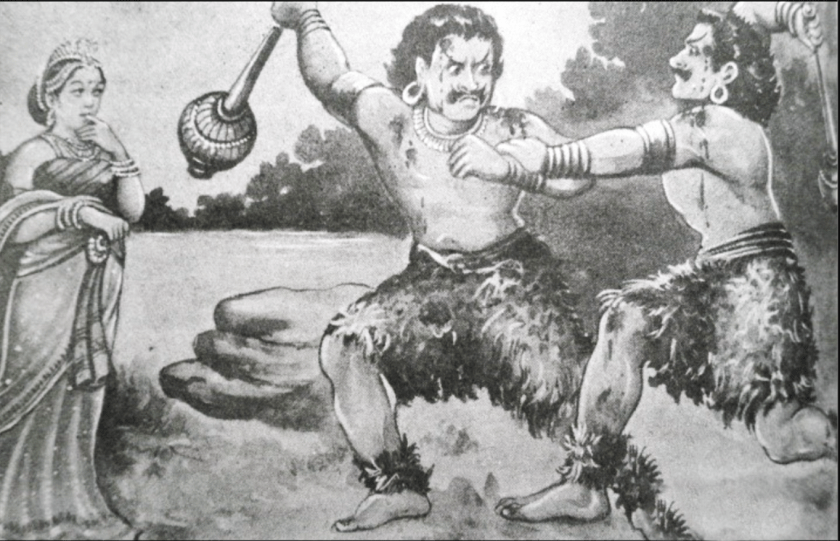
The asura brothers Sunda and Upasunda were inseparable. They shared everything equally- food, clothes and even their kingdom.
In the hope of gaining immortality, they performed severe penance to please Brahma. After a long time, the god finally appeared.
‘We are overjoyed to be in your presence, my lord!’ they said, bowing to Brahma.
‘Your penance is commendable, my dear devotees.’ Brahma smiled. ‘I will grant you a boon. Tell me, what do you wish for?’ Sunda and Upasunda had been waiting for this moment. ‘We want to be immortal.’ they chorused.
‘I am afraid that is impossible. Any living being that is born must die. I am only the creator, and have no power to stop death. Ask me for something else instead. ‘
After careful thought, Sunda and Upasunda said. ‘Then give us such a boon that will allow us to die only by each other’s hand and no other.’
Now, Brahma was famous for granting boons to his asura devotees. More often than not, there were strange conditions associated with these boons. The truth was that Brahma made sure to weave loopholes into his boons, knowing that every mortal must die. This time was no different. He nodded and said. ‘May you be invincible from this day on. You can only be killed by each other.’
Sunda and Upasunda were ecstatic. They knew that they would never fight each other.
Together the brothers conquered many lands and became immensely powerful. Their invincibility made them arrogant, and they soon started to abuse their subjects. Friends and enemies alike feared them because they were known to seize kingdoms on a whim. Adter decades of suffering their torture, the whole world wanted to see the brothers dead but the bond between them remained as strong as ever. They didn’t seem to have a single difference of opinion!
Finally, the people appealed to Brahma. ‘Please rid the world of these monsters. We have no one else to turn to,’ they pleaded.
‘All powerful asuras inevitably turn towards the destruction of mankind,’ thought Brahma as he listened to the people’s relentless cries for help. ‘As I am the one who bestowed the boon of invincibility upon them and caused this misery, it is my responsibility to find a solution.’
After much thinking, brahma hit upon an ingenious plan. He created a beautiful and irrestible enchantress and named her Tilottama.
Tilottama, by Brahma’s design, ran itno Sunda and Upasunda during one of their strolls. The brothers were immediately captivated by her magical beauty. She nodded at them as she walked past.
Sunda stared at Tilottama in wonder and said to his brother, ‘I want to marry her.’
Upasunda did not reply. He was thinking the same thing!
Sunda noticed his brother gazing at his future wife and realized what was going on in his mind. This exquisite woman is going to be Upasunda’s sister-in-law! he thought. ‘How dare he stare at her in this manner?’ He shouted at his brother, come to our senses. She is going to be my wife. You must treat her like a sister.’
‘But I was the one who saw her first! She must marry me,’ replied Upasunda.
How can you say that, brother?
‘Listen to me. The moment our eyes met, I knew we were meant for each other.’
Sunda did not agree. ‘I am the older sibling. I am to marry her and my decision is final.’
‘Just because you are older doesn’t mean you can force your choices on me. My opinion matters too.’
This rankled Sunda. Gradually the argument between the brothers escalated. Neither of the Asuras was ready to relinquish Tilottama. After much debate, they decided to approach the maiden herself to ask her whom she liked best. agreeing to respect her choice no matter what.
When the asuras explained the conundrum to Tilottama, she pretended to be upset. ‘I curse my beauty!’ she exclaimed. ‘It has caused a rift between the two of you. It is better that I leave your kingdom.’
No, Tilottama, please don’t leave, they pleaded. ‘Be honest with us. Whom would you like to be wedded to?’
My dream is to marry the greatest warrior on Earth,’ she said coyly. ‘So I will wed whoever is stronger, but I will leave that to you both to decide.’
Sunda and Upasunda forgot everything except their love for Tilottama. They decided to have a wrestling match. The news spread like wildfire. Many people, animals, birds and even devas swarmed to the scene.
The match was fierce and intense as the brothers were equal in strength. Sunda and Upasunda were aware of each other’s weaknesses and fought viciously like two enraged elephants as the world watched with bated breath. in the end, neither of them survived.
Everyone rejoiced and Brahma smiled. What could never have been put an end to by might was easily done by beauty.
: ँ :
Thank you.
Do Share what you thought of the story?
If today is the first time you have arrived on The Road To Nara, you are heartily welcome ~ Namaste
: ँ :
ROAD TO NARA is an Ethnographic Blog of History, Stories of Culture, Passion, Art, People, Rivers, Folk, Mysticism, Meditation, Mountains, Trees and Tantra Yoga Science of Ancient India and the Indigenous World to your mailbox.
Do subscribe to Nature: ROAD TO NARA
Subscribe to Nature
Type your email…
SUBSCRIBE
: ँ :
I will take this opportunity to introduce you to About me and importantly,
In India, the term Trimurti is used in reference to the three faces of god. They are Brahma, Vishnu and Shiva, and collectively called the Trinity.
Lord Brahma is the creator of the universe and everything both living and non-living. He is said to have risen from a Lotus that emerged from Vishnu’s belly button. Just as an Artisan moulds statues, Brahma is the eternal sculptor responsible for the intricacies of all life forms. We are all his children.
Ages ago, the god of love, Kamadeva and his wife, Rati, prayed fervently to Brahma for a boon. They wanted a special bow and arrow. So they fasted and meditated for days and days, and finally Brahma appeared.
Kamadeva said, ‘Dear Lord, give me a bow and arrow that will make anyone I shoot it with fall instantly in Love with the nearest person.’
Brahma considered the request. ‘This boon is perfect!’ he thought. ‘It will encourage more humans to fall in love and over time, the number of children on this planet will increase and the human race will flourish. But I don’t think strong willed people or those who follow a spiritual path will fall prey to Kamadeva’s arrow. However, that shouldn’t stop me from granting the boon.’
Brahma raised his right hand. ‘So be it.’
A bow of sugar cane and an arrow of flowers appeared in front of the delighted Kamadeva. He took possession of it and thanked the god with all his heart before going on his way.
Soon, Kamadeva wanted to test the bow and arrow. Without thinking too much, he shot the first arrow at Brahma himself!
At that time, Brahma was in the process of creating a beautiful maiden. She was named Shatarupa, a woman with a hundred beautiful forms. Her beauty was nothing like the world had ever seen.
As soon as Brahma finished breathing life into her, the magic of Kamadeva’s arrow started to take effect.
The lord began gazing at Shatarupa so intensely that it scared her. She hadn’t expected her creator to behave in such a manner. So she stepped away from him, turning to his right. Brahma couldn’t look away- his eyes followed her. To his surprise, a second head sprang up on his right. Alarmed, Shatarupa ran the other way, to his left, but a third head appeared in that direction as well. Finally, Shatarupa was right behind Brahma, and lo and behold, another head was formed. Now Brahma had four heads facing all four directions- east, west, north and south. This way he was able to see Shatarupa no matter where she went.
The maiden now had no choice but to turn upward. Unfortunately for her, that didn’t stop Brahma. Another head facing the sky sprang up on his fifth head. And thus Brahma’s gaze stayed on Shatarupa.
Shiva, who had been watching the entire incident, was furious. ‘It is time for me to step in and help the poor girl,’ he thought. ‘Brahma is shatarupa’s creator- it is not right for him to fall in love with her like this.’
Shiva cut off Lord Brahma’s sky-facing head in one swoop with his trishul and cast a curse on him. ‘Henceforth, you will eternally be four-headed, and furthermore, you will be worshipped in just one place.’
Only after he had removed Brahma’s fifth head did Shiva realise that Brahma wasn’t completely responsible for his behaviour. It was Kamadeva’s arrow of Love that had started it all.
So to soften the curse, Shiva declared, ‘Brahma, even though you may not be worshipped the way Vishnu and I are, you will always be revered as a part of the divine Trinity.’
There was no denying that Shiva had sinned by punishing Brahma. As a consequence, he became a wandering ascetic and made his way to Brahma Kapala(better known today as Badrinath in Uttarakhand). Shiva carried Brahma’s severed head in his hands and used it as a begging bowl, but strangely the skull would never fill up. No matter how much food went into it, the bowl remained empty. It was only when Shiva made his way to Varanasi and recieved alms from mother Annapoorna, the goddess of nourishment and an avatar of Parvati, that the begging bowl finally began to fill up. It is believed that Brahma’s fifth head has remained with Shiva ever since.
The place where this incident is said to have taken place is Pushkar, Rajasthan.
: ँ :
Thank you.
Do Share what you thought of the story?
If today is the first time you have arrived on The Road To Nara, you are heartily welcome ~ Namaste
: ँ :
ROAD TO NARA is an Ethnographic Blog of History, Stories of Culture, Passion, Art, People, Rivers, Folk, Mysticism, Meditation, Mountains, Trees and Tantra Yoga Science of Ancient India and the Indigenous World to your mailbox.
Do subscribe to Nature: ROAD TO NARA
Subscribe to Nature
: ँ :
I will take this opportunity to introduce you to About me and importantly,
Road To Nara has been my Laboratory for sharing my life experiences as a a Writer, as a Documentarian and as an Educator for sometime now. And ever since I started writing here I have tried to bring in my understandings from any walk of life that spoke to me ever. Be it my Travels, from my School, My Yogic or the Spiritual way of being, my experiences with nature, The Himalayas and many a times about the Art world, Primarily Sharing from the lives of Writers and Photographers.
And all my co-travellers here, who visit this space, many a ones whose views I cherish who bring their own world to make this space a little more chirpier and happier. This Special Edition goes out to each one of you with whom I have ever interacted.
This week, I am sharing about a film that shaped something unexplainable in me, that I think gave me a perspective on how deep and beautifully films can hit you. It was SHAWSHANK REDEMPTION. I watched Shawshank as a teenager during one late night, it had finished around 3 A.M. had taken my sleep away, needless to say I was looking into the oblivion like an Owl. It was one of those films that gave me some of my first supernatural emotions. And no matter how many times I go back and watch a scene from this movie and hear myself saying nothing and staying in silence, absorbing it. I have found no other alternative to it. There is no comparison of this film to any other, for that matter comparison in my life, do not exist.
SOME INTERESTING SECRETS FROM THE SET OF SHAWSHANK REDEMPTION
September 23, 1994 saw the limited release of what today is the number 1 movie on IMDB.
After finishing the script for the movie, Darabont took “The Shawshank Redemption” to Castle Rock, the production company you might remember from “Seinfeld.” Rob Reiner, one of the cofounders of Castle Rock, loved the script. In fact, he loved it so much that he wanted to direct it himself. He offered Darabont a couple million for the script, but Darabont held steadfast that he wanted to direct.
The look of “Shawshank” is a big part of its success. You can thank cinematographer Roger Deakins for that. Considered one of the all-time best at his chosen profession, he has been nominated for 15 Oscars, winning twice. Deakins is a longtime collaborator of the Coen Brothers, which is how Tim Robbins met them. When he took on the role of Andy, Robbins recommended Deakins to Darabont.
“The Shawshank Redemption” is now a beloved movie. That was not the case at first, though. In fact, “Shawshank” made only $16 million in its initial run before being pulled. Given that the movie cost $25 million to make, that was a disaster. However, the film would get a re-release and an international release that got the film up to $58.3 in lifetime box office. Even so, for a film this popular, that’s surprisingly bad.
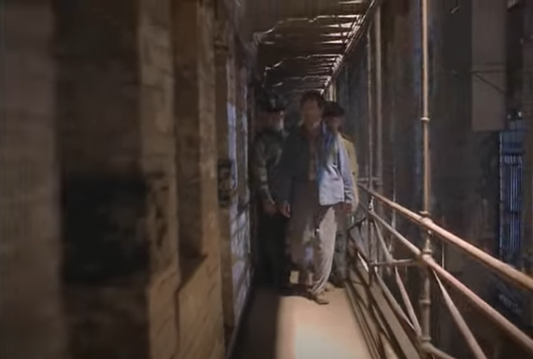
The prison was the Ohio State Reformatory in Mansfield, which had closed. The same prison was also used in the films Air Force One and Tango and Cash, as well as the TV show, House.
Dennis Baker, who had been the assistant to the warden of the Ohio State Reformatory in real life, has a cameo appearance in the scene where Tommy Williams is brought to Shawshank.
You might not believe that the number of people who walked away from playing Andy Dufrense is amazing – Brad Pitt, Tom Cruise, Tom Hanks, James Gandolfini. At least Tom Hanks was busy shooting for Forrest Gump.
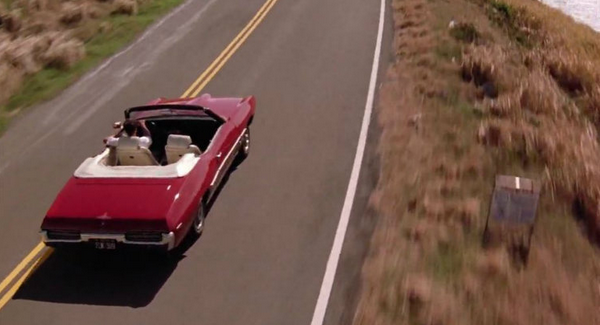
The makers wanted to use a Mustang, keeping it in line with the time of 1965 – when Andy escapes, but they were unable to get the car in time. So they used a 1969 Pontiac car. A glitch in the matrix as some people say.
Red’s cell number is 237 – the same as the room number in The Shining. Though the origin of both stories is Stephen King, the number is not used in either books.
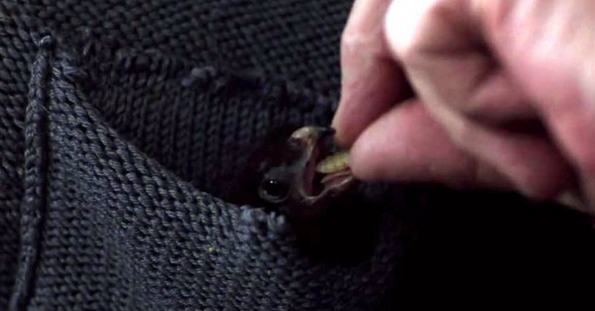
A representative from the ASPCA (anti-Animal cruelty guys) told the filmmakers they couldn’t use a live wax worm and only a worm that died of natural causes. Director is said to have quoted “You’ll do an autopsy now?” They ended up with a wax worm made out of baby food.
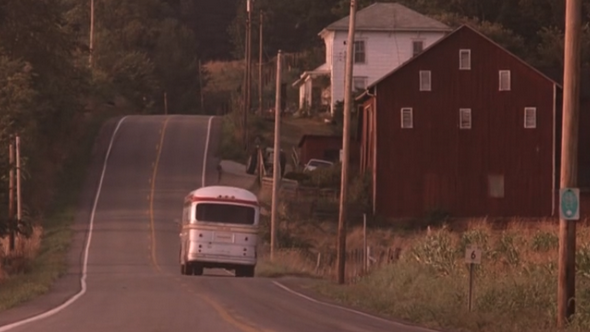
If Frank Darabont had his way, this would have been the final shot of the movie with Red getting into a bus and heading towards Mexico and an ambiguous ending. But Castle Rock executives asked him to conclude with Red and Andy meeting. Thank You Castle Rock!
This scene took over 9 hours to shoot with Morgan Freeman repeatedly throwing the ball and catching it. The next day Morgan Freeman showed up on the set with his arm in a sling
Andy Dufrense asks Red, why is he called Red – to which Red responds “Maybe its because I’m Irish.” This is in response to the fact that in the original novella Red is a middle-aged Irishman. Frank Darabont had envisaged only Morgan Freeman as Red.
In King’s original novella, the character of Red was white and described as a middle-aged Irishman. However, the producers really wanted Morgan Freeman so the part was rewritten as an African American. However, before that decision was made, Paul Newman and Clint Eastwood both auditioned for the role.
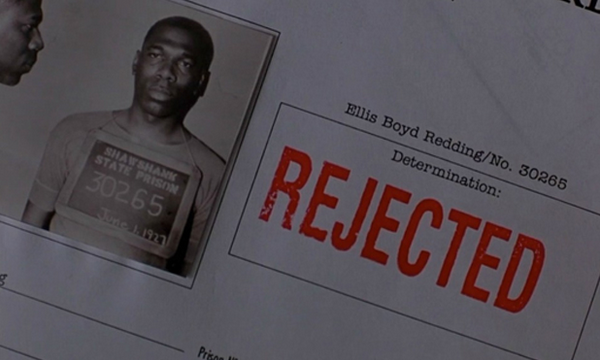
The mugshot of a young Red that is glimpsed briefly in the film is actually not a young Morgan Freeman. The director used a picture of his son for the sequence. No wonder they didn’t look anything alike.
Morgan Freeman’s son also has a double role in the movie. He is seen in the scene when Andy Dufrense enters the prison for the first time and also as a mugshot of the young Red. Interestingly, he has a blink and you miss cameo in Se7en that was released in 1995.
The film is based on “Rita Hayworth and the shawshank redemption.” The name of Rita Hayworth was removed so that people wouldn’t think it was a biopic of Rita Hayworth. In fact Frank Darabont got many calls from actresses – if they could be considered to play Rita Hayworth.
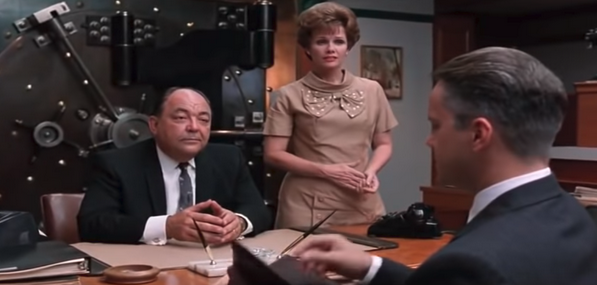
In fact you may not realise but only two women speak in the whole movie: One, Karen type complains about Brooks’s lack of grocery clerk skills and the other woman helps Andy at a bank.
Frank Darabont, the director has 2 cameos in the film. Both scenes, only hands.
This film was narrated by the voice of God Morgan Freeman. Hard as it may be to believe, this is the first time he had done it. They recorded the narration in 40 minutes, before shooting, to gauge the rhythm. Then had to re-recorded as a hiss could not be removed.
The novella uses Jayne Mansfield, Linda Ronstadt, Hazel Court and Rita Hayworth. In the film just three feature: Rita Hayworth, Marilyn Monroe, and Racquel Welch as posters in the cell.
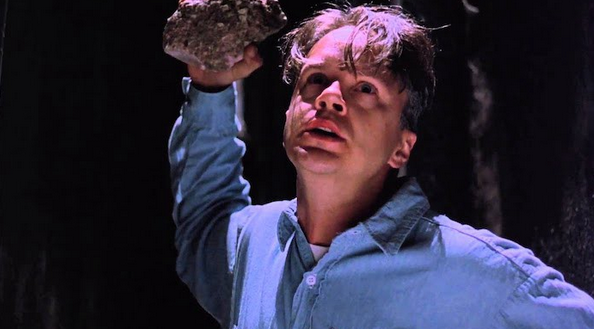
In one of the more powerful scenes in the film, the character Red finds a letter from Andy, in a tree, in Buxton, Maine. This scene was actually not shot anywhere near Maine and was filmed in Malabar Farm(Nothing to do with Kerala) State Park in Ohio. We sort of feel deceived with this cinematic trickery!
The white oak tree featured near the end of the movie has fallen down on Pleasant Valley Road near Malabar Farm in Ohio due to strong winds.
Shawshank Redemption was released in Taiwan for some reason with the title 1995: Fantastic. In Finland, the movie is titled Rita Hayworth—The Key To Escape.
Given that Stephen King has an association with the horror genre, Columbia pictures decided not to include his name in any of the marketing of the film.
Clancy Brown played the prison guard Byron Hadley. During his research for the role, he realized that correctional officers were generally good. But he decided to go full retard and become extremely evil.
Stephen King liked the adaptation a lot. But his one criticism is that Andy’s tunnel was too cartoonishly round.
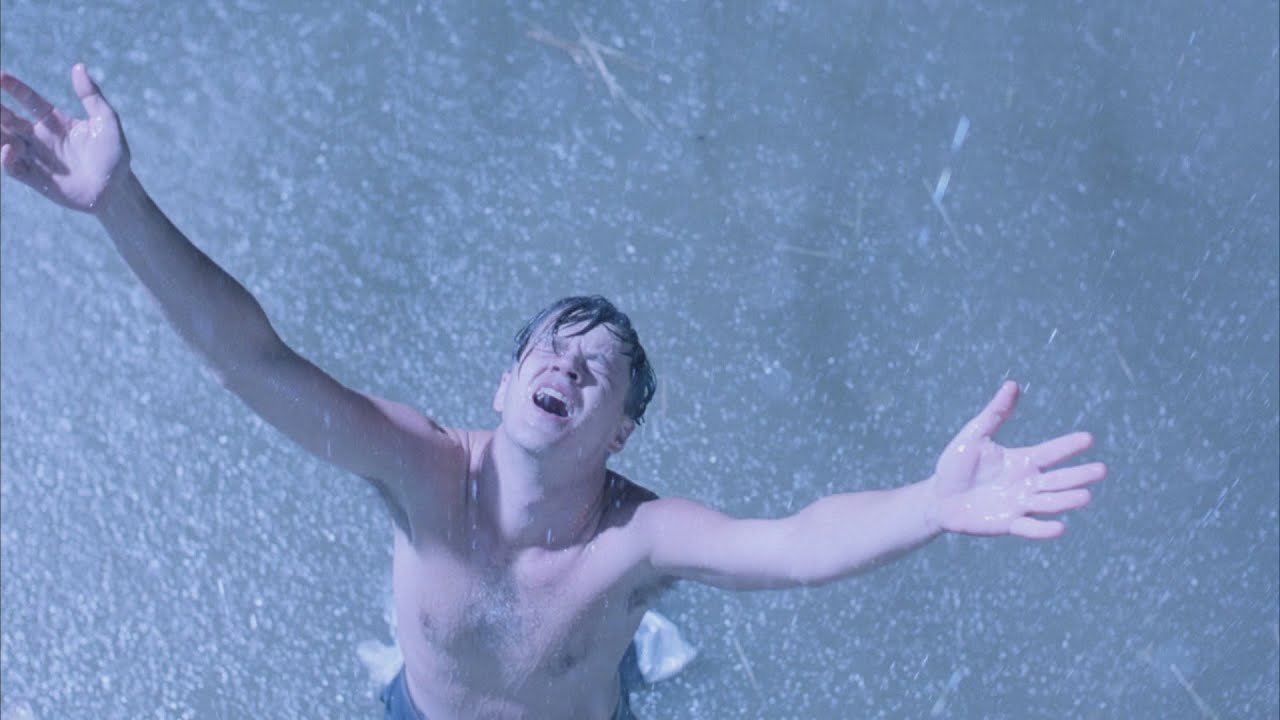
The most unforgettable visual in the entire movie is that of Tim Robbins raising his arms into the air and soaking in the pouring rain after escaping. But it was a disaster to shoot and they only got it correct in their final attempt after which they would’ve given up.
This character was simply called “Fat Ass”. Jon Favreau auditioned for this part and felt horrible to do so. This inspired him to start losing weight.
Red keeps applying for clemency with the Parole board and it keeps getting friendlier each time. After 20 years: “SIT” After 30 years: “Sit Down.” After 40 years: “Please sit down”
The attention to detail in this movie is amazing – towards the end of the movie Andy’s eyebags are getting bigger and bigger indicating that he is spending more time in the night hammering away in his cell.
No other movie keeps reminding us of HOPE in these times.
The music played in the iconic “Opera” Scene that is also about hope is a portion of Mozart’s even more iconic Le Nozze di Figaro https://youtube.com/watch?v=fwSNMibfaRg
Have you seen this Film? If yes, do write what was it like for you? And also please mention your all time favorite films?
: ँ :
Thank you
If today is the first time you have arrived on The Road to Nara, you are heartily welcome ~ Namaste
ROAD TO NARA : To have an access to Stories of Culture, History, Passion, Art, People, Lores, Rivers, Folk, Mysticism, Meditation, Mountains, Trees and Tantra Yoga Science of Ancient India and the Indigenous World to your mailbox.
Do share your e-address
Follow Nature
: ँ :
I will take this opportunity to introduce you to About me and importantly
and then beneath the cloak of political surveillance.
Now cyberspace exists exclusively
to promote
commerce,
gossip
and pornography.
And of course to hunt down sedition.
Only paper is safe.
Books are the key.
A book cannot be accessed from afar,
you have to hold it,
you have to read it.
And finally become it.
: ँ :
Thank you
If today is the first time you have arrived on The Road to Nara, you are heartily welcome ~ Namaste
ROAD TO NARA : To have an access to Stories of Culture, History, Passion, Art, People, Lores, Rivers, Folk, Mysticism, Meditation, Mountains, Trees and Tantric Science of Ancient India and the Indigenous World to your mailbox.
Do share your e-address
Type your email…
Subscribe
Follow Nature
: ँ :
I will take this opportunity to introduce you to About me and importantly
It was the year end night. Some friends had come over to celebrate. I had also called my brother-in-law who is an Investigating officer and an entertaining storyteller but seemed not quite himself that night. He stood alone, in dark, looking down dreamily with a tilted glass, now empty. I walked over and asked playfully if he was regretting over missing a shot at a culprit. Thankfully, he had his wit intact. He beckoned me to come out of the room. “What’s the matter Rana? I asked.” We walked towards the balcony. Bhaiya, in the noontime today, a doctor came over to the office and he narrated a story, and ever since I have heard his tale, I do not know what to make of it.
Really? What is it? What happened.
Rana spoke with passion as he does and just like the doctor he spoke in first person;
I started my first job at a hospital in Alibaug. Each case provided me with new knowledge more than my books. Every patient even now teaches me something.
One afternoon an injured woman came who was pregnant after 11 years of marriage. A bull roaming around the streets of Alibaug had knocked her stomach with its horn.
It was a scary sight with part of the woman’s stomach injured and a baby’s hand peeping out of the crack of the uterine wall. My mind was in turmoil. The mother’s life could be saved because the stomach wound was not serious. But to sew up the wall of the uterus was unthinkable as it was impossible to put the child’s hand back inside.
The family’s mandate was clear. Save the mother’s life. But how would I ignore the call of that little hand which appeared to be asking for help.
The operation theatre had a skeleton staff. Apart from me there were two nurses, a compounder and a helper whose job was to sterilize tools. He was middle-aged and an alcoholic who remained high at most times but was extremely sincere and efficient in his work for which the entire staff tolerated him. In the Operation Theatre, as everybody stood dumbstruck seeing the hand of the baby coming out of the womb. I observed everyone gazing at it with disbelief and particularly him who stood calmly behind keenly observing the proceedings. Yet even after healing the stomach wound, how do I get that little hand inside was beyond my knowledge. It required the touch of the god himself.
The creator had made the Uterine wall so strong that it cannot be opened easily, and even if it was opened, then the possibility of the birth and survival of the child from seven month pregnancy was remote, while it seemed difficult for the mother to come to consciousness. No option came to my mind but to perform surgery, which could even be of no use!
As I strolled in the Operation Theatre, looking helpless; the helper at that point who was silently watching, all of a sudden came up to me and whispered in my ear, “saheb, there is a way that the hand will automatically move in. I stared at him. Time was precious. I didn’t know why but my inner conscience made me ask him what he had in mind? He said heat the injection needle and touch the hand, it will immediately go back. His words actually left me open-mouthed. I could not say no! Having no other option, I agreed to his suggestion. I prayed to God in my heart and asked for a hundred apologies from that little one and gathered courage and warmed the needle. My heart beating loudly as I walked over slowly and pricked the hand lightly. The miracle happened and the hand immediately withdrew back in with a jerk. It was nothing but divine intervention. I sighed! Further work was easy. I immediately put the strap on by dressing the uterine wall.
For days on I prayed that the child inside should be safe and God above did not disappoint me either. Two months later, the woman safely delivered the baby in the same hospital and the little girl was smiling right in my hands. And since that moment I considered that helper as my guru. His name was Sanjay.
To my mind, I believe that when there is no cure by the books, God shows the path as a guru in any form as Sanjay showed me. His tip will not be found in any medical book.
Like my in-law, by the end of the story, I had nothing to express rather I was trying to make sense of this miraculous tale. I was indeed taken aback of what I had just heard. And to me it was nothing but, The Will of God.
Who was the doctor? I whispered feebly.
The Doctor was Subhash Munje.
Certainly, the story made me believe in the power of prayer. Divine is Nature.
A Happy New Year to Everyone
: ँ :
Thank you
If today is the first time you have arrived on The Road To Nara, you are heartily welcome ~ Namaste
: ँ :
ROAD TO NARA is an Ethnographic Blog of History, Stories of Culture, Passion, Art, People, Rivers, Folk, Mysticism, Meditation, Mountains, Trees and Tantra Yoga Science of Ancient India and the Indigenous World to your mailbox.
Do subscribe to Nature: ROAD TO NARA
Subscribe to Nature
: ँ :
I will take this opportunity to introduce you to About me and importantly
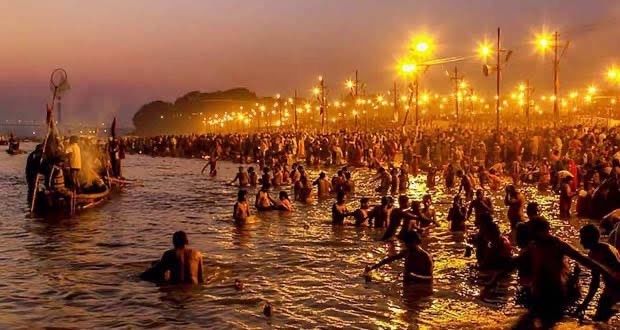
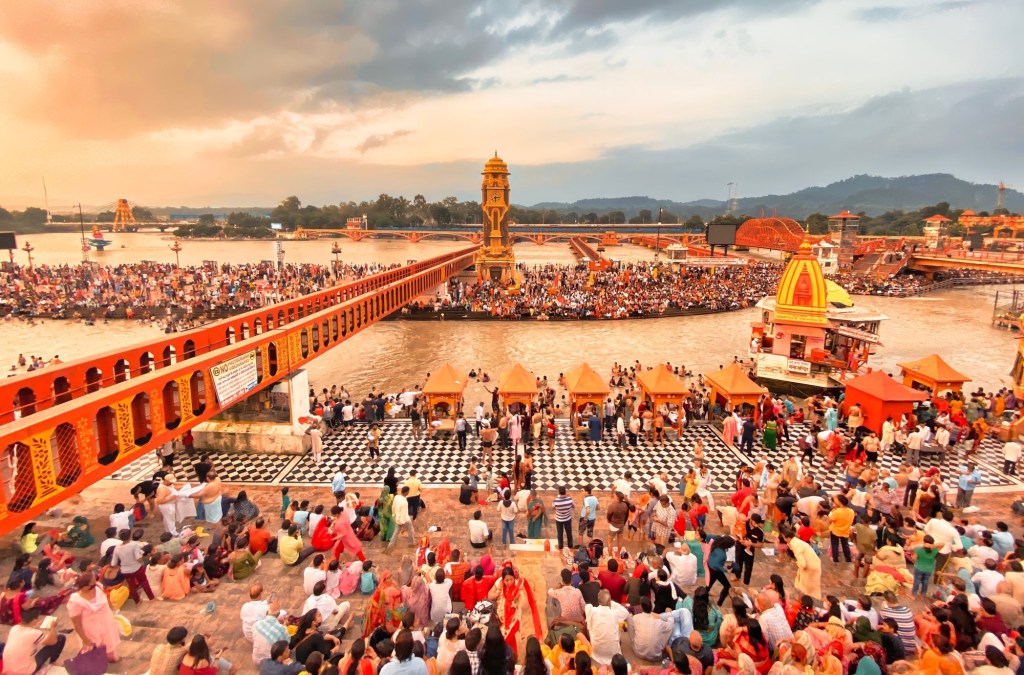
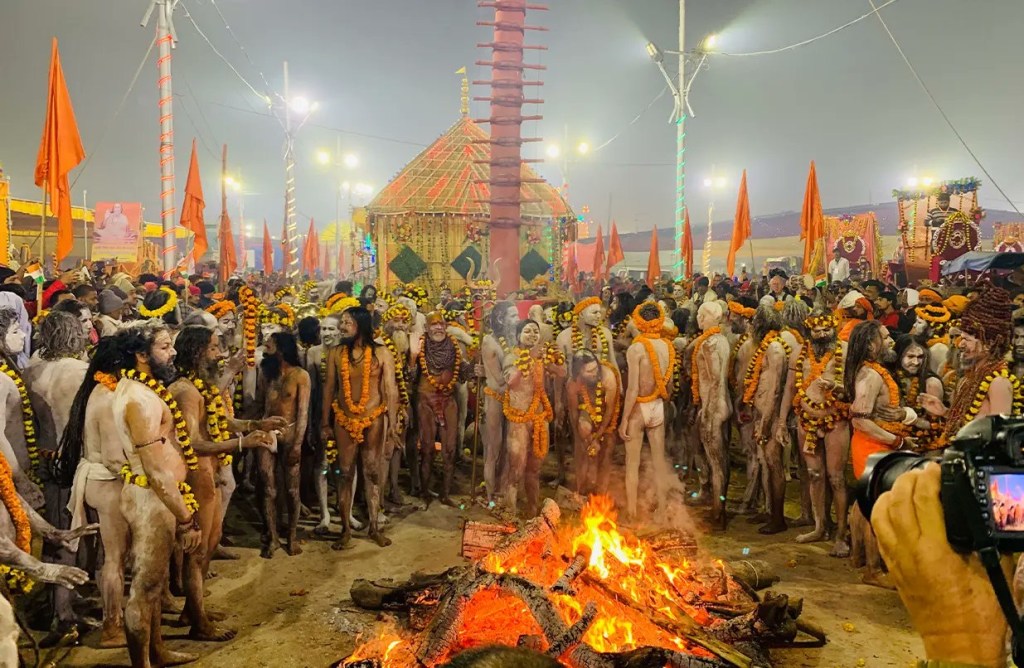
Tonight is Paush Purnima night as I right this. And it marks the start of the largest and the Oldest Congregation of Humankind ever meeting at the Sangam of India’s three ancient Rivers Ganga, Jamuna and the legendary Saraswati. The Maha Kumbh Mela of 2025 is set to take place in Prayagraj, Uttar Pradesh, from January 13 to February 26, 2025.
Kumbh literally means a kalash “Pot” or “pitcher” in Sanskrit. and has significance going back to the times unknown. It is the most remarkable gathering of ascetics from all sects, traditions and cults in India. The Kumbh Mela is believed to commemorate the legendary event of the churning of the ocean (Samudra Manthan) when the nectar of immortality (Amrit) was discovered. It is said that a drop each of this divine nectar fell into the rivers from the ‘pitcher’ the kumbh at four locations where the Mela is held, giving these places immense spiritual significance.
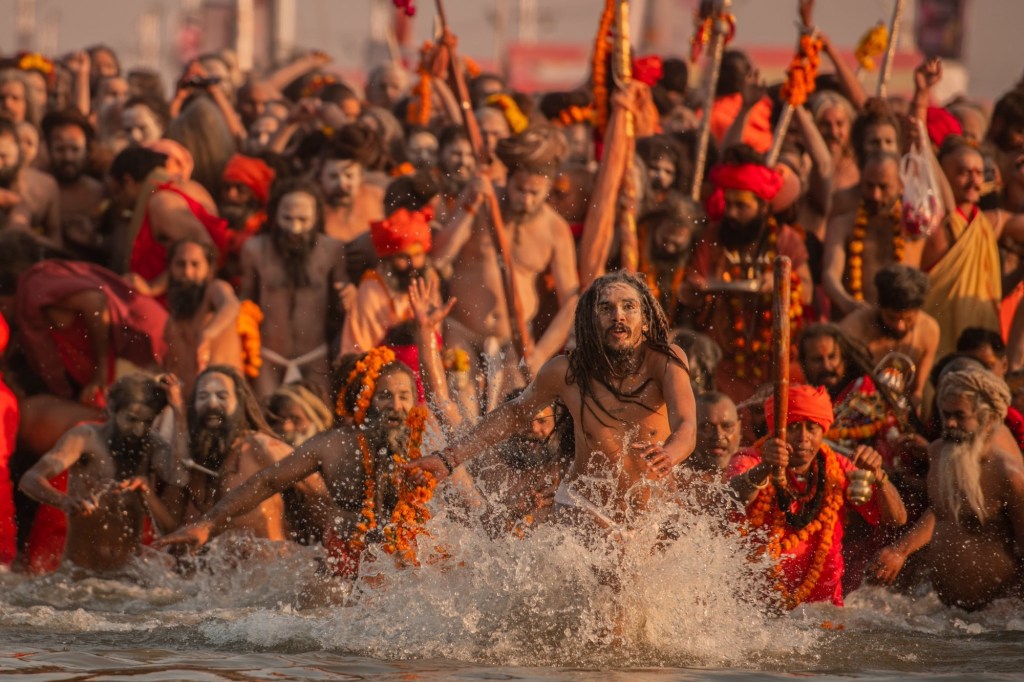
Bathing ritual is the most significant ritual performed at Kumbh. Although taking a dip in the sacred waters on all days of Prayagraj Maha Kumbh beginning from Makar Sankranti is considered holy, yet there are some specific auspicious bathing dates.
There are six auspicious bathing days during the Maha Kumbh, which include three major royal baths (Shahi Snan) and three additional bathing days
January 13, 2025: Paush Purnima,
January 14, 2025: Makar Sankranti (First Shahi Snan),
January 29, 2025: Mauni Amavasya (Second Shahi Snan),
February 3, 2025: Basant Panchami (Third Shahi Snan),
February 12, 2025: Maghi Purnima, and
February 26, 2025: Maha Shivratri (Final Snan).
Difference Between Kumbh Mela and Maha Kumbh Mela
Many people often mix up the Mahakumbh Mela with the Kumbh Mela, but the main difference between the two is their locations. Kumbh Mela occurs every three years across four different places i.e Haridwar, Nashik, Prayagraj and Ujjain while the Maha Kumbh Mela takes place once every 12 years and is only celebrated at Prayagraj.
Yet there are some Amazing Unknown Facts that you should know about MahaKumbh Mela 2025
2. The Secret of the ‘Kumbh’ Symbolism:
The origins of the Kumbh Mela trace back thousands of years to ancient Hindu scriptures. It is deeply rooted in the mythological story of the Samudra Manthan (churning of the ocean), where drops of the nectar of immortality fell at four locations: Prayagraj, Haridwar, Nashik, and Ujjain.
The symbolism of the Kumbh (pitcher) is profound. In addition to representing the nectar of immortality, it is also seen as a representation of the universe and the human body. During the Mela, the Kumbh is seen as the divine container holding the nectar of wisdom and spiritual knowledge. This represents the journey of self-discovery and awakening that devotees aim for during their participation in the event.
2. The World’s Largest Religious Gathering:
The Maha Kumbh Mela is renowned as the world’s largest religious gathering, with over 100 million people expected to participate in 2025. Pilgrims from India and abroad converge at Prayagraj to take a holy dip in the sacred confluence of the Ganga, Yamuna, and the Saraswati rivers.
3. The Magical Power of Mother River Ganga and the Sacred Confluence, The Triveni Sangam:
The river Ganga is central to the Kumbh Mela, especially in Prayagraj, where the confluence of the Ganga, Yamuna, and the legendary river Saraswati is believed to be a place of great power. Devotees believe that taking a dip in the Ganga at MahaKumbh of all times will wash away all sins and grant spiritual liberation. The water from this sacred river is considered to have curative powers and is often taken home by pilgrims.
4. A 12-Year Cycle The Astrological Connection:
The timing of the Maha Kumbh Mela is determined by astrological alignments. The event occurs when Jupiter (Brihaspati) moves into Aquarius (Kumbh) and the Sun enters Capricorn (Makar). This celestial combination is considered highly auspicious in Hindu traditions.
Mahakumbh 2025 is special not only because of its spiritual significance but also because of the rare celestial alignment that occurs only once every 144 years.
5. Rituals Beyond the Bath:
While the most famous ritual at the Kumbh Mela is the sacred bath in the holy rivers, the event also includes a series of spiritual practices such as yajnas (fire rituals), water rituals, prayers, and religious discourses. Devotees engage in meditation and chanting, with a focus on spiritual growth and cleansing. The Mela also serves as a platform for spiritual leaders to address their followers on a variety of religious topics.
6. The Unique Role of the Naga Sadhus:
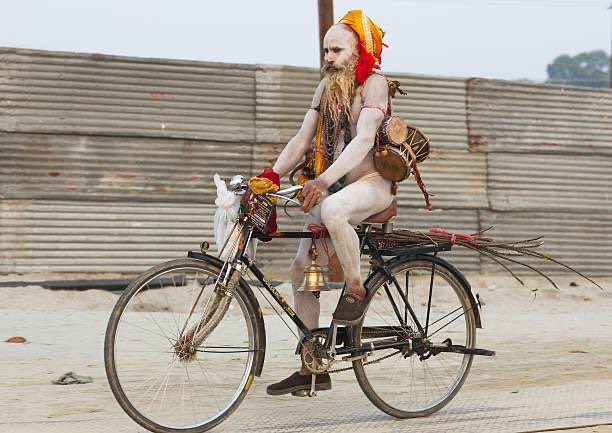
Among the millions of devotees who attend the Kumbh Mela, the Naga Sadhus (ascetic holy men) hold a special place. These ascetics, who renounce worldly pleasures and possessions, are known for their distinctive appearance—often naked and smeared with ash. The Naga Sadhus are believed to have extraordinary spiritual powers, and they play a pivotal role in the rituals and processions during the Mela.
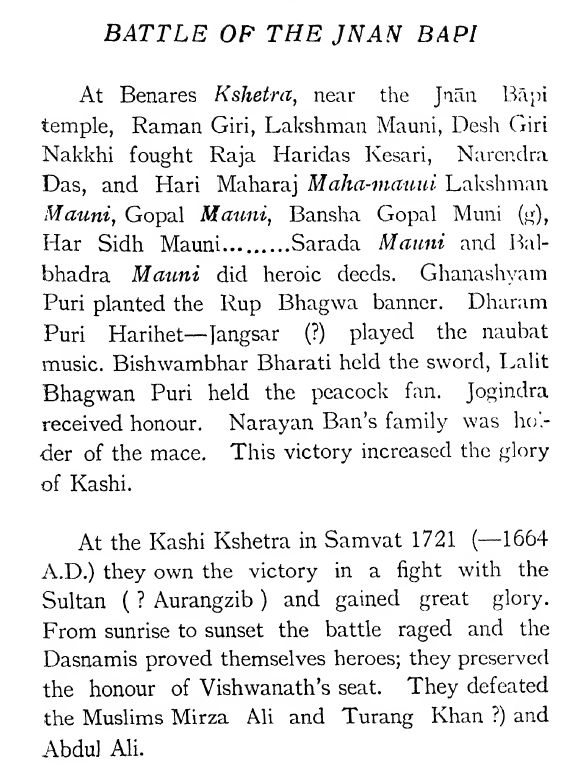
Naga Sadhus are known and respected for their Valour and Sacrifice they gave to protect the Sanatan Dharma in the Battle of Gokul, 1757 and Kashi Vishvanath Temple in 1664. It is stated that 4000 Naga Sadhus, an original thought/creation of Adi Shankaracharya defeated an army of 40,000 Afghans Ahmed Shah Abdali while 2000 of them gave their lives to save the temple at Gokul.
7. The Significance of the Akhadas:
The Akhadas are traditional orders of ascetics, and each Akhada plays an essential role in the Kumbh Mela. The Akhadas hold processions, rituals, and lead the masses in bathing in the sacred rivers. There are different sects of Akhadas, each following unique traditions and practices, and they often compete for dominance in the spiritual arena. The Naga Sadhus, in particular, belong to a certain Akhada and are known for their fierce devotion.
8. Eco-Friendly Initiatives:
With the change that the world is going through, the Kumbh Mela of 2025 has embraced 100% eco-friendly and sustainable practices such as Zero Waste Zones, Plastic-Free Campaigns, Eco-Friendly Sanitation Facilities, Green Transportation Options and Perhaps the most inspiring aspect of the Maha Kumbh’s sustainability efforts is the active involvement of pilgrims in cleanliness drives.
9. UNESCO Recognition:
Even though something like Kumbh Mela doesn’t need a recognition of any kind apart from what it already is. But due to the sheer mass, intensity and the faith this Congregation creates, it becomes a force that makes governments turn.
Hence, In 2017, the Kumbh Mela was inscribed on UNESCO’s Representative List of the Intangible Cultural Heritage of Humanity, recognizing its cultural and spiritual significance
10. A Global Spiritual Magnet and A Place of Unification
The Maha Kumbh Mela attracts not only Hindu devotees but also seekers from various faiths and backgrounds. International tourists and spiritual enthusiasts come to witness the grandeur and experience the unique energy of this sacred event. It is not only a place of intense vibration but also a venue for unification. People from various regions, cultures, and social backgrounds come together, setting aside differences to participate in a common spiritual goal. The Mela acts as a bridge between India’s diverse spiritual traditions, bringing together a unique blend of sects, practices, and beliefs that reflect India’s religious pluralism.
Since forever, Hinduism, its traditions, sects or language in terms of Yoga, Meditation, Vedanta, her Philosophies known as Darshanas have long been a global phenomena and thus Mahakumbh represents a unifying festival where people from all regions, communities and countries come to bathe not just in the rivers but in the essence of what this mega festival stands for.
If you are reading this, and wish to know India i.e Bharat there could be no other time but right now, at Prayagraj.
Plan beforehand to avoid last-minute problems
The Maha Kumbh 2025, will be starting on the auspicious occasion of Makar Sankranti, January 14, 2025, would occupy 4,000 hectares along the riverbank at Prayagraj, Uttar Pradesh and is anticipated to draw at least 40 crore visitors with an approximate expenditure of ₹6,500 crore
The Mela will end on February 26, 2025, on the holy night of Mahashivratri. Since millions of people will attend the Kumbh Mela, it is essential to reserve lodging. Kindly make travel plans in advance. Securing your location in advance is essential for tents, motels, and dharamshalas. To prevent last-minute price increases and limited availability, purchase your rail or airline tickets in advance.
: ँ :
Thank you
If today is the first time you have arrived on The Road to Nara, you are heartily welcome ~ Namaste
ROAD TO NARA : To have an access to Stories of Culture, History, Passion, Art, People, Lores, Rivers, Folk, Mysticism, Meditation, Mountains, Trees and Tantric Science of Ancient India and the Indigenous World to your mailbox.
Do send me your digi-address
Follow NATURE
: ँ :
I will take this opportunity to introduce you to About me and importantly
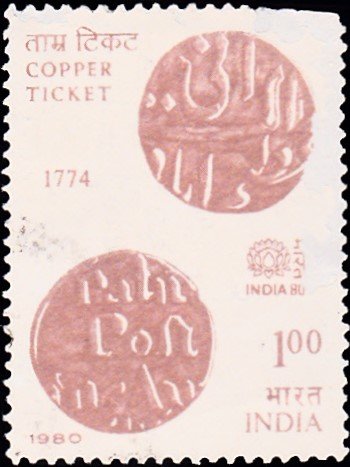
It was in January 1774 India’s 1st Governor General, Warren Hastings began to make arrangements for the establishment of India’s first Post Office Department. A Post Master General was appointed who took forward the plan ahead.
During the administration of Warren Hastings (1774 – 1785) in India, the post office was placed on a better footing than before and steps were taken to make the post available to a limited extent of private communications as well.
The ‘Copper Ticket’, on the other hand, was the first pre-paid token stamp issued from Patna, 1774. This stamp now belongs to Dilip Shah of Jabalpur. This ticket was also known as ‘Azimabad Ekanni’ & ‘Azimabad Duanni’.
This opened up the postal service to the public and letters were no longer restricted to government departments and business houses.
“Among the many things, good & bad, that the modern world has produced, surely the postal system, which covers the world, is one of its most beneficient activities.” ~ Jawahar Lal Nehru
but this post is not merely about the First Postage stamp. It is about the end of an Era.
India Post Abolishes Book Post Service
On December 18, 2024, without consultation or warning to stakeholders, India Post discontinued the ‘Book Post’ service.
India Post has shocked book lovers and businesses by terminating its ‘Book Post’. The Redeemed Book Post (RBP) service costs Rs 80 to send a book weighing up to 5 kg, which is less than other courier services.
Furthermore, India Post’s extensive network of 19,101 pin codes and 154,725 post offices in India ensures prompt delivery, with most shipments arriving within a week. Delivery within the city arrives the following day.
The closure of this service has created a crisis in the publishing industry. With the increase in shipping charges, many readers are reluctant to pay Rs 78 in postage on a book worth Rs 100. There is talk that this decision will further weaken the reading habit in the country. And in the long run will prove detrimental to India’s commitment to literacy, education, and intellectual growth.
: ँ :
Thank you
If today is the first time you have arrived on The Road to Nara, you are heartily welcome ~ Namaste
ROAD TO NARA : Stories of Culture, History, Passion, Art, People, Lores, Rivers, Folk, Mysticism, Meditation, Mountains, Trees and Tantric Science of Ancient India and the Indigenous World to your mailbox.
Follow NATURE
: ँ :
I will take this opportunity to introduce you to About me and importantly
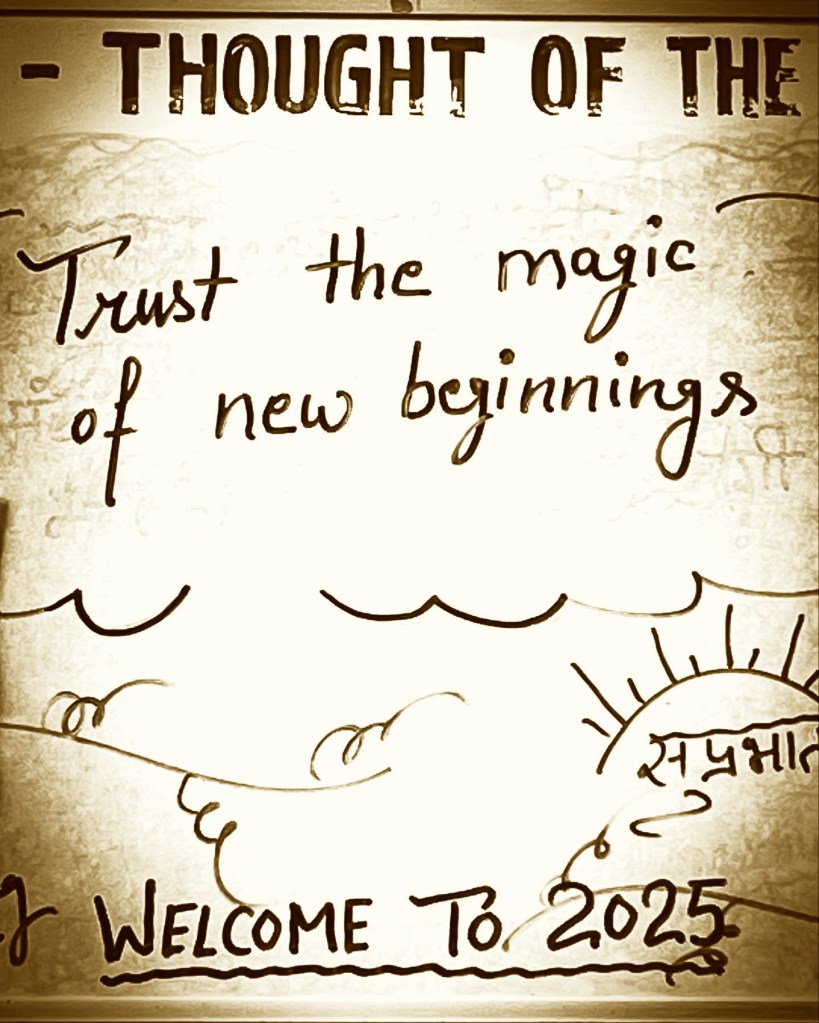
My dearest co-travellers, from Nara family to yours, wishing you an awakening 2025.
2024 was a year that helped me to ground and restart living the stillness that comes with just being. It was very much like going back to my Vipassana days and the months with my teachers at the Yoga Gurukul. Because as I see those years now, they were priceless. During Vipassana I didn’t even have a phone of my own and while I was in Gurukul, the internet was still confined to Cyber Cafe’s.
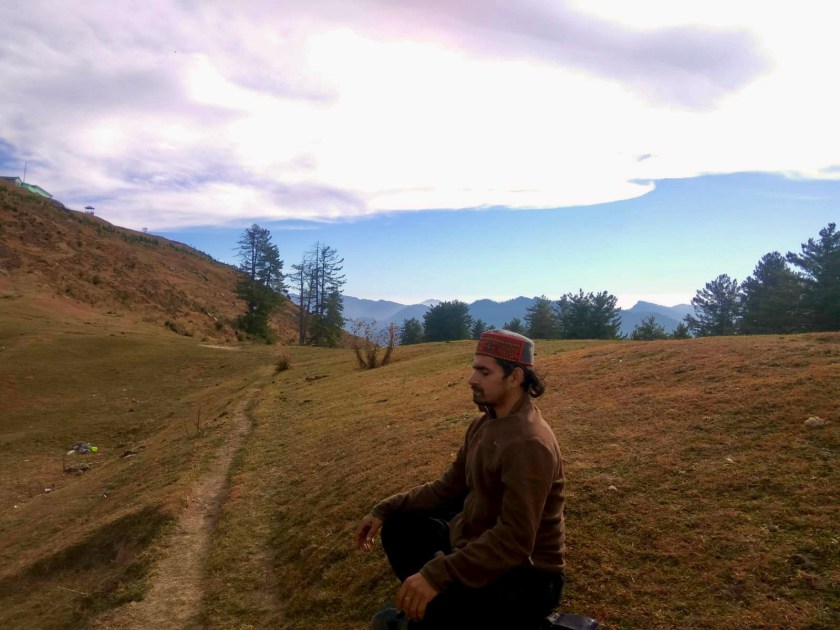
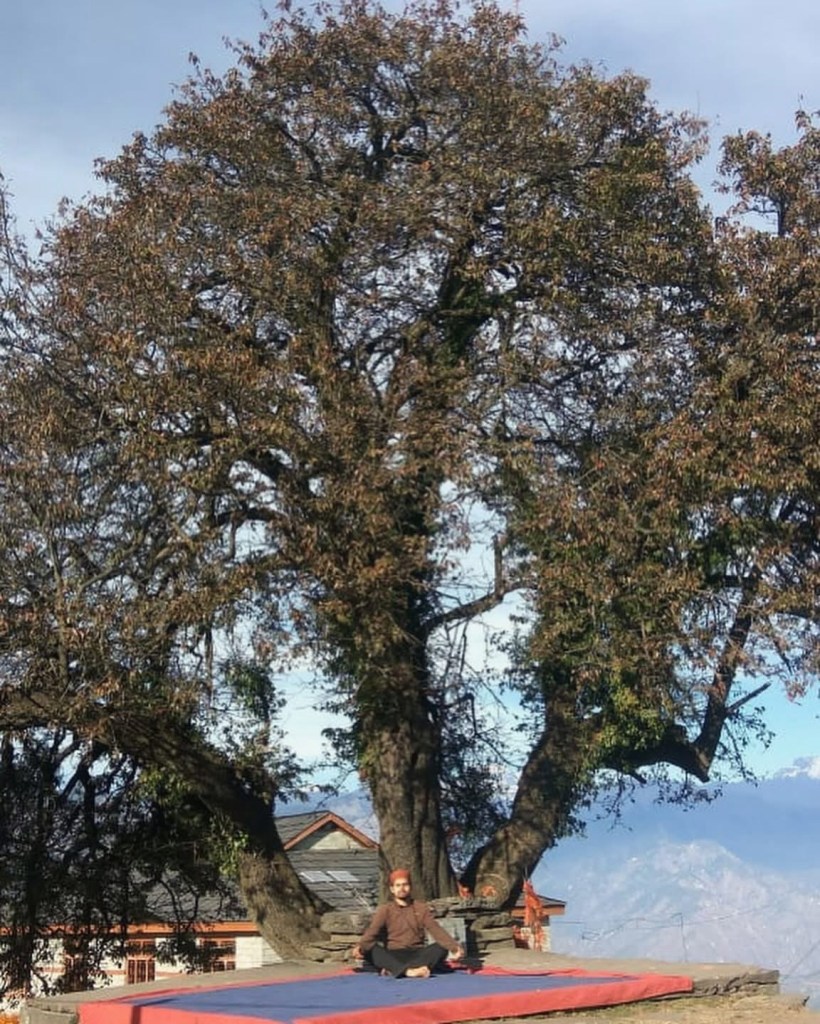
Meditating in the premises of Bijli Mahadev, Himachal Pradesh
Last year when I decided to travel in April I took a break from blogging and it went on for over 6 months. It was peaceful to say the least. But I also mull because so much of last year’s time in the Himalayas I could not and did not share with you at all. At the same time I could reimagine a world where I could keep writing without meaning to instantly share. I spent a lot of time reading in the evenings which I felt I had no patience for. But it reorganised my mind to words and the rhythm that comes with it.
And as I press on this note to myself, some lessons that i am carrying from previous years that are not goals, neither resolutions but some learnings that shall lead to better days, better moments and hopefully a better me. And hence I wish that 2025 becomes a year of clarity, of serving, teaching, uplifting and doing fewer things with intensity and determination.
As I reflect on the year that is history, I feel the need to share some lessons I learned or that have been reinforced over the past twelve months, that I must focus on before I think of any achievements or even light. And i will hope that they will be of use to you, my online family on this beautiful journey, our life.
Thought board at School
Here they are:
1. God first. God always. God alone!
2. Owning my mornings.
3. Each Day and every night: Pray. Reflect. Act.
4. That value is in to serve, to solve, to uplift the ones in need.
5. That reading for at least an hour each evening is 1000x better than scrolling.
6. That the quality of my habits will determines the caliber of my future.
7. That a good night’s sleep prevents bad decisions.
8. Read a little. Write more. Think most. Meditate all the time!
9. That country music is balm for my soul.
10. That fasting breeds focus, energy and longevity.
11. Know that the world is in the most dangerous place it’s been in for 100 years yet there’s also much beauty to celebrate.
12. That victims curse change while leaders rise within it.
13. That self-discipline is not a natural gift but a daily practice.
14. That what you do daily is so much more important than what you do annually.
15. That each time you settle for what others say, very possibly degrades your vision. And reduces your heroism.
16. That Energy is a more valuable commodity than Time.
17. That social media is a splendid tool to distribute value and a terrible waste of time if misused.
18. That allowing even one toxic person into your life can dramatically reduce the quality of your life.
19. That your work environment is a major factor in the production of your mastery.
20. That peace of mind (and heart) is more priceless than gold.
21. That if your parents are healthy and happy into their old age you’re a fantastically blessed person.
22. That generosity is a gift you give yourself.
23. That life’s just too short to worry about rejection.
24. That today, the most important vitamin is Vitamin N. Learning to say ‘NO’ will help you to bide time.
25. That in the end, Stillness will be the Key.
As they say,
If you really know where your mind goes when it wanders?
What would have to change for you to actually follow the wandering and make it real?
Or for your mind to choose to wander somewhere else? Somewhere you’re already going.
Please know how grateful I am to be doing what I love and all the more, sharing my life and my little works with you all, here.
Thank you all, my dear co-travellers.
And Happy 2025. I hope this list will help you to straighten out a few lines. Stand strong. Believe in your gifts. Be brave!
Love and Respect,
Narayan
: ँ :
Thank you
If today is the first time you have arrived on The Road to Nara, you are heartily welcome ~ Namaste
ROAD TO NARA : Stories of Culture, History, Passion, Art, People, Lores, Rivers, Folk, Mysticism, Meditation, Mountains, Trees and Tantric Science of Ancient India and around the World to your mailbox.
Follow NATURE
: ँ :
I will take this opportunity to introduce you to About me and importantly
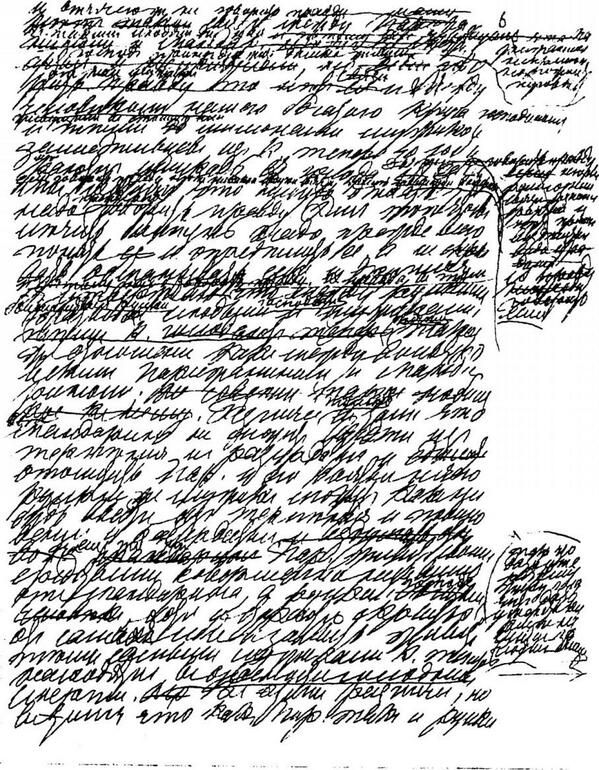
Few of my Road To Nara’s oldest family members might remember that I loved Mahatma Gandhi’s popular book ‘My Experiments with Truth‘, and that at a given period of my school life, I kept reading that book for several years at least once a year. And there was this one paragraph that got stuck with me which talked about a person’s handwriting. Mahatma’s handwriting wasn’t good itself or so he thought. And he believed that good handwriting is a necessary part of education, and that bad handwriting is a sign of an imperfect education
I still write on paper. Be it writing for the blog, research papers, grant applications or short/long essays. Everything. I find this process the best starting way for my stories to reach from where I can build on them while typing on my computer.
And it was this thought of knowing how famous author’s handwriting was when there were no screens. At a time when humans worked with higher concentration and deeper focus. And somewhere it understandably came out as a revelation for longhand writings in previous century was beautiful to look at. Not sure I could read anybody’s hand but the lines on paper had something about them. It was art. It was romance.
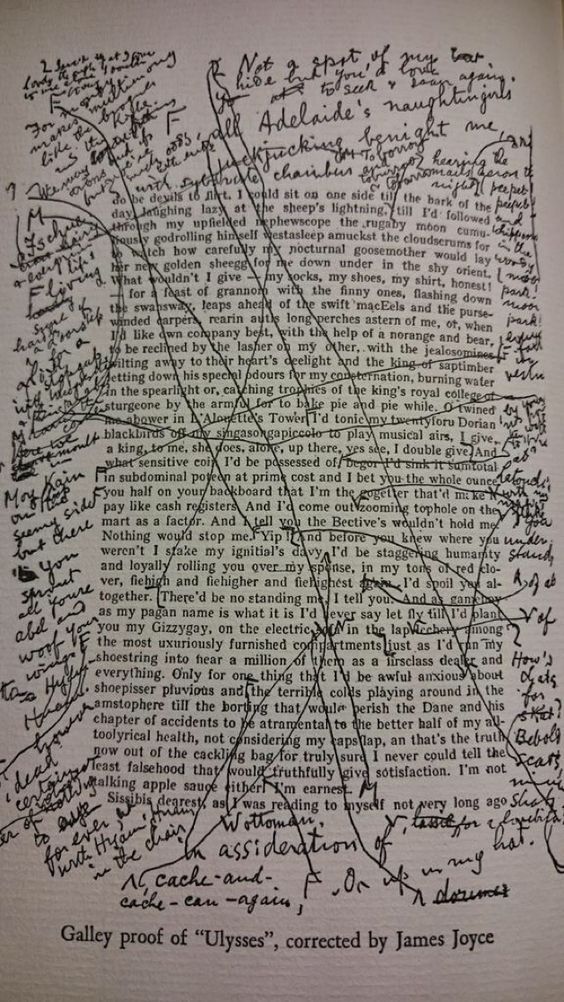
Sharing some of those pages I could find on internet and well for anyone in future who would like to see them closely.
1. Fyodor Dostoevsky’s manuscript draft of The Brothers Karamazov
2. Even in his final hours, the night before he died, C.S. Lewis took time to write a letter to a child
“Dear Philip, to begin with, may I congratulate you on writing such a remarkably good letter; I certainly could not have written it at your age. And to go on with, thank you for telling me that you like my books, a thing an author is always pleased to hear. It is a funny thing that all the children who have written to me see at once who Aslan is, and grown ups never do!”
3. J. R. R. Tolkien’s letter from Aragorn to Sam Gamgee,
in which the King of Gondor informs the hobbit of his future visit and expresses his desire to “greet all his friends.”
This handwritten letter, penned in Sindarin Tengwar, was created as an epilogue to The Lord of the Rings but was not included in the published edition.
4. Having a bad day?
Imagine being the editor who opened the mailbox to find this manuscript revised by James Joyce.
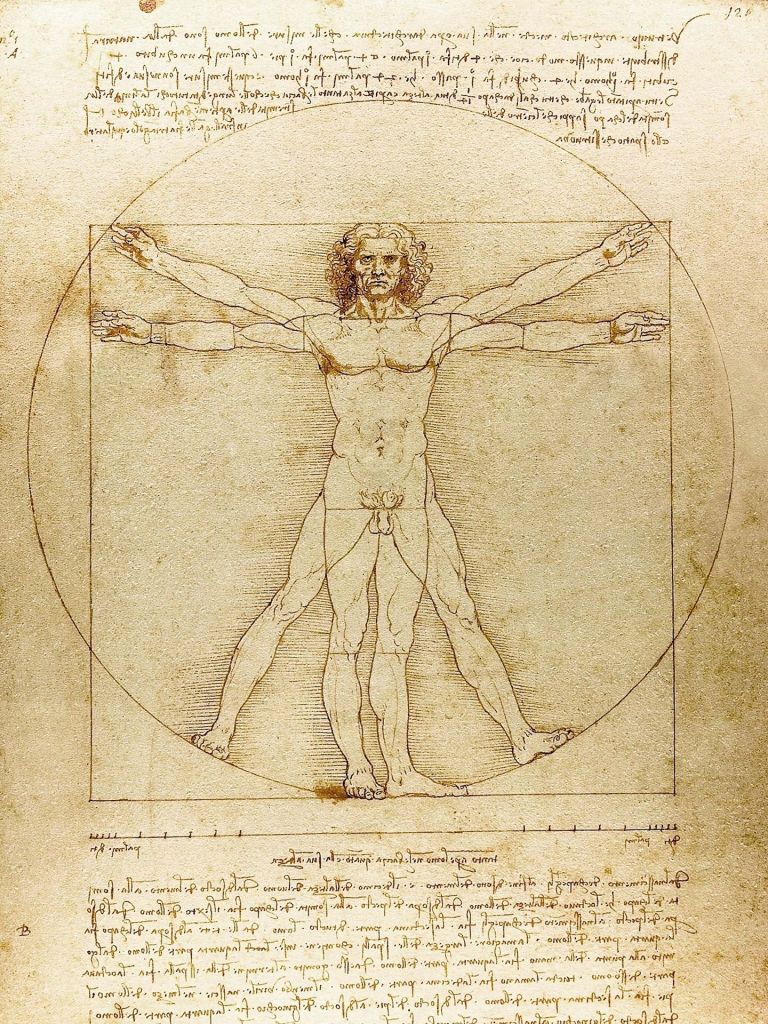
Leonardo da Vinci—the legendary left handed polymath
5. Leonardo da Vinci—the legendary left handed polymath—famously used mirror writing, where words appear reversed. To this day, his decision to use this method remains a topic of debate among experts:
• Many suggest that it prevented smudging, common for left-handed writers
• Some propose it as a form of reinforcement learning
• Others argue it hindered idea theft
Ernest Hemingway’s reading list for a young writer
6. Ernest Hemingway’s reading list for a young writer
Friedrich Nietzsche announces the title of his new book (Thus Spoke Zarathustra)
7. Friedrich Nietzsche announces the title of his new book (Thus Spoke Zarathustra) in a letter to Heinrich Köselitz.
This could be the first example of handwriting attributed to Italy’s ‘national poet’ and the father of modern Italian
8. In 2022, esteemed scholar Virgiliano Rodolfo Signorini urged caution regarding a potentially groundbreaking discovery: a 1295 parchment possibly bearing Dante Alighieri’s signature.
This could be the first example of handwriting attributed to Italy’s ‘national poet’ and the father of modern Italian.
F. Scott Fitzgerald
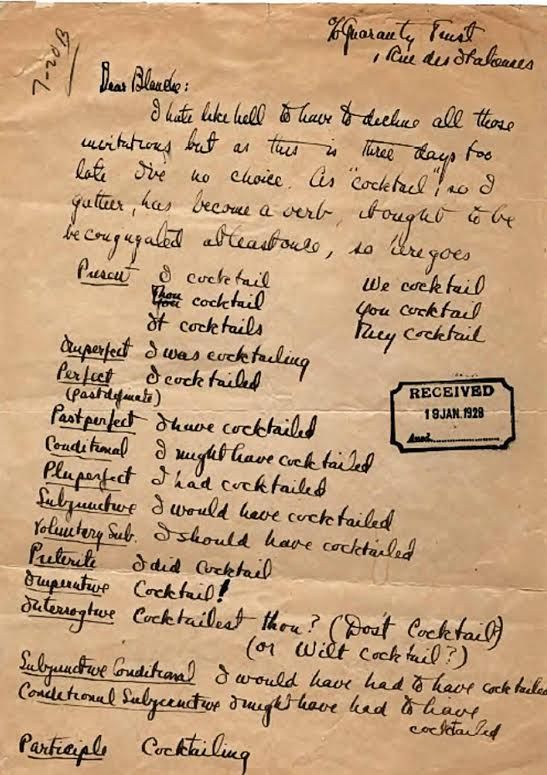
9. F. Scott Fitzgerald conjugates “to Cocktail,” the Ultimate Jazz-Age Verb, in a 1928 letter to Blanche Knopf.
Charles Dickens’s handwritten manuscript of Oliver Twist
10. Charles Dickens’s handwritten manuscript of Oliver Twist
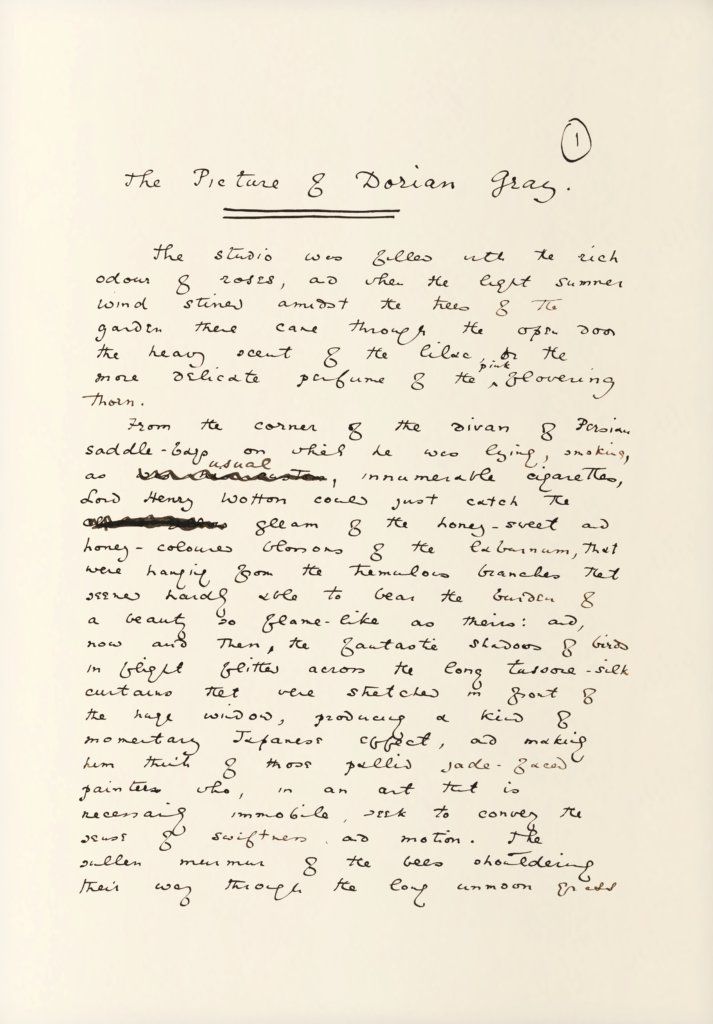
Oscar Wilde’s edits to The Picture of Dorian Gray
11. Oscar Wilde’s edits to The Picture of Dorian Gray
A 1974 copy of The Gulag Archipelago
12. A 1974 copy of The Gulag Archipelago with a magnificent inscription by Nobel prize–winner Aleksandr Solzhenitsyn
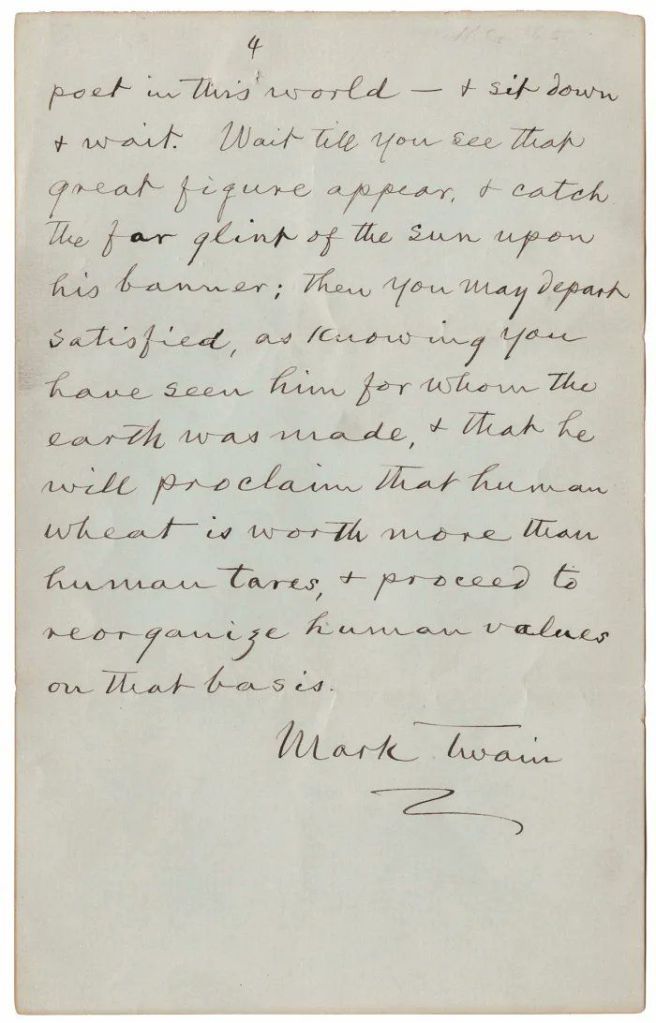
Mark Twain writing a letter to Walt Whitman
13. In May 1889, as Walt Whitman was approaching his seventieth birthday, Mark Twain wrote a letter of congratulations to “the father of free verse.”
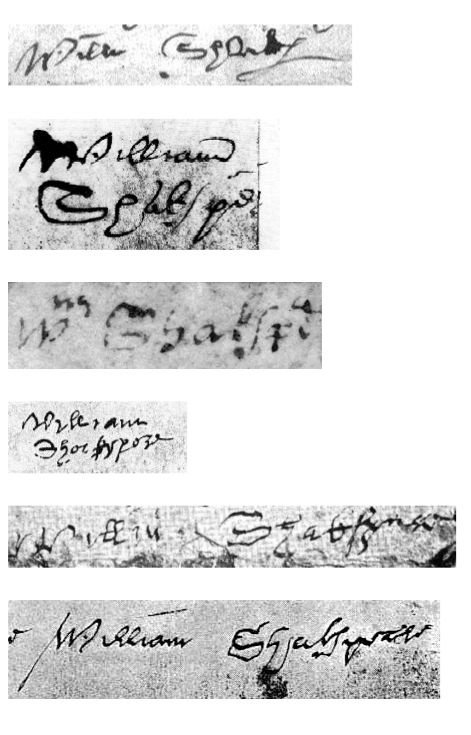
William Shakespeare’s six surviving signatures
14. William Shakespeare’s six surviving signatures are all from legal documents
War and Peace handwritten by Leo Tolstoy
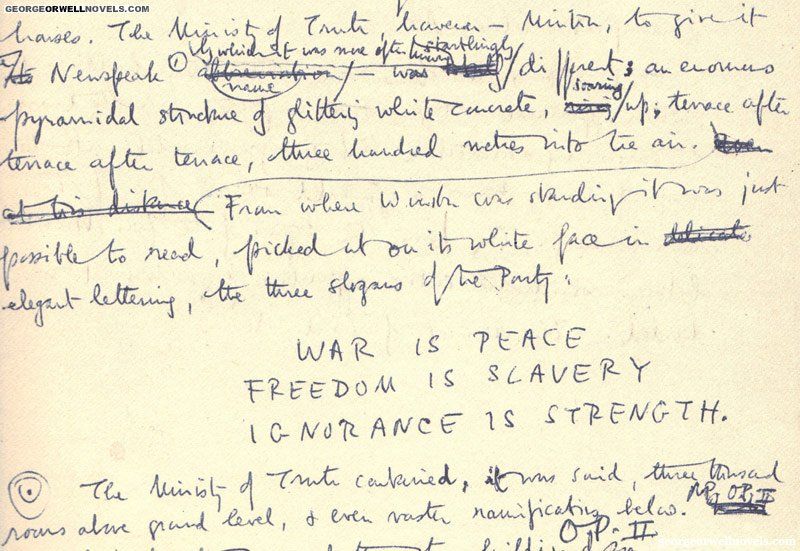
George Orwell’s 1984 manuscript
16. George Orwell’s 1984 manuscript
“The three slogans of the Party:
War is Peace Freedom is Slavery Ignorance is Strength”
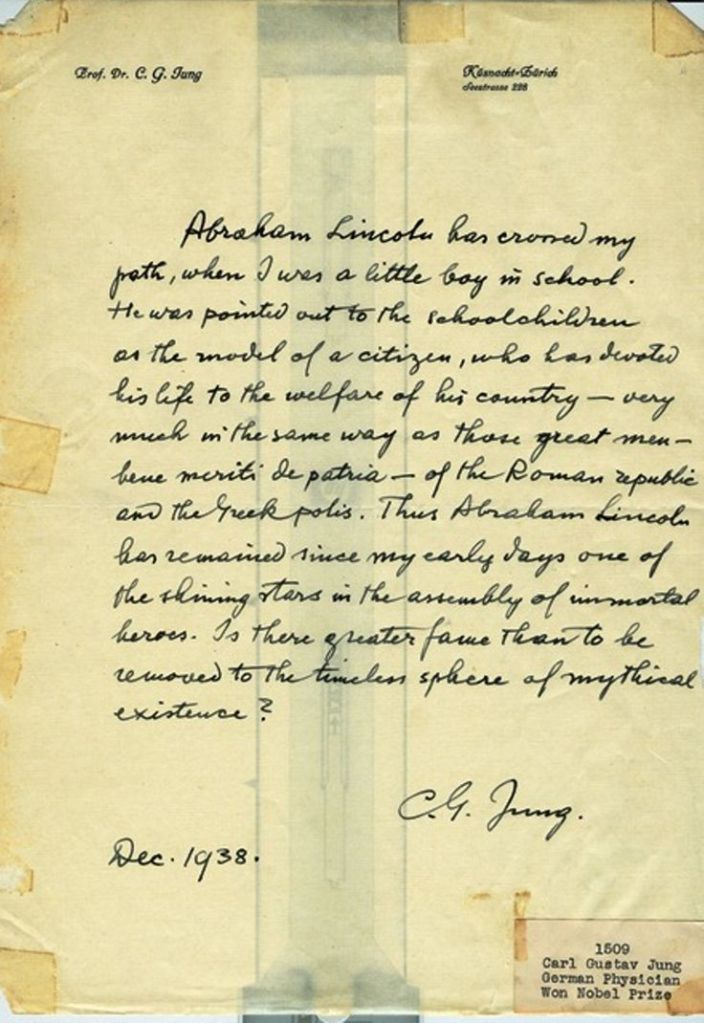
Carl Jung’s 1938 letter about Abraham Lincoln
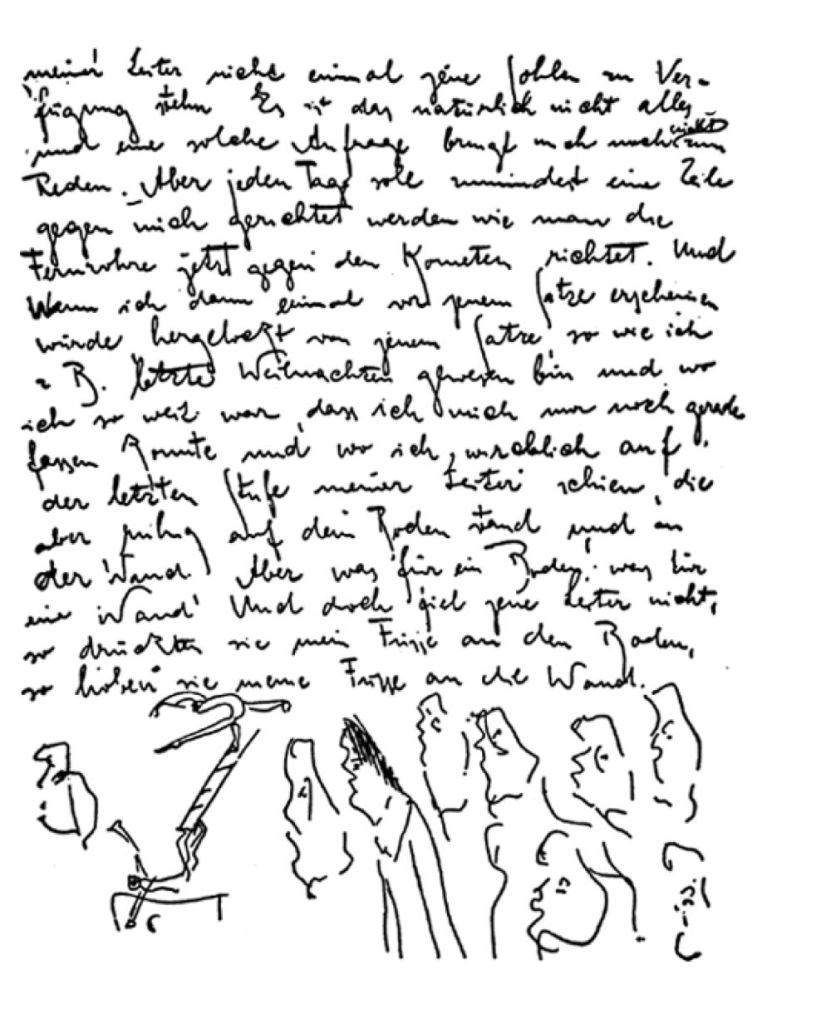
18. A page of Franz Kafka’s diaries
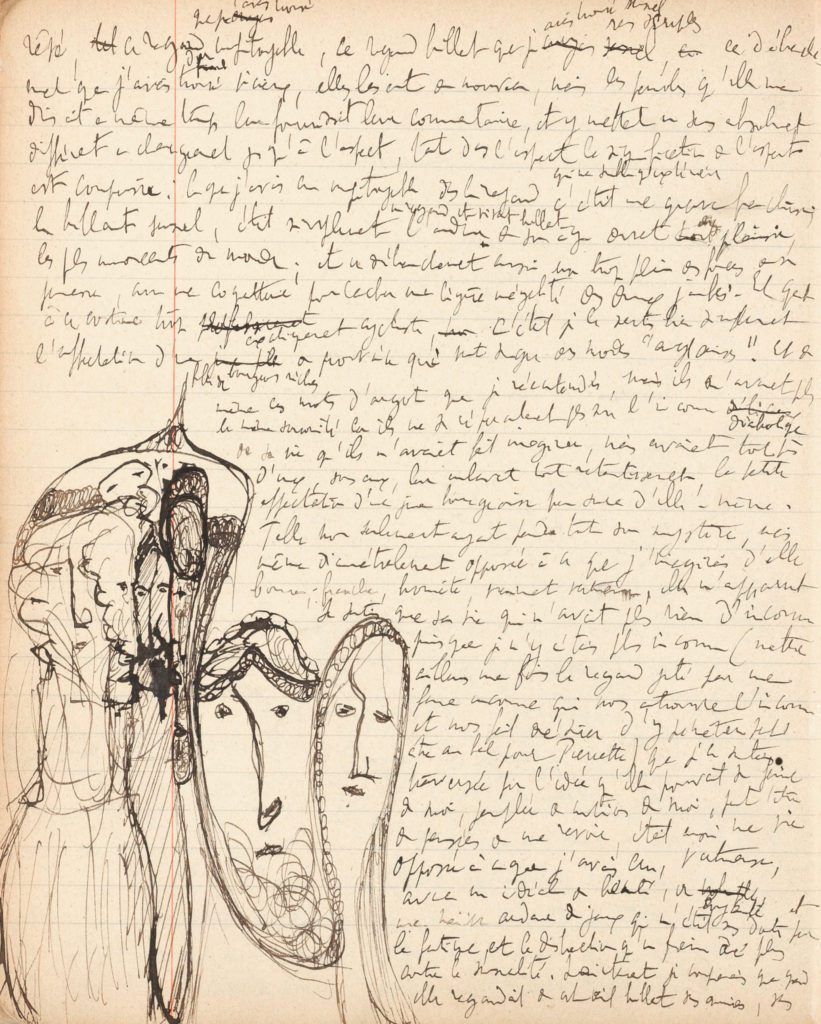
Marcel Proust’s In Search of Lost Time manuscript
Edgar Allan Poe’s Letter
20. This Edgar Allan Poe’s letter pleading for $40 from a Philadelphia editor was sold 173 years later for $125,000.
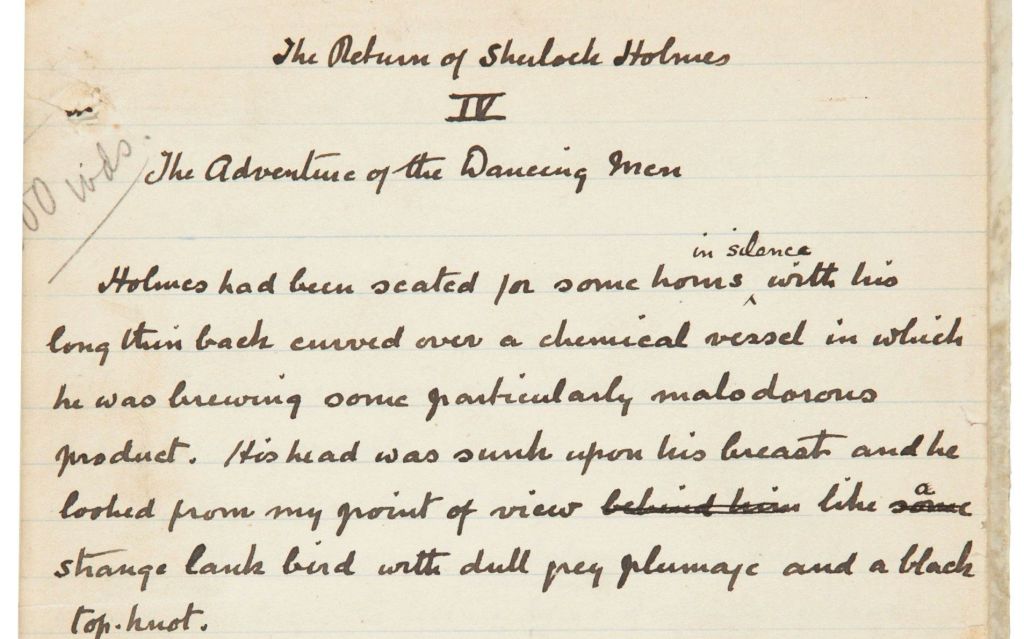
Sir Arthur Conan Doyle’s handwritten manuscript of Sherlock Holmes
Herman Melville
22. Herman Melville declines to write encyclopedia entries: “I am unpracticed in a kind of writing that exacts so much heedfulness” (December 11, 1887)
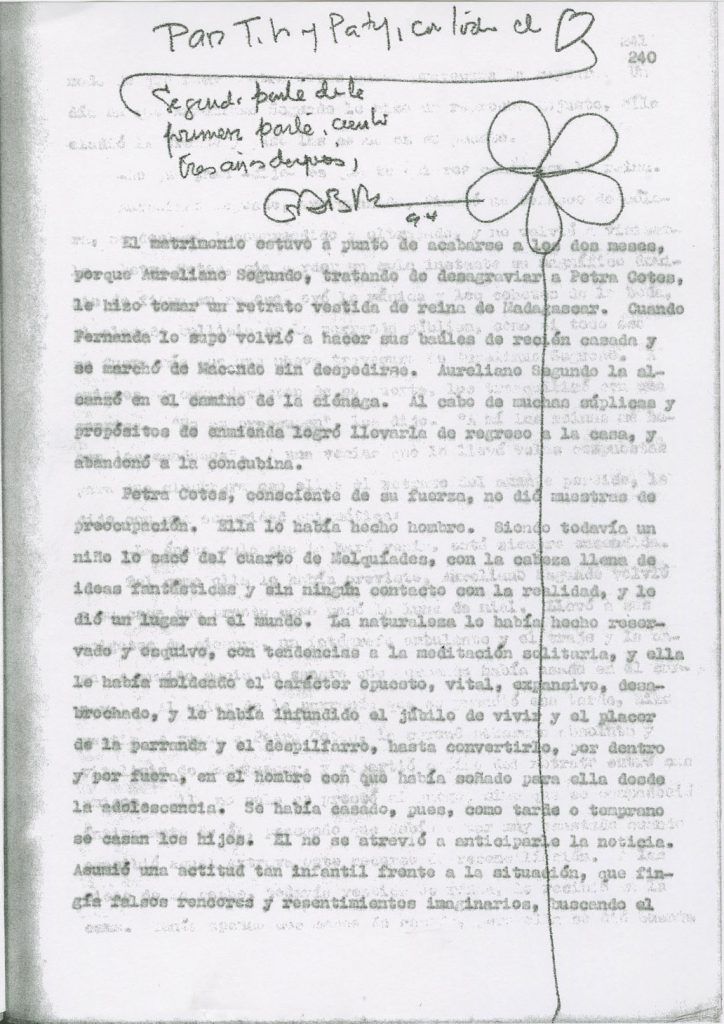
Draft page of Gabriel García Márquez’s One Hundred Years of Solitude, 1967
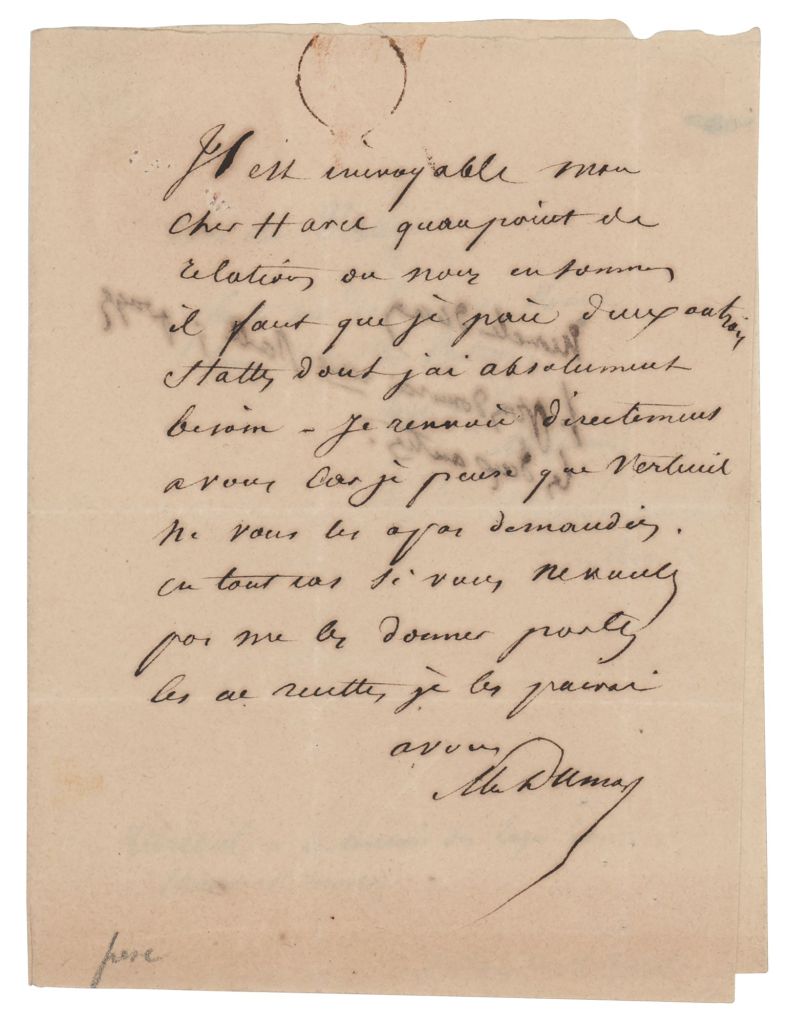
Autograph letter signed by Alexandre Dumas
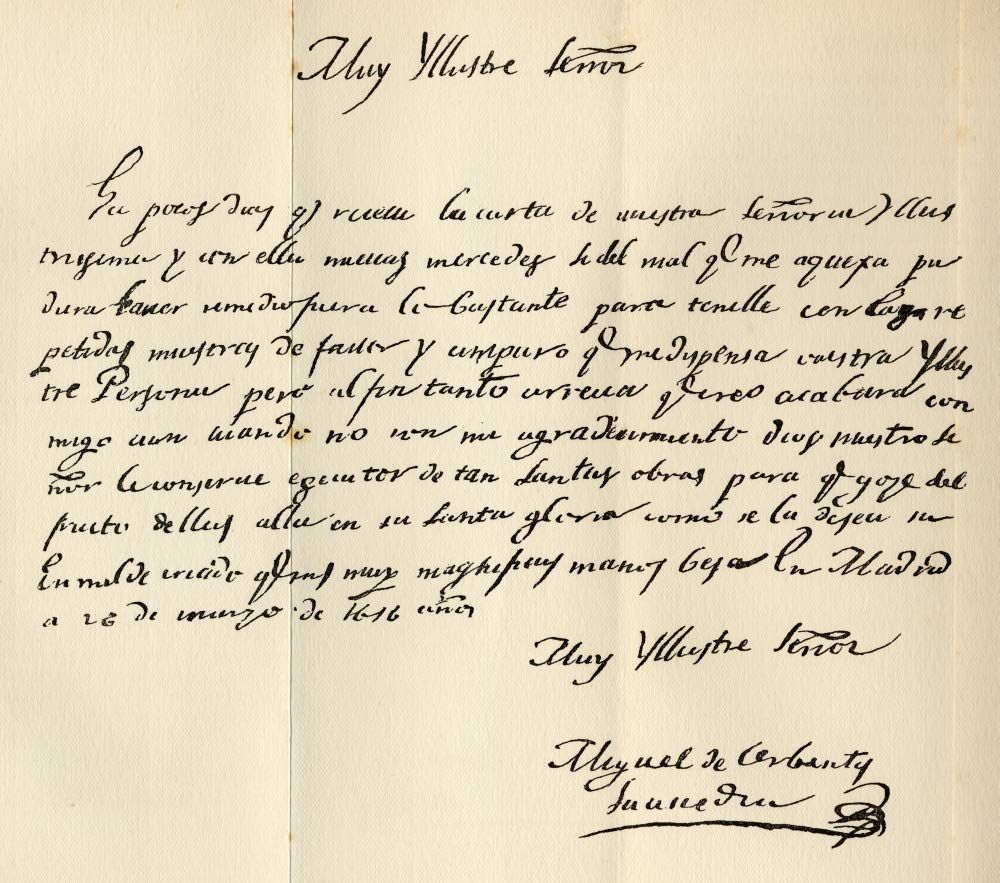
The handwriting of Miguel de Cervantes in a letter written by him to Archbishop of Toledo, 1616
Narayan Tushar Kaudinya’s Writing and Travel Sketch
And finally, yours truly’s hand written pages and well, even though I think i have forgotten how to sketch but think I should keep doing it.
What do you think of these Author’s handwritings and also, please SHARE about your writing process and what has worked for you? Do you still write on Paper?
: ँ :
Thank you.
If today is the first time you have arrived on The Road To Nara, you are heartily welcome ~ Namaste
If you like reading the posts from the blog, please subscribe to the email list. From time to time, I keep sending some very useful informative letters that will guide you to understand your body and your mind better.
: ँ :
I will take this opportunity to introduce you About me and importantly,
Folktales are Oral stories that are passed down by the elders to the younger generation. For centuries, folktales have been a crucial medium for preserving cultural traditions and teaching the youth to understand the world around them.
A Short History of Folktales in India
People believe that Indian folk tales originated in ancient India during the Vedic period (10000 BCE to 5000 BCE). And subsequently, they passed down these tales from generation to generation through oral tradition. And often used them as a means of entertainment and education. These tales evolved over time, incorporating elements from different cultures and regions of India.
The tales typically have a rural or village setting and feature ordinary people, animals, and magical creatures. They are popular among all age groups due to their simplicity, humor, and accessibility.
This post is dedicated to land of Nagaland; preserving the lesser known folktale from this Northeastern state of India and Northwestern region of Myanmar.
Who is the Greatest Man in the World: A Folktale from Nagaland
One day a man was going to his field, and on the way he caught a rat. He brought it home and put it in a box, and when later he took it out, the rat had miraculously turned into a beautiful girl. When he saw her he said to himself, ‘If I could marry this beautiful girl to a great man, then I would benefit from it.’ So he went to find the greatest man in the world, and arrived at the doorstep of the chief of his clan. He said, ‘You are the greatest man in the world whom I know and I want you to marry my adopted daughter.
But the chief said, ‘I would like to marry her, she is the most beautiful but you say she should marry only the greatest man in the world. Now, Water is greater than me, because when I go into a river in flood it carries me away.’ The man went to water, and spoke to it as he had spoken to the chief. Water said, I am not the greatest or the strongest, for when I am still, Wind comes and blows me into waves. Wind is greater than I am.’
So the man went to the wind, but Wind said, ‘Mountain is greater and stronger than me. However hard I blow, I cannot move it even an inch.’ So he went to Mountain, which said, ‘Yes I am stronger than most things. Not even wind can blow me away. But a rat can pierce my side whenever he pleases. I am powerless before a rat.’
The man didn’t know where else to go. So he came home sad, but what did he find? He found that the girl had turned into a rat again.
Looking at the rat, he smiled and let her go.
: ँ :
Thank you.
If today is the first time you have arrived on The Road To Nara, you are heartily welcome ~ Namaste
: ँ :
ROAD TO NARA is an Ethnographic Blog of History, Stories of Culture, Passion, Art, People, Lores, Rivers, Folk, Mysticism, Meditation, Mountains, Trees and Tantra Yoga Science of Ancient India and the Indigenous World to your mailbox.
Do subscribe to Nature: ROAD TO NARA
Subscribe to Nature
: ँ :
I will take this opportunity to introduce you to About me and importantly,
My Road To Nara Family, Namaste again. I hope you have all been healthy and enjoying these last few weeks of 2024.
In late March, when i announced my break for I think five months, which initially i thought would be a lot more and I will start writing here a lot earlier, but life threw a beautiful mix of intensity and learning all these past months that strangely i enjoyed my new found freedom to an extent it became harder for me to come back here. But it was not the ‘not writing here’ part which concerned me most, it was not missing it. Family life, School- its responsibilities and then my own personal and professional commitments to myself.
Some posts that were published earlier in last two months were pre-scheduled, so much so that I had written them in May itself. I forgot about them and couldn’t write or comment back as i didn’t see them for over a month. I will try to get back to the posts and answer each one.
Last many months have been like surfing in an Ocean. I was blessed to be on the Road constantly for four months in the Himalayas. In Gangotri and the time spent with my friend Sumanto around his Garden in JagatSukh came out to be the most cherished times. While i kept writing in my diary the details I also kept interviewing and documenting the full moons on the road. I have slowly started to post some things on mine and your ROAD TO NARA’s YouTube Channel but I feel I am still sometime and some rhythm away to find my way into that platform.
Now, when I am here and writing, I wanted to write hello to each one and some special people who have been kind and beautiful enough to support and timely asking me If I am good? Thank you, It was some time off and like all great days, they left quickly. And now when I am here, I shall be writing more frequently and shall be sharing all my views, travel articles, poems, stories, photographs and my new found loves that this year gifted me.
But i cannot say the same for my city; Delhi Chokes with some smoggy, yellow and toxic shades of grey. Stats say that I am smoking around 50 cigarettes a day, but these days i feel they know nothing about a cigarettes pleasure and the comfort of corners it comes with. Beacuse how my city these days looks, it is deadly uncomfortable. In simple words, We, our families, children must not be going through this. We must not be living here.
And every winter it’s the same story. Clean air is one of the few things that must be available for free. Even Supreme Court had to call it a constitutional right. And it’s not like road or electricity. Clean air is a basic human right yet for Delhi, this calamity has started to seem normal.
This is unacceptable. And I hope you who are living in the Capital, feel this.
We must make politicians pay for this. If any person or party’s manifesto doesn’t include fighting pollution as their goal. They should not get our vote. And I hope you are with me on this?
Here, Some images I took to remind myself, breathing and walking through these dark Delhi days.
Does this also bothers you? Do you live in a city which is polluted? Or how is it that you make your space environment friendly? Please do share.
: ँ :
Thank you.
If today is the first time you have arrived on The Road To Nara, you are heartily welcome ~ Namaste
If you like reading the posts from Road To Nara, do subscribe to the email list.
Type your email…
SUBSCRIBE
: ँ :
I will take this opportunity to introduce you to About me and importantly,
It’s been 10 years of those 10 electrifying current-passing days for what brought seeing to my spirit. Even today I only think of ‘why’, was I there or was it that I was demanded by the Mother to witness it. Someone who has been away from most kind of cruelties, being born in a lineage who never tasted fish, leave meat.
May be it happened to shake wake me up for all what life revolves around, some harsher realities, some withering truths. To may be learn the ways and come out of the skin of merely being a meek observer that after a decade of witnessing it eventually brought me immense strength. And learn to observe to absorb. And I absorbed; the smell of the blood, the count of the severed big buffalo heads or peacocks, even pigs, goats, ducks and bodies of geese. And of course it were not the fallen bodies that pricked me but those dead big open eyes that were always looking at someone or the Sky but not you. And in the sky were thousands of Crows and vultures just like the ones walking alongside me, in different but same ways.
This is a tribute to myself. To have lived through those longest tiring days when I walked and walked all day long along the river, and fields afar but could not find a yard a drop of blood was not spilled, where the Earth hadn’t turned red, where someone was not holding a goat’s or a calfs neck, to slaughter it.
O Shiva, it’s been 10 long years.
I must have blinked less in those days. And ate even lesser. I marched till I had to lie flat on the ground. But those fields were not to rest upon for there were people, and they carried animals and birds whose blood, they said will ripen this land for next five years.
And you know it wasn’t those 10 days now. But the journey of this spirit in the years after that. And I cannot thank this nature enough for the churning.
Certainly, I see that I was blessed. Like we all, who are breathing, living, reading this, sensing, feeling today and that we might witness another moon of Kartik tonight.
On the Road to Nara, I re-visit this unbelievable journey to Nepal for The River of Heads; Gadhimai Mela
If today is the first time you have arrived on The Road To Nara, you are heartily welcome ~ Namaste
: ँ :
ROAD TO NARA is an Ethnographic Blog of History, Stories of Culture, Passion, Art, People, Rivers, Folk, Mysticism, Meditation, Mountains, Trees and Tantra Yoga Science of Ancient India and the Indigenous World to your mailbox.
Do subscribe to Nature: ROAD TO NARA
Subscribe to Nature
Type your email…
SUBSCRIBE
: ँ :
I will take this opportunity to introduce you to About me and importantly
On October 15, 1932, history was made! The civil aviation industry in India, now one of the world’s largest, owes its beginnings to a single flight. It was taken by a Paris-born Parsi with a vision to connect with his roots & shape the future.
Indians remember Jehangir Ratanji Dadabhoy Tata as the leader of India’s largest industrial group for five decades. He is also celebrated as a visionary who played a crucial role in establishing the aviation industry in India, including the flagship airline
JRD Tata was born in Paris but shocked many when he renounced French citizenship and returned to India. Just twelve days after the launch of India’s first flying club in Bombay – the Aero Club of India & Burma – JRD achieved his dream of becoming a pilot.
n 1932, following the family tradition, JRD established a business named Tata Airlines. Their vision was to transport mail & passengers in India. They faced a problem: lack of proper facilities. Initially, the firm operated out of a small hut with a thatched roof at the Juhu Airstrip in Bombay.
On October 15, 1932, JRD himself piloted the first-ever flight of Tata Air Services from Karachi’s Drigh Road Aerodrome to Mumbai’s Juhu Airstrip via Ahmedabad. The aircraft, a single-engine De Havilland Puss Moth, carried 25kg of 4-anna airmail letters.
Tata airlines became a public limited company on July 29, 1946, when regular commercial service resumed in India after World War II. It was renamed Air India Ltd and was nationalized in 1953.
JRD re-enacted his historic flight in 1962 and then again on its 50th anniversary in 1982, flying solo from Karachi to Bombay via Ahmedabad.
The civil aviation industry in India, one of the largest globally, traces its origins to a single flight taken by a Paris-born Parsee who sought to return to his roots and make history.
: ँ :
Thank you.
If today is the first time you have arrived on The Road To Nara, you are heartily welcome ~ Namaste
If you like reading the posts from Road To Nara, do subscribe to the email list.
: ँ :
I will take this opportunity to introduce you to About me and importantly,
One day, the nawab sent word to maharaja Krishnachandra that he wanted the whole earth measured, from side to side and from end to end, and that he would greatly appreciate it if maharaja would take it upon himself to count the stars in the sky as well. The Maharaja was astounded and said, ‘I don’t want to seem uncooperative, but you have commanded me to do the impossible.’
And the Nawab said, ‘But do it you will.’
So the Maharaja fell into a brown study and brooded over how he might fulfill the demands of the Nawab.
It was not long before Gopal Bhar passed by, and seeing the Maharaja in such a state of despair, he tugged gently at the ends of his mustache and said, ‘Maharaj, what is this I see? If you have. troubles, you need only tell your Gopal, and all will be well.’
The king was not so easily consoled. He said, ‘No Gopal, this is a problem even you cannot solve. The Nawab has commanded me to measure earth, from side to side and end to end. And as if that were not enough, he wants me to count the stars in the sky as well.’
Gopal was not dismayed. He said, ‘Ha, Maharaj, nothing could be easier. Appoint me your official Earth-Measurer and Star-Counter, and set your mind at rest. And when I am through, I shall myself go through the Nawab with the results. Only one favour: ask the Nawab for one year to finish the job and a million rupees for operating expenses. In one year’s time, i will bring him the results.’
The Maharaja was greatly pleased and relieved, since if the job were not done it would be Gopal’s head that would come off and not his own. He did as Gopal had asked.
So Gopal passed a very pleasant year, spending the million rupees on the most delightful women and the most delicious food in the kingdom, as well as on palaces and elephants and jewels and other things of that type. He spent, in fact, such a pleasant year that at its end he went to Maharaja again, jungling the four nickel coins and two copper coin that remained of the million rupees, and assuming a worried frown, said, ‘Maharaj, the task is more difficult than I had assumed. I have made an excellent start, and the results are promising. But I will need another year’s time. And incidentally, another million rupees, operating expenses.
The Maharaja reluctantly petitioned the Nawab, and the Nawab reluctantly granted the extra year and the second million rupees. And Gopal passed his year even more pleasantly than the first, since now he had some experience in these matters.
Exactly one year later to the hour, Gopal cam dragging himself up to the road to the Nawab’s palace. With him were fifteen bullock carts, crammed to creaking with the finest thread, tangled and jumbled and matted and flattened down, and five very fat woolly sheep. He led this very odd procession through the gates of the palace and into the court of the Nawab, made a deep and graceful bow, and said, ‘Excellency, it has been done as you ordered. I have measured the earth from end to end and from side to side, and I have counted the stars in the sky.’
‘Excellent. And now give me figures. The exact figures.’
‘Figures, Majesty? Figures were not in the agreement. I have done as you have commanded. The earth is as wide as the thread in the first seven bullock carts is long, and it is as long as the thread in the other eight is long. There are, furthermore, just as many stars in the sky as there are hairs on these five sheep. It took me a long time to find sheep with just the right number of hairs.’
The Nawab could only say, ‘Impossible! I cannot measure that thread or count those hairs. Still, you have lived upto your end of the bargain. Here’s your reward: a million rupees.’
And Gopal lived in ease for some more time till he found the kind again, in despair.
: ँ :
Gopal Bhand was not just another name for a person but was very much part of the everyday life of a by-gone era. Whenever, one looks at the history of Bengal with special reference to the rule of Maharaja Krishna Chandra, they will come across the character of Gopal Bhand, the jester at his majesty’s court.
Gopal was born in the village of Ghurni, north of Krishna Nagar. He lost his father at a very young age and because of economic reasons could not continue with his education. Still, whatever he had learnt in the early days along with his in-born intelligence, he became an intellectual.
Gopal belonged to the clan of barbers, famous for their quick wit. There is a saying that crows among the bird and barbers among the humans are the cleverest species in the whole world. Gopal lived up to this saying; from the very beginning he showed signs of cleverness and cunning. He grew up entertaining people all around him and soon people started calling him GOPAL BHAND or GOPAL THE JESTER.
: ँ :
Thank you.
If today is the first time you have arrived on The Road To Nara, you are heartily welcome ~ Namaste
If you like reading the posts from Road To Nara, do subscribe to the email list.
: ँ :
I will take this opportunity to introduce you to About me and importantly,
A poor widow lived with her two sons and two daughters-in-law. All four of them scolded and ill-treated her all day. She had no one to whom she could turn and tell her woes.
As she kept all her woes to herself, she grew fatter and fatter. Her sons and daughters-in-law now found that it was a matter for ridicule. They mocked at her for growing fatter by the day and asked her to eat less.
One day, when everyone in the house had gone out somewhere, she wandered away from home in sheer misery and found herself walking outside town. There she saw a deserted old house. It was in ruins and had no roof. She went in and suddenly felt lonelier and more miserable than ever; she found she couldn’t bear to keep her miseries to herself any longer. She had to tell someone.
So she told all her tales of grievance against her first son to the wall in front of her. As she finished, the wall collapsed under the weight of her woes and crashed to the ground in a heap. Her body grew lighter as well.
Then she turned to the second wall and told it all her grievances against her first son’s wife. Down came that wall, and she grew lighter still. She brought down the third wall with her tales against her second son, and the remaining fourth wall, too, with her complaints against her second daughter-in-law.
Standing in the ruins, with bricks and rubble all around her, she felt lighter in mood and lighter in body as well. She looked at herself and found she had actually lost all the weight she had gained in her wretchedness.
Then she went home.
: ँ :
Thank you.
If today is the first time you have arrived on The Road To Nara, you are heartily welcome ~ Namaste
If you like reading the posts from Road To Nara, do subscribe to the email list.
: ँ :
I will take this opportunity to introduce you to About me and importantly,
We are into the sunset of March, and as I wait for the Sun to melt my resolves again this summer, I try to pull many a me’s within me. To take a cue from the happier poets and write about happiness;
But how will it come
without a company?
Without anyone to share it with.
May be by adapting,
One more time.
Going placidly amid the noise and haste, and understanding what peace there may be in silence.
As far as possible without surrender by being on good terms with all persons,
from your side.
Speaking your truth quietly and clearly; and listening to others, even to the dull and the ignorant; knowing they too have their story.
by Avoiding loud and aggressive persons, they are vexations to the spirit.
If you compare yourself with others, you may become vain and bitter; for always there will be greater and lesser persons than yourself.
By enjoying your achievements as well as your plans.
By keeping an interest in your own career, however humble; it is a real possession in the changing fortunes of time. Exercising caution in your business affairs; for the world is filling with impatience and trickery But let this not blind you to what virtue there is; many persons strive for high ideals; and everywhere life is full of heroism.
Be yourself. Especially, do not feign affection. Neither be cynical about love; for in the face of all aridity and disenchantment it is as perennial as the grass.
Take kindly the counsel of the years, gracefully surrendering the things of youth. Nurture strength of spirit to shield you in sudden misfortune. But do not distress yourself with dark imaginings.
Many fears are born of fatigue and loneliness. Beyond a wholesome discipline, be gentle with yourself.
You are a child of the universe, no less than the trees and the stars; you have a right to be here.
You have a right to be you.
And whether or not it is clear to you, no doubt the universe is unfolding as it should.
Therefore be at peace with God, whatever you conceive Him to be, and whatever your labors and aspirations, in the noisy confusion of life keep peace with your soul.
With all its sham, drudgery, and broken dreams, it is still a beautiful world.
Be cheerful. Because happiness is not to be found,
It is above all, to be shared.
This image is from an Old mud house I had knocked in, in the middle of the night in a remote village of Spiti, Himachal Pradesh. Freezing, I had been riding my bike to nowhere it seemed when I saw one lone bulb hanging outside. This person opened the door like God, allowed me in, cooked at 2 A.M and let me sleep till late noon.
I don’t remember his name today but I acknowledge and appreciate his kindness, and dedicate this image to our parting memory, as I was getting ready to leave his temple of a home. I will be taking a break from writing on ROAD TO NARA for sometime, as I will be travelling on assignment in the higher Himalayas documenting and collecting stories of Climate Change and Human Animal conflict for the next two months in collaboration with Radio Mandakini and the Vivekananda International Foundation.
Its the first time in close to four years that I will be taking a conscious break from sharing stories, views, to helping people know India that is Bharat; as a country and a civilisation better, to help them to travel and explore this magic region, better.
Apart from the Work Assignment, there are some other areas that are demanding my attention, my school which needs a lot of work, not just with children, the staff but with the maintenance of our age old building too. Secondly, writing weekly on the blog, as each writer here knows, requires a lot of work which lately has started hampering me in finishing other projects that I undertake to earn my ‘whole wheat bread.’
In addition, I have considered a change in my blogging constancy. From here onwards my posts may appear irregularly and/or less frequently.
And Even so I fear a drop in my readership, but I need to work my energy to be relocated
To some newer adventures that are waiting, not to be shared or written about first but to experience them, wholly.
To empty myself a bit.
To Read more, as work and School leaves me with no time to spend with books. I also feel blogging has lead me to read less books and more blog posts.
To seriously work on Longer form of Writing.
To see and observe from a distance for a bit, to how Road To Nara can serve the Human and the Soul world better in the years to come from here on.
And to plan the arrival of my Podcast ROAD TO NARA Youtube Channel that i have been wanting to for sometime, which I believe WILL compensate with the lost viewership in the times to come.
There is also this one more thing that I would really want to do, is to thank you personally. So, even though I might not be available commenting, but in time, I will try to write to every reader of ROAD TO NARA who made my journey here possible, who shared my love and my conflicts, who remained one with me, and who all helped me to float and gradually to grow, i will be writing to you.
If anyone would like to share their email-id, for me to write, may write them in comments or just inbox me a sweet little ‘hello’ at lotusofnara@gmail.com
: ँ :
Thank you.
If today is the first time you have arrived on The Road To Nara, you are heartily welcome ~ Namaste
: ँ :
I will take this opportunity to introduce you to About me and importantly,
A Joy filled, Colourful and Auspicious Holi to each one. The colourful festival of Holi, literally meaning ‘burning’, is celebrated on the full moon day in the month of Phalguna and heralds the onset of spring season.
Holi is One of the two Indian Festivals, amongst a plethora of them and other than Diwali that the world recognises. And for us here in India, it has quite a few meanings. Foremost and the simplest one is its arrival marks the end of a long and Cold winter, and that the time of colour and water has arrived.
And since this beautiful festival starts with fire, the night before, symbolising the legend of Holika Dahan; a story of Truth and devotion’s victory over Evil.
here on ROAD TO NARA, I will take my co-travellers on an outing sharing a Visual History of this Ancient and most colourful festival on Earth, Holi.
Unraveling the Mystique of the Indian Holi Festival
From All-Women to Coed, from Music and Fire to Water, From Feast to Bhang.
Holi is Called by various names throughout the ages and regions: “Dol-Jatra”, “Dulhendi”, “Dhola”, “Odad”, “Holikotsav”, “Holi”, “Rangwali Holi”, “Dol Purnima”, “Dhuleti”, “Dhulandi”, “Ukuli”, “Manjal Kuli”, “Yaosang”, “Shigmo”, “Phagwah”, or “Jajiri”
Archaeo evidences suggest that the Full moon of Phalgun was celebrated by woman with music followed by a full night Jagran(musical awakening) on the following day dedicating it to Shiva until about 1000 years ago.
Evidences of pichkaries and Water are seen from 10th century onwards with some participation of man is also visible in this era
Around 1500, The men participation increased.
Around 1750, Radha Krishna paintings became popular.
And by 1970, Holi’s association with Bhang came into limelight with Bollywood films and songs.
Exploring the Journey of Holi
Holi is one of the Oldest festivals on the planet being celebrated till date. It is described by Buddha himself during his lifetime in the text Udânavarga. the oldest reference of holi comes from the eighteenth pariśītha of Atharvaveda where its mentioned by the name Holäkâ to be observed on Phalguna Purnima- the same day we celebrate it even today.
Gathâsaptasati by the Sâtavahana King Hâla written 2000 years ago gives a detailed description of playing Holi by throwing colours and water playfully at each other.
3rd Century BCE
The earliest mention of the Holi festival dates back to the Sitabenga Cave Inscription from the 2nd or 3rd century BCE. –
“adipayariti hadayarti 1 sabhava-garu kavayo e ratayarh
dule vasarhtiya hasavanubhute I kudasphataiii evarii alarh g”.
It describes how during the swing-festival of the vernal full moon, people used to tie garlands thick with jasmine flowers around their necks as they enjoyed frolics and music.
In a second picture from Chandraketugarh, Bengal, woman can be seen playing music with garlands around her neck. (Similar to the inscription found in Sitabenga) Suggesting that around 2200 years ago, Holi may have been primarily a women’s festival.
Approximately 2200 years ago, during the time of Holi, the weather would have been as hot as it is today in April due to the earth’s precession.
7th Century CE
King Harsha mentioned Holikotsav in his work ‘Ratnavali.’
Holikotsav is an ancient Hindu festival that signifies the victory of good over evil. It typically falls on a full moon day during February-March and marks the beginning of spring.
1012 Century CE: Holi as per Al Biruni who visited India
The full moon’s day of Phalguna is a feast to the “Women”, called Odad (?), or also dhola (i.e. dola), when they make fire on places lower than those on which they make it on the festival camahka, and they throw the fire out of the village.
On the following night, i6. that of the 16th, called Śivaratri, they worship Mahadeva during the whole night; they remain awake, and do not lie down to sleep, and offer to him perfumes and flowers.
12th Century. CE
A woman plays Holi while her assistants fill the Pichkari and Gulal Pot. She holds a clutcher, likely for Gulal.
In second carving the women are seen filling pichkaris themselves
Location: Chennakesava Temple, 12th century AD, Belur, India
“Pichkari” Piston Technology:
Originated in India a millennium ago but “Patented” by JW Wolf in the US in 1896, over 130 years ago
15th Century CE
A stunning carving from the Holi festival at Mahanavami Dibba, Hampi, Karnataka captures the essence of the celebrations. King Krishnadevaraya commissioned the building of the temple in 1513 AD. The exquisite walls feature intricately carved statues depicting women joyfully playing Holi with pichkaris and tubs.
The pride of India is in it’s vibrant heritage. While pictures of people playing Holi are there in miniature art, in sculpture form, this depiction is very rare.
1591 A.D
The two women on the right are spraying the lovers on the swing with coloured water from bamboo syringes (pichkaris)
In his memoirs, Jahangir, whose mother was Hindu, vividly describes Holi, the exuberant Hindu festival:
‘Thursday is the Holi, which in their belief is the last day of the year. On the night of this day they light fires at the head of the streets and ways, and when it becomes day they splash ashes on each other’s heads and faces, creating a wonderful noise and disturbance. After this, they wash themselves, put on their apparel, and walk about in the gardens and on the plains.’
Krishna and Radha Celebrating the Holi Festival with Companions
India, Rajasthan, Marwar, circa 1750
Pahari Hills, Bilaspur School Nathdwara, C 1800
1760 A.D
King and Prince playing Holi with their consorts in Farukkhabad and Deccan region
1795 A.D
A nobleman watching Holi celebrations Patna style Women and men are seeing throwing Cotton, balloons and water using pichkaris.
British Library
19th century Holi Festival by a Lucknow Painter
Holi in 20th Century
1950s :: PM Jawahar Lal Nehru Playing Holi
1960s :: Actress Sadhana Playing Holi With Asha Parekh
1968 :: The Beatles Playing Holi In Rishikesh
Holi at the sacred Manikarnika Ghat, Varanasi.
Today Holi is misunderstood for intoxicating oneself with Bhang Filthy songs about sacred relationships are played with all vigour.
Many men use this day to malign and grope women, stories of abuses and trauma circulate the internet. Who is responsible for turning a “festival that dignified woman” to a “Festival in-dignifying woman”?
Please share this essay, and your experiences in Comments. But meanwhile, never let darkness in, because that is what the human journey is all about.
It is towards light, towards colour, towards Joy.
Here, in the late 90s, my Little Sister and I.
Happy Holi.
: ँ :
Thank you.
If today is the first time you have arrived on The Road To Nara, you are heartily welcome ~ Namaste
If you like reading from Road To Nara, do subscribe to the email list. This will help us to connect and reach out to you whenever we roll out anything new.
: ँ :
I will take this opportunity to introduce you to About me and importantly,
Sage Narada could travel instantly to any part of the world whether it was the skies, the earth or below the ground. He did not possess a home or a vehicle, and was notorious for mischievously engineering many misunderstandings. However, he would always side with the truth and his words were taken seriously. His presence was always welcomed by devas, asuras and humans.
Narada advised everyone he met to become a sage like him and constantly pray to Vishnu. This upset his father greatly. Brahma said to his son, ‘Look, you are free to do whatever you want to do- you have few responsibilities and almost no attachments, but the common man on earth has much more to worry about and must undergo his share of suffering. Don’t think that you know what’s best for others, especially when you have no understanding of a mortal life, of marriage and children, of joy and sorrow.
Narada, however, did not heed his father’s words and only smiled mockingly at Brahma before going on his way.
A few days later, Narada visited Vishnu, and his conversation with Brahma came up.
Vishnu smiled mysteriously. Suddenly, he coughed and glanced at his devotee. ‘I am very thirsty. Will you please bring me a glass of water from the lake nearby?’ the god asked.
Narada promptly went to fetch water, kamandalu– an oblong water pot, in hand. While dipping the water pot into the lake, he saw a series of stunning white steps below the surface of the water. Curiosity got the better of him and he could not resist going down the stairs. As he had the power to wander anywhere. Narada was able to go deep under the water. A short while later, he came across a large palace. A beautiful maiden was sitting in the garden in front, making a garland.
‘Who are you?’ asked Narada in surprise.
‘I am the princess of this palace,’ the woman replied.
‘Who is this garland for?’
‘For Vishnu, of course. I am his devotee and I am getting the garland ready for a puja.’
Narada was charmed by the maiden’s devotion and beauty, and he joined her for the puja. By the end of it, he had fallen in love with her and asked her to marry him.
Shyly, she agreed.
The two were married in a grand wedding ceremony and Narada lived in the underwater palace with the princess.
Decades went by, and Narada became the father of sixty children. Life was utterly blissful.
One day, a terrible storm came out of nowhere, and the palace came tumbling down. Narada tried his best to save his famil, but failed. One by one, he saw all his children die before him. Narada and his wife cried bitterly at their helplessness. Suddenly, a bif wave emerged and his wife was swept away with it. Before he could react, he found himself staring at the eye of the storm. As Narada held on to a treefor dear life, he remembered Vishnu. ‘Please save me, please save me, ‘he chanted and closed his eyes in preparation for death. He became afraid and realised that the life he had was important to him. He wanted to live.
And then he felt someone tapping on his shoulder. When he opened his eyes, he found Vishnu standing beside him. The storm had subsided and everything was quiet and dry.
‘Narada, what is the matter?’ asked Vishnu.
‘Has the storm passed?’ Narada asked him in disbelief.
‘Why? What happened?’
Narada sobbed. ‘I lost my wife and my children, and now I have nothing! I don’t deserve to live without them.’
Vishnu chukled. ‘What are you talking about, dear Narada? I only sent you to fetch some water for me, and here you are sitting and daydreaming by the lake. Look around you. There is no storm. Tell me now, what’s bothering you?
Narada stared around him, flabbergasted, and told Vishnu the whole story.
The lord finally admitted, ‘I am the one who created that maya for you. You are neither married nor do you have children. May be now you can understand what attachment. feels like and how hard it is for the common man to be detached from it all. If an accomplished sage like you can get caught in this web of illusion, just imagine how others must cope with it. Your father is absolutely right, dear devotee.
Narada bowed his head in shame.
Vishnu smiled, ‘I want people to remember this unique incident, and so the names of your sixty children will represent each of the upcoming sixty months or 12 samvatsaras i.e. years on Earth, that is equivalent to One year on Jupiter. At the end of which India hosts the biggest pilgrimage festival the earth observes in Hinduism, the Kumbha Mela.
And this is how the Indian Calander or samvantara came into existence.
: ँ :
Thank you.
If today is the first time you have arrived on The Road to Nara, you are heartily welcome ~ Namaste
If you like reading the posts from Road India Nara, do subscribe to the email list.
: ँ :
I will take this opportunity to introduce you to About me and importantly,
Children have been busy since the turn of the year at School. There were unexpected holidays due to extreme cold in December and most of January which sidelined and pushed away various activities that children were waiting for and well likewise we, the teachers. One amongst which and everyone’s favourite was Picnic that could not happen either in December or in January.
Hence the first thing when Picnic dates di not match the weather, we decided to bring Parents in instead of taking children out for something that we called as ‘The Food Festival’, it was the first of its kind we organised at our small school. Here children got there own ingredients, spices and other things; prepared and cooked a few different snacks by themselves with the help of teachers of course, decorated their stalls, kept prices of them all and then sold various food items to the parents and other invitees. It was lovely and contagious to see their excitement enjoyed by one and all. It almost turned into a small lesson in business education.
The Food Festival at School
My favourite teacher is Hemlata mam, she is the eldest we have and mostly does the typing and printing work. In front of her, on the table are kept some beautiful Hand crafted small Pouch bags that were especially made by Kashmiri women(widows) whom I had met while I was working in Srinagar, Kashmir for sometime in 2019 (with the help of skill development organisation ‘Nari Jagran Shakti’ that mother runs, we were able to create 400 of them in collaboration with a local organisation called ‘Pamposh’ meaning a flower)
I will probably share these bags, those women with whom i was grateful two spend two evenings, filming and interviewing, and a few other products that they had created in another post. They can still be acquired at a reasonable price. So If anyone of you is interested, please contact me.
While at school, children cooked at ate no holds barred.
The Coming of PICNIC
Delhi is beautiful in Winter Times. It has many gorgeous parks, few lakes, Museums, historical monuments, Forts, Archaeological Marvels, beautiful temples and many more things for children to see and enjoy but over the years we have actually seen them all, and particularly me.
I have been the torch bearer of taking all the unlikely steps at school and so this year it was decided that we are not going to go to any museum or any place where we have been to already. Instead I wanted my children to experience some nature, ecology as it also was going to be our first outing since the forgettable Corona Days. So it was also a way for us to try making them aware of a world that lived beyond the busyness of Delhi.
The Deva Farms
On the Outskirts of Delhi, Deva Farm is an Eco Adventure Activity Park. They provide an all-in-one activities for children, teachers, be it rock climbing to swimming, Camel ride, to pottery, tunnel crossing to giving them a glimpse of yesteryears village life to eating all day long from various corner as its spread in a large area and small children keep something to nibble after every two hours or so.
So, it was a refreshing change for everyone, as we from the teacher’s side had not thought or experienced on any outing ever before that something so light will land on our fate, quite literally. And that was Freedom.
Their well trained volunteers took charge the moment we entered the camp, made separate teams and took equal number of children under them, and left. They left, Just like that. And we were told to go and eat. Those volunteers lead these teams of our children to all the activities there were in the park, including making them eat and taking them to toilet, whole day long. We actually did not see our children till the time they were all asked to come to the dance floor late in the evening.
So, It was not just the best Picnic, it was the most fun filled day that we and even the children experienced as they kept going gaga over how happy it made them to do all the activities, the freedom they enjoyed as they never heard from there teachers nagging them to not go there or come here or make a line, nothing. Above all to have enjoyed such activities that they had only seen on the Television.
Sharing some images of the day
: ँ :
Thank you.
If today is the first time you have arrived on The Road to Nara, you are heartily welcome ~ Namaste
If you like reading the posts from Road to Nara, do subscribe to the email list for the best writings on Interesting History bits, Ancient Yogic Practices, On Indic Rivers, Cultures and Borders at the Heart of Travel.
: ँ :
I will take this opportunity to introduce you to About me and importantly,