
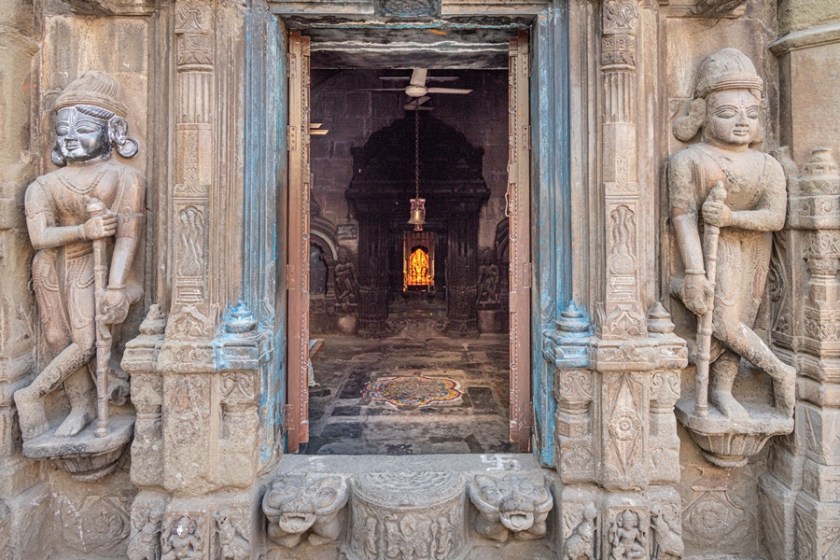
In India, the term Trimurti is used in reference to the three faces of god. They are Brahma, Vishnu and Shiva. They are collectively known as the Trinity. Together they represent the oneness of the universe while retaining their distinctive nature and are known for their ability to grant boons. Hymns are chanted every day all over India, in temples and homes, and countless stories abound in their praise.
Here is the tale of The God of Knowledge
One day, Parvati happened to observe all the followers around Shiva from their abode on Mount Kailash. She remarked. ‘These people are all your devotees, my lord. They listen to you and not me.’
That cant be true, Parvati, replied Shiva.
Parvati did not say anything further, but she was convinced that she was right.
A few days later, she called for Shiva’s white bull and said to him, ‘Nandi, I am going to take a bath. Please guard the door and make sure no one comes in till I am done.’
When Shiva came home, he saw Nandi standing guard outside. ‘where is Parvati?’ he asked.
‘She is taking a bath.’
Shiva nodded and tried to step inside but Nandi stopped him, saying, ‘My Lord, the goddess has ordered me not to allow anyone in until she is ready.’
‘That may be so Nandi, but this is my house and I am your Lord and her husband. I can go in and out as I please.’
Convinced. Nandi moved aside and allowed Shiva to enter.
When Parvati saw Shiva, she realised that Nandi was is more loyal to his master than to her. She was overwhelmed with sadness, for she wanted somebody who’d be as faithful to her and follow her instructions without question.
The next time Parvati wanted to bathe, instead of relying on someone else to guard her door, she decided to create someone altogether. She sculpted the statue of a young boy with some sweat, rocks and mud and breathed life into him. She named him Ganesha.
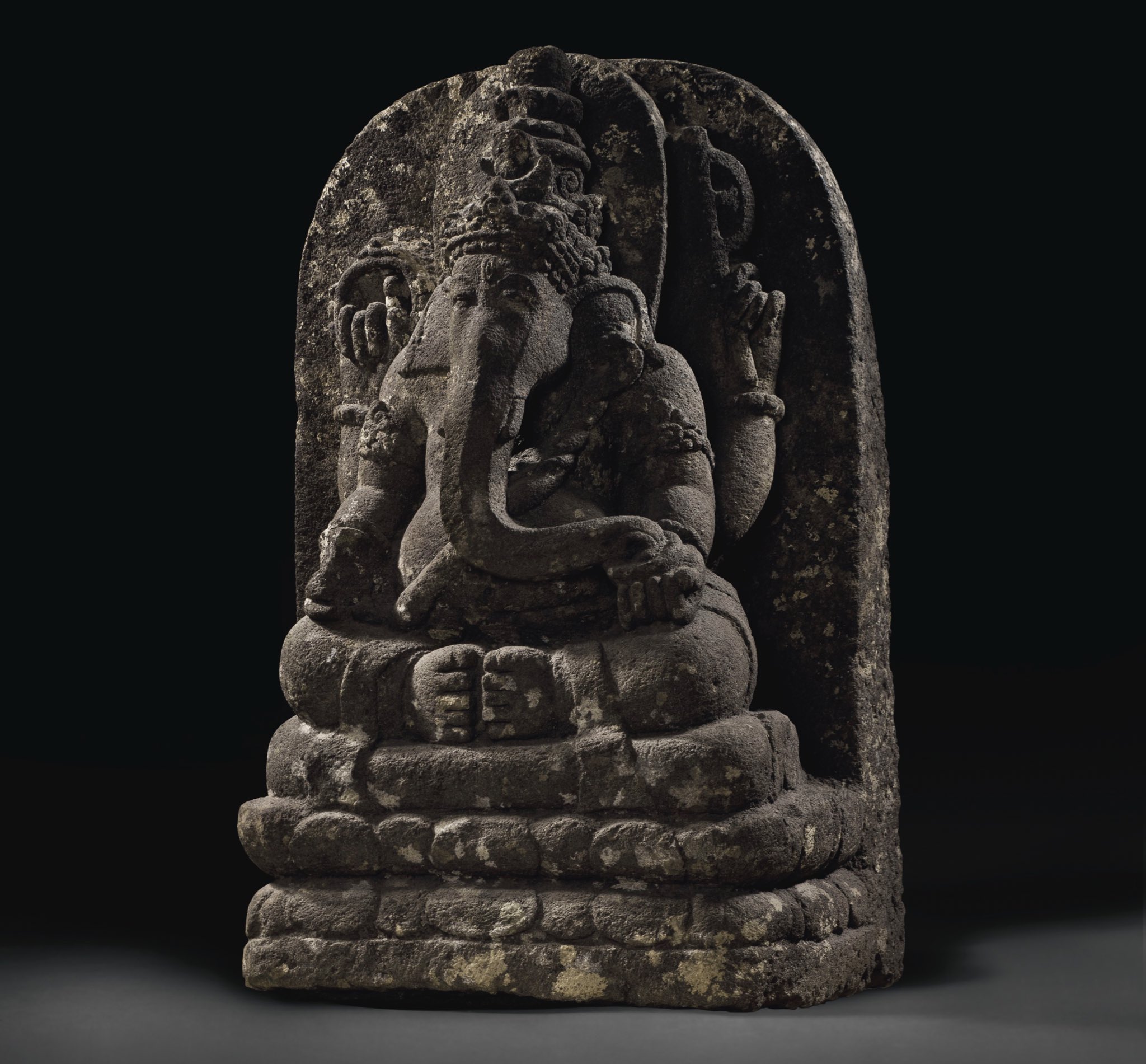
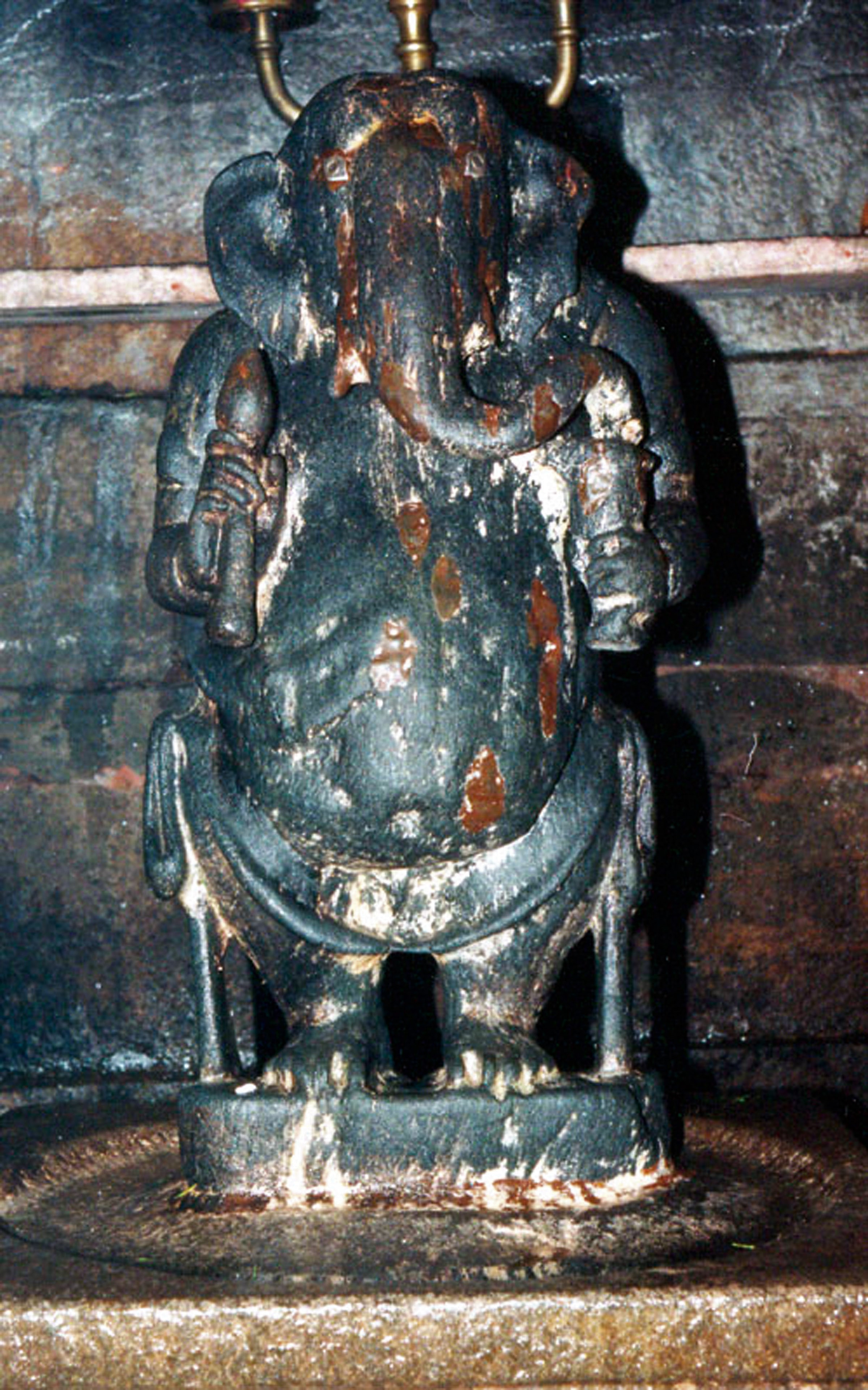
As soon as Ganesha came to life, he bowed and said, ‘Mother, I am here to do your bidding. Tell me, how may I help you today?
Parvati said gently, ‘My child, I am going to take a bath. Please don’t allow anyone inside the house until I am done.’
Some time passed and Shiva came home. He was surprised to see the little boy standing guard outside his house.
‘Little one, who are you? Where are your parents and why are you standing here?’ asked Shiva.
The boy replied boldly, My name is Ganesha and I am Parvati’s son.’
Shiva did not believe him. ‘Move aside and let me enter,’ he said.
‘No, I cannot do that. I must follow my mother’s orders. Please wait out here with me until she is done.’
‘Little boy, don’t you know who I am? I am Shiva and this is my home you are guarding. You cannot stop me from entering my own place.’
But Ganesha refused to be intimidated. He repeated, I am sorry, but I can’t allow you inside until my mother says it is alright to do so.’

Ganesha’s response irritated Shiva. He tried to reason with him again and again, but the boy would not budge.
Finally, Shiva lost his temper and cut off Ganesha’s head with a single swish of his trishul. The sheer force of the blow sent the boy’s head flying out of the Himalayas.
Hearing the commotion, Parvati rushed outside, but it was too late. Her child’s headless body lay on the white icy ground before her. Parvati cried out in despair and anger. ‘This is my son… my beloved child! Who has dared to do this to him?’
By now Shiva realised his folly. Feeling extremely remorseful for what he had done, he tried to console Parvati, saying, ‘I have made a huge mistake. I did not know that you had created him- I thought he was lying about being your son. Please forgive me- I will do everything I can to revive him.’
Though her face remained streaked with tears, Parvati looked at Ganesha’s body and nodded silently.
Shiva then instructed Nandi to go north and find the boy’s head.
Nandi looked for the head everywhere, but in vain. He returned to Shiva and said, ‘My lord, the head is nowhere to be found. What should I do?’
Try again, Nandi, insisted Shiva. ‘Or. . . . if you still cannot find it then look for anyone sleeping sleeping with his head towards the North, please remove their head and bring it to me.’
Nandi rushed out to follow his master’s orders. He finally saw an elephant sleeping with its head towards the north. Without a moment’s hesitation, Nandi cut it off and brought it back.
Shiva was pleased. He attached the head to Ganesha’s body, restoring his life, and accepted the boy as his own. Thus, Ganesha and Kartikeya became brothers.’
Ganesha was now devoted to both his parents. One day, Shiva and Parvati called their two sons and said, ‘Let’s have a friendly contest. They called both their sons and told them to go and Travel the world. But Just remember that We will give the fruit of knowledge to whoever goes around the world in the least amount of time.’
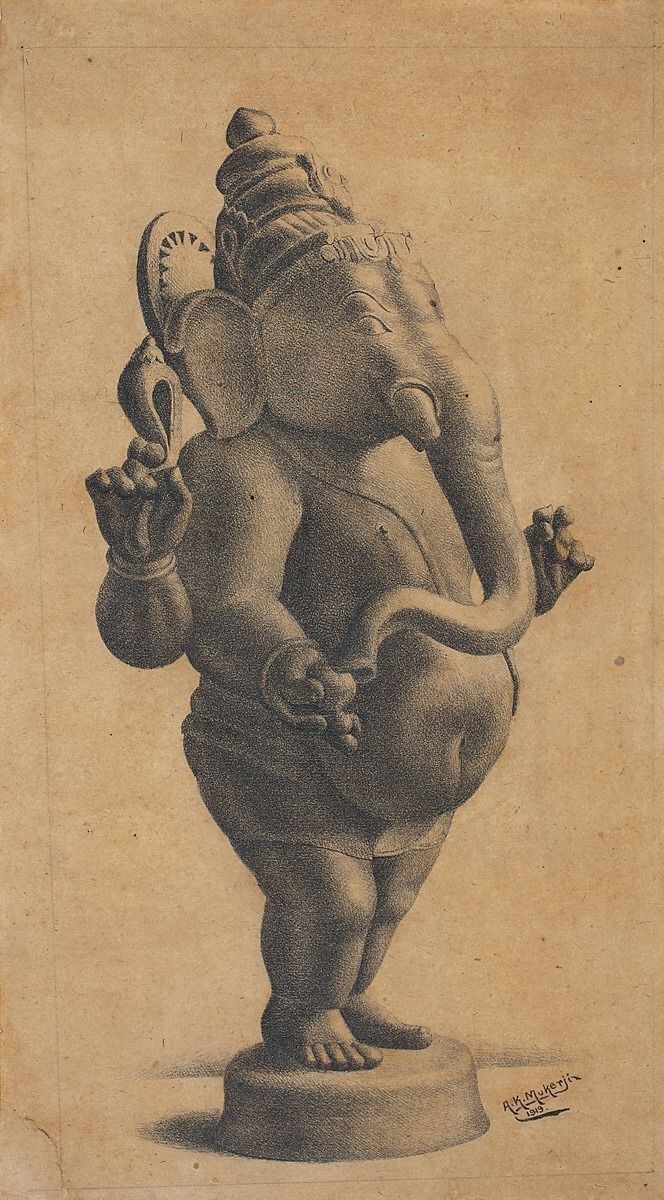
Kartikeya instantly mounted his peacock and began his journey around the world. Ganesha, on the other hand, did not hurry at all. He simply walked around his parents and then bowed before them.
Parvati said affectionately, ‘My dear child, what are you doing? Your brother must be halfway across the world by now- you will surely lose the race!’
Ganesha smiled at his parents with such warmth that it touched Parvati’s heart. ‘It does not matter, Mother. The two of you are my world and I have already encircled you. My journey is complete.’
Shiva and Parvati smiled and handed him the fruit.
“You are such a smart child, Ganesha,” said Shiva. ‘You will always have my blessing. From this day on, you will be known as the God of Knowledge.’
: ँ :
If anyone of you have ever come to Mumbai during the popular Ganesh Chaturthi festival, you might have heard masses chanting, Ganapati Bappa Morya.
But Do you know the story of the Origin of “Ganapati Bappa Morya?”
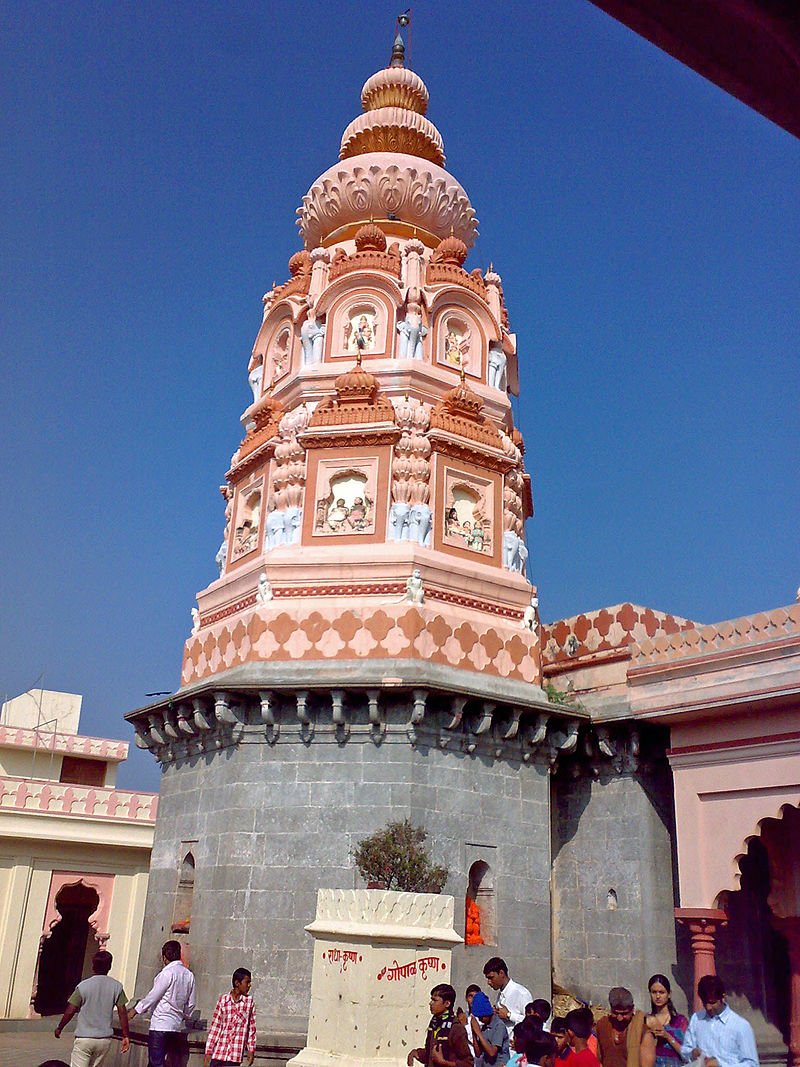
The Origin of this heartening chant goes to this Mayureshwar Temple near Pune. Mayureshwar means one with peacock (mayur) as vahana even though Ganesh has mooshika (mouse) as His vahana
The temple is the starting and ending point of a pilgrimage of eight revered Ganesha temples called Ashtavinayaka. This temple is said to be home to the shrine of a 13th century saint of the Ganpatya sampradaya, a sect of Hinduism. The name of the saint is Morya Gosavi, who performed many miracles – such as restoring the sight of a blind girl.
Pilgrims entering this temple would chant ‘Ganapati Bappa Morya‘ as a mark of respect to the saint and the deity itself and that is how we get the popular chant – ‘Ganapati Bappa Morya‘.
: ँ :
Thank you.
Do write your thoughts on the story?
If today is the first time you have arrived on The Road To Nara, you are heartily welcome ~ Namaste
: ँ :
ROAD TO NARA is an Ethnographic Blog of History, Stories of Culture, Passion, Art, People, Rivers, Folk, Mysticism, Meditation, Mountains, Trees and Tantra Yoga Science of Ancient India and the Indigenous World to your mailbox.
Do subscribe to Nature: ROAD TO NARA

Subscribe to Nature
Type your email…
SUBSCRIBE

: ँ :
I will take this opportunity to introduce you to About me and importantly,
As a co-traveller, share my Ten Lessons I learnt from several years on the road, before you coarse on your own Road to Nara.
: ँ :
You might also like to know about My Little School Project.
If you wish to come over for a visit someday, that you must, you will be heartily welcome here
If you have anything to share, or feel like saying a hello, please feel free to write to me at lotusofnara@gmail.com
Instagram | X | Facebook
: ँ :
Image Credit- Featured Image is made by Photographer Kevin Standage

 ROAD TO NARA
Pingback: The Legend of the Elephant God Ganesha VII | Ned Hamson's Second Line View of the News
Thanks Ned
LikeLiked by 1 person
I have a little carving of Ganesha from India which has been with me for many years, yet I only now have learned his story, so thank you!
LikeLiked by 3 people
My pleasure Caro. I am enjoying writing them very much. Also please read some of my answers to the above comments. As i would really like share something that this story conveys.
Also I am travelling to the Aravallis in Rajasthan, hence will be sharing something completely different and continue again after two weeks.
Much love from where I am.
LikeLiked by 1 person
We very much like how you tell these mythological stories.
Thank you
The Fab Four of Cley
🙂 🙂 🙂 🙂
LikeLiked by 2 people
Its feels well to read this Klaus. I am enjoying sharing it myself actually. I never thought I would re-write these tales but this is like learning from the source.
Like i mentioned something in above comment to Janet, about sleeping towards the North. I knew it from before through my Parents but writing it seemed like putting an end to many other free thoughts that take over you about directions.
Thank you.
LikeLiked by 2 people
I enjoy these stories!
LikeLiked by 3 people
Pleasure, to read this from you Vanya.
LikeLiked by 2 people
Thanks, now I know how Ganesh came to be. Elephants are very wise and have excellent memories, so it would be good to have an elephant’s head.
LikeLiked by 2 people
There is another thing to note here Janet. The head was cut because it was sleeping pointed towards the north. And the elephant was put to immortality, making them sacred.
LikeLiked by 2 people
Catherine M. Cox and others researched into genius and concluded that interconnections between neurons were more important than merely the head size. I used to think that cult of Ganpati worship was recent and from Maharashtra. Shiv Purana defines Ganesha as a name of Shiva. Veebhatsa rasa stories of Shaivism don’t have too much logic into them. AI evolutionary versions of becoming more advanced versions of ourselves only suits volitional adaptation in a safe environment rather than losing an argument or being forced to serve your head to a deity or superior no matter how exalted ( and yet angry and eager to watch or witness something specific passionately )
LikeLiked by 2 people
Engaging
LikeLike
Thanks Swami.
LikeLiked by 1 person
I will get back to you on Word Press when I return from vacation in May.
LikeLiked by 2 people
Please, eager to hear from you. Energize well, enjoy heartily.
LikeLiked by 1 person
Beautiful story of lord Ganesha well shared
LikeLiked by 2 people
Thank you Priti.
LikeLiked by 2 people
😊👏
LikeLiked by 1 person
You weave the stories beautifully. It’s interesting to read them. Thank you for sharing the stories.
LikeLike
These stories are super interesting. Yet It makes me smile, thank you Kritika.
LikeLiked by 1 person
My pleasure 🙏 keep Smiling and sharing these beautiful stories.
LikeLiked by 1 person
I will.try as much dear Kritika.
LikeLiked by 1 person
Ganapati baapa morya 🙌
LikeLiked by 2 people
Ab iss baras tu jaldi aa 🔱🫶🏻🙌
LikeLike
Thank you
LikeLike